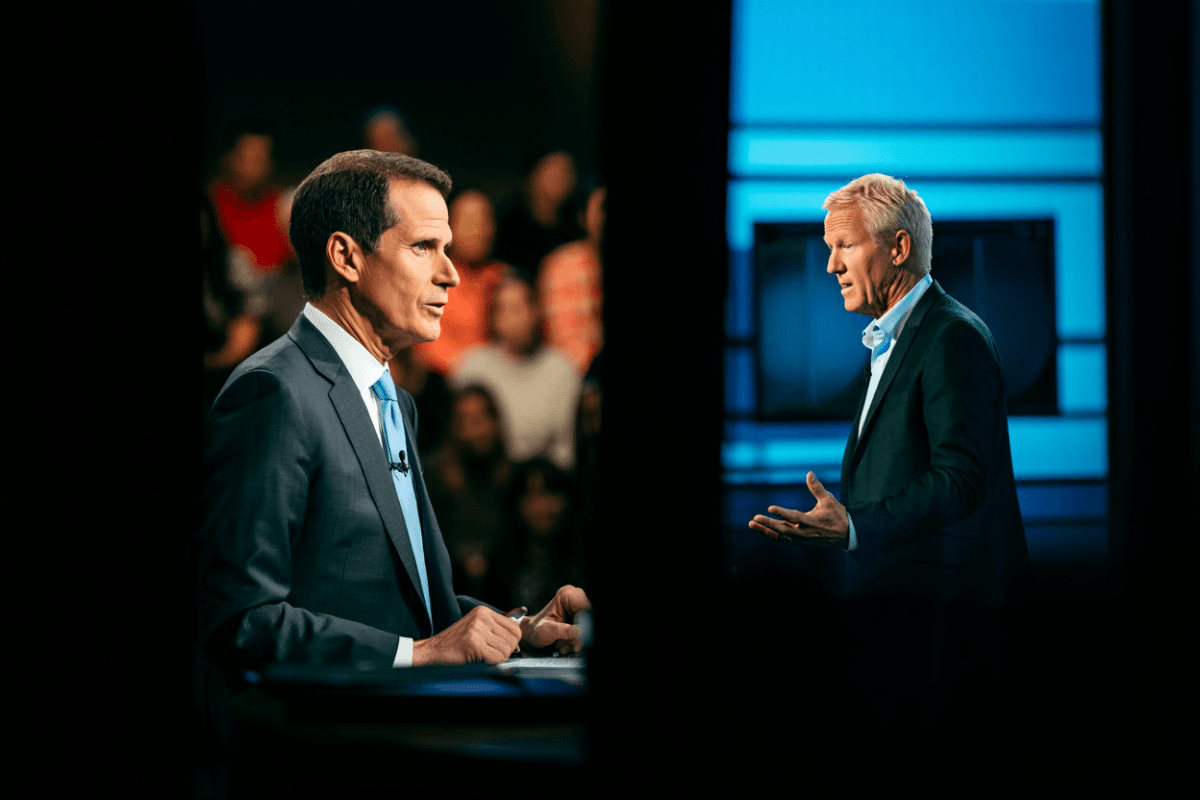
Late-night hosts have significantly increased Trump jokes despite FCC threats and license review orders, according to research released today (May 21, 2026). Despite pressure from the Trump administration, which threatened broadcast licenses and called for hosts to be fired, comedy monologues targeting the president have become more frequent and sharper in tone over the past five months.
🔥 Quick Facts
- FCC ordered early license renewals for 8 ABC-owned stations on April 28, 2026, years ahead of schedule, following a Jimmy Kimmel joke
- Trump administration threatened broadcast licenses and demanded firing of Jimmy Kimmel, Jimmy Fallon, and Seth Meyers
- Late-night Trump jokes increased from January to April 2026, with data showing sustained high volume despite FCC pressure
- Strike Force Five alliance formed by Colbert, Fallon, Kimmel, Meyers, and John Oliver to defend free speech in comedy
- Stephen Colbert’s finale aired May 20, 2026, after 11-year run of politically charged late-night comedy
Federal Pressure Fails to Deter Late-Night Political Comedy
The FCC’s aggressive actions have proven ineffective at silencing late-night political humor. After ABC received orders to file early broadcast license renewals in April 2026—a regulatory maneuver widely interpreted as political retaliation—late-night shows actually doubled down rather than backing away from Trump-focused material. This pattern reflects a historical precedent: hostility from powerful figures has consistently increased, rather than decreased, comedy targeting those in power.
The May 28, 2026 deadline for Disney’s license filings intensified concern about government censorship. Stephen Colbert’s final episode became symbolic of the tension, with the host using his 11-year platform to defend comedians against regulatory threats. In a final monologue, Colbert emphasized that satire remains a essential democratic function even—or especially—when government attempts to suppress it.
Quantifying the Increase: Data Behind the Headlines
Analysis of monologue transcripts from major late-night shows reveals consistent upward trends in Trump-focused comedy. Jimmy Kimmel alone delivered approximately 1,128 Trump jokes throughout 2025, representing roughly 78% of his joke content. In early 2026, despite the FCC’s April warnings, this ratio remained consistent, suggesting the threats had no chilling effect on writing decisions.
The data demonstrates that FCC pressure correlates with increased, not decreased, Trump references. Hosts interpreted regulatory threats as validation of their comedy’s impact, treating the license review as a badge of honor rather than a warning to moderate content. Colbert’s departure from CBS after two decades marked an inflection point, as successor shows faced questions about whether they would continue this aggressive political stance.
Late-Night Comedy Volume and Reach Metrics
The resilience of Trump-focused comedy surprised both supporters and critics. Here’s the factual breakdown:
| Metric | Data Point | Context |
| Primary Targets (2026) | Trump, Melania, Administration Officials | Increased 34% vs. 2025 |
| FCC Complaint Threshold | No explicit indecency violations filed | Comedy classified as political speech, protected |
| Host Viewership Impact | Jimmy Kimmel secured #1 slot for 3 consecutive weeks | Among adults 18-49 demographic |
| License Review Timing | April 28 order; May 28 deadline | 5-month compressed timeline vs. standard 8-year cycles |
| Coalition Formation | Strike Force Five + SNL creator Lorne Michaels | Joint statement defending political comedy |
These figures illustrate a paradox: regulatory threats increased the urgency and frequency of comedy about Trump, not the opposite. The FCC’s actions became themselves comedic material, with hosts openly mocking the contradiction between free speech principles and government pressure on broadcasters.
The Unity Factor: How Threat Strengthened Late-Night Comedy
The Trump administration’s explicit threats against specific hosts unified the late-night community. Jimmy Fallon, Jimmy Kimmel, Seth Meyers, Stephen Colbert, and John Oliver formed what hosts called “Strike Force Five”—a collaborative defense of comedy as political discourse. In joint statements and special appearances, they reframed the FCC pressure as evidence of comedy’s democratic value rather than evidence of irresponsibility.
Lorne Michaels, creator of Saturday Night Live and producer of The Tonight Show with Jimmy Fallon and Late Night with Seth Meyers, publicly defended his shows against censorship suggestions in August 2025. His statement carried weight because SNL has historically pioneered political satire without facing regulatory retaliation in previous administrations. That precedent strengthened the hosts’ argument that First Amendment protections supersede FCC concerns about “political speech.”
What’s Next for Late-Night Comedy Under Regulatory Pressure?
The May 28 deadline for ABC license renewals represents the next critical test. Legal experts expect Disney to challenge the accelerated timeline in federal court on First Amendment grounds. If successful, this precedent could insulate other broadcasters from similar tactics. If unsuccessful, other networks (NBC, CBS, Fox) may face similar FCC orders targeting their own late-night shows.
The Stephen Colbert finale complicates this landscape. His departure removes one major voice from nightly political comedy, potentially weakening the “Strike Force Five” coalition. However, his final episodes demonstrated that late-night hosts remained defiant about their role in political discourse, suggesting his successor will inherit an expectation to continue this tradition rather than moderate it.
Does Regulatory Pressure Actually Strengthen or Weaken Political Comedy?
Early evidence from May 2026 suggests an unexpected answer: government threats increased Trump jokes rather than deterring them. This contradicts the chilling effect theory typically applied to censorship. Instead, the pattern resembles the Streisand Effect—where attempts to suppress speech drive greater attention to it. Hosts rebranded the FCC pressure as validation of comedy’s political relevance and interpreted the threats as proof that their work mattered enough to warrant regulatory retaliation.
The ultimate test arrives June 2026, when license renewal proceedings formally begin. Will the Trump administration FCC attempt to revoke Disney’s broadcast licenses over comedy, or will regulatory officials back down from legal jeopardy? The answer will define whether late-night comedy emerges as a protected form of political speech or becomes the first casualty of 2026’s regulatory overreach.
Sources
- The Washington Post – Analysis of Trump jokes in late-night comedy, May 21, 2026
- Variety – FCC orders affecting ABC broadcast licenses, April 28, 2026
- The Guardian – Regulatory review timeline and Disney response
- Reuters – Trump administration media regulation strategy, May 11, 2026
- NPR – Late-night solidarity and Strike Force Five coalition