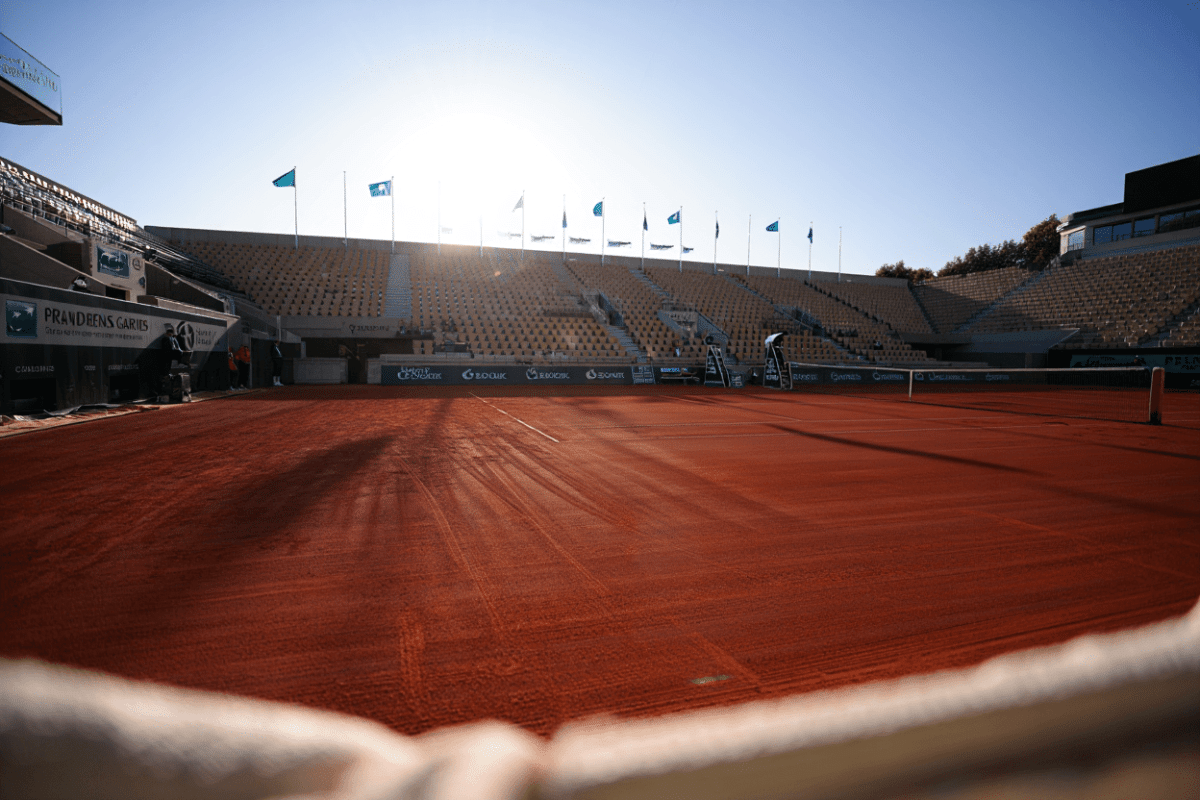
Roland Garros announced the complete main draw on May 21, 2026 at 2:00 PM CEST in Paris, setting the stage for the clay-court Grand Slam from May 24 to June 7. Novak Djokovic enters the tournament seeking his 4th French Open title and record-breaking 25th Grand Slam championship, facing Giovanni Mpetshi Perricard in the opening round. The draw places Jannik Sinner and Alexander Zverev as the top men’s seeds leading opposite halves of the bracket.
🔥 Quick Facts
- Draw announced May 21, 2026 at 2:00 PM CEST in Paris, France
- Main draw begins May 24 with 128 men and 128 women competing for Grand Slam titles
- Djokovic pursues 4th French Open title and record 25th Grand Slam championship
- Sinner seeded #1 (men), Sabalenka seeded #1 (women) in their respective halves
- Djokovic faces Perricard (No. 3 world ranking) in potential opening-round test
The Challenge Ahead: Djokovic’s Path to History
Djokovic’s pursuit of a 25th Grand Slam title carries historical weight. At 39 years old, the Serbian champion seeks to become the first male player to reach that milestone. His three previous French Open victories came in 2016, 2021, and 2023, establishing him as one of the tournament’s elite champions on clay. A successful run would cement his legacy as the greatest male tennis player of all time, breaking the record he currently shares with significant peers in tennis history.
The main draw structure features Sinner and Zverev leading opposite halves, creating a championship scenario where Djokovic would avoid both top seeds until a potential semi-final. This positioning suggests a favorable bracket distribution, though third seed Daniil Medvedev and other elite competitors remain formidable obstacles on the clay courts of Stade Roland Garros.
The Draw Breakdown: Seeds, Pairings, and Opening-Round Storylines
The 2026 French Open main draw released today confirms 128 players in both men’s and women’s singles, with competition across six categories: men’s singles, women’s singles, men’s doubles, women’s doubles, mixed doubles, and wheelchair events. Djokovic’s pairing with Perricard, a strong-serving Frenchman ranked inside the top 3, provides an early examination of his readiness for the tournament’s physical demands.
Coco Gauff enters as defending women’s champion, while rising star Jannik Sinner headlines the men’s field as world No. 1. The placement of these seeds creates distinct narrative arcs: Sinner aims to capture his first French Open title; Gauff seeks back-to-back titles; Sabalenka pursues her second women’s championship after dominating clay. Djokovic’s storyline, however, remains the most dramatic—a bid for tennis immortality on clay.
Schedule and Tournament Structure: May 24 – June 7
The 2026 Roland Garros schedule runs for exactly 15 days, with specific phases outlined as follows:
| Round | Dates | Detail |
| First Round | May 24-26 | 128 → 64 players advance |
| Second Round | May 27-28 | 64 → 32 players advance |
| Third Round | May 29-30 | 32 → 16 players advance |
| Quarterfinals | June 2-3 | 16 → 4 players advance |
| Semifinals | June 5-6 | 2 players per draw reach finals |
| Finals | June 7 | Champions crowned |
The schedule concentrates early-round matches into compressed days, allowing later rounds to showcase marquee matchups on Centre Philippe Chatrier, the tournament’s primary court. Djokovic’s experience managing intensive match schedules—having competed in over 300 Grand Slam matches across 20+ years—positions him favorably in this compressed format.
The Women’s Draw: Sabalenka and Gauff Lead
Aryna Sabalenka enters as the women’s #1 seed following her dominant performances on clay and hard courts. Defending champion Coco Gauff, seeded #4, occupies Sabalenka’s half of the draw, setting up potential semi-final drama. Other top contenders include Elena Rybakina (#2 seed), Iga Swiatek (#5 seed), Jessica Pegula, and Amanda Anisimova, each capable of mounting championship campaigns on Roland Garros’ distinctive red clay courts. The women’s draw features compelling storylines beyond the top seeds, including rising European talents and emerging American challengers vying for breakthrough Grand Slam moments.
“Djokovic is attempting to become the first player to win a record 25th major title, and the first man to complete a quadruple Career Grand Slam. By winning this tournament, he would join exclusive history.”
— According to Wikipedia’s 2026 French Open Men’s Singles overview
What This Tournament Means: Legacy, Records, and Clay Mastery
Beyond immediate rankings and seeding, the 2026 French Open represents a defining moment in professional tennis. Djokovic’s pursuit of tennis immortality—a 25th Grand Slam—captures global attention. His dominance across decades has redefined player longevity; he won his first French Open at 23 years old in 2016 and seeks another at 39, a span of 13 years in elite competition.
Sinner’s emergence as top seed signals a changing of professional tennis’ guard, with younger rivals challenging the established order. Sabalenka’s power game on clay continues evolving after her 2025 French Open runner-up finish, where she fell short of repeating as champion. Gauff’s defense of her crown represents American tennis’ highest priority, as dominant performances by US players remain rare at Roland Garros in recent seasons. Each narrative arc converges during these 15 days in Paris, where clay-court mastery determines champions and cements legacies.
Can Djokovic Overcome the Challenge and Chase History?
The central question entering the 2026 French Open asks whether Djokovic can maintain his elite form across seven matches in a compressed timeframe. His opening opponent, Perricard, serves as a meaningful early test—a high-ranking competitor known for powerful serves on any surface. Beyond Perricard lie potential third-round matchups against ranked opponents, quarterfinal encounters with established contenders, and a semi-final path potentially featuring Alexander Zverev or other elite players.
Historical parallels provide perspective: Djokovic’s ability to win Grand Slams at advanced age (he won the 2023 French Open at 36) suggests experience outweighs raw athleticism at tennis’ highest level. Mental fortitude, tactical acumen, and court intelligence—factors that diminish minimally with age—remain his strengths. The Roland Garros clay surface, where he has thrived since 2016, continues to suit his movement patterns and defensive capabilities. Yet competitive excellence intensifies as rounds progress; facing Sinner, Zverev, or other elite competitors in later stages would demand peak performance precisely when physical fatigue accumulates most severely.
Sources
- ATP Tour – Official Roland Garros 2026 draw and schedule information
- Roland Garros Official Site – Main draw ceremony details, tournament structure, opening week information
- Wikipedia – 2026 French Open men’s and women’s singles draw analysis
- Tennis365 – Seeding confirmations and strategic matchup previews
- USA Today Sports – Draw logistics and schedule published May 19, 2026