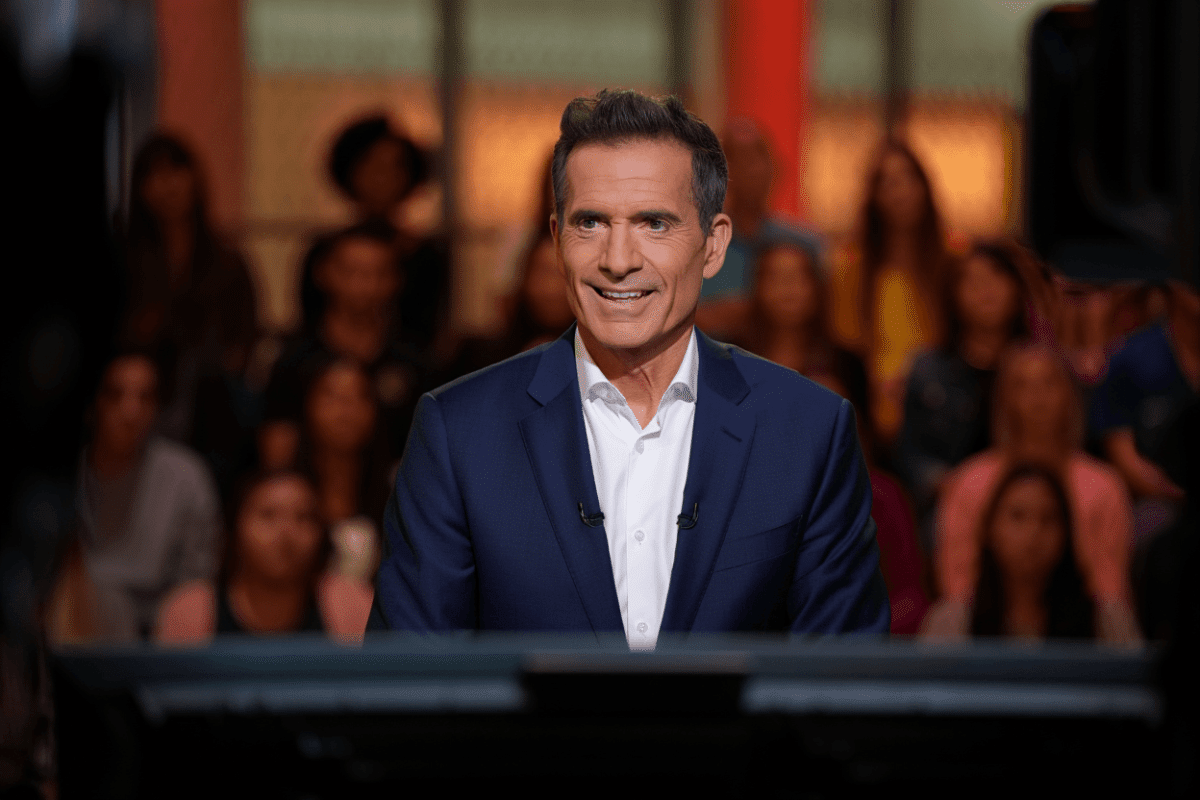
The Late Show with Stephen Colbert airs its finale tonight at 11:35 p.m. ET on CBS, concluding an 11-year run that reshaped late-night television. The extended final episode will feature Bruce Springsteen as the musical guest, closing a chapter that made the show the highest-rated late-night program for nine consecutive seasons as of 2025. Colbert’s departure marks the end of an influential era in American talk television.
🔥 Quick Facts
- Final episode airs May 21, 2026 at 11:35 p.m. ET/PT on CBS
- The Late Show ran for 11 seasons with over 2,000 episodes
- Colbert’s program led late-night for 9 consecutive seasons through 2025
- Bruce Springsteen performs as the finale’s musical guest
- CBS ends The Late Show for financial reasons, not performance
From Daily Show Correspondent to Late-Night Titan
Stephen Colbert built his career path through comedy, improv, and political satire. He spent eight years as a correspondent on The Daily Show with Jon Stewart, where his “This Week in God” segment and absurdist political commentary became fan favorites. In 2005, he launched The Colbert Report, a satirical news show that earned him numerous Emmy nominations and established him as a leading voice in post-9/11 American comedy.
When David Letterman retired from the Late Show slot in 2015, CBS tapped Colbert to take over. The network’s decision represented a significant shift—replacing a traditional talk-show format with a more politically aware, analytically sharp host. His debut episode drew 8.26 million viewers, beating all late-night competitors on its opening night.
The Late Show Era: Ratings Success and Political Commentary
The Late Show with Stephen Colbert became the highest-rated American late-night talk show almost immediately after launch. In the 2016-2017 season, the program averaged over 3.2 million nightly viewers, a performance that sustained throughout most of Colbert’s tenure. As recently as Q2 2025, the show averaged 2.42 million viewers, still outpacing competitors like Jimmy Kimmel’s program.
Beyond ratings, Colbert’s Late Show redefined late-night’s role in political discourse. As one media analyst noted, “Most satirists offer wry commentary about political events. Colbert often did something more ambitious: He helped audiences understand them.” His monologues frequently addressed complex issues—election coverage, COVID-19 responses, foreign policy—with both humor and substantive analysis. His finale week featured performances from major artists reflecting on his influence across American culture.
Why The Late Show Ends Despite Top Ratings
CBS announced The Late Show’s cancellation in April 2026, stating the decision was “purely financial” and “not related to the show’s performance, content, or other matters.” Despite maintaining the top-rated position, the program was reportedly losing more than $40 million annually. This financial contradiction reveals shifting economics in late-night television.
The advertising model supporting late-night talk has compressed dramatically. Though Colbert’s 2.47 million viewers exceed those of competing hosts, traditional TV ad dollars have plummeted due to cord-cutting and streaming migration. Networks increasingly prefer cheaper reality content or algorithm-driven streaming production. CBS prioritized immediate profitability over legacy brand value, opting to sell the 11:35 p.m. time slot to Byron Allen’s Allen Media Group via a time-buy agreement.
| Metric | The Late Show Record | Context |
| Debut Viewership | 8.26 million (2015) | Beat all late-night competitors |
| Peak Average | 3.2+ million nightly (2016-2017) | Season performance benchmark |
| Final Average (Q2 2025) | 2.42 million viewers | Still #1 in late-night category |
| Consecutive #1 Seasons | 9 seasons (through 2025) | Longest winning streak in show history |
| Annual Operating Cost | $40+ million in losses | Reason cited for cancellation |
| Total Seasons | 11 seasons | Ended May 21, 2026 |
“Colbert often did something more ambitious than offer wry commentary: He helped audiences understand complex political events through satire and analysis.”
— Media analyst, Katie Couric Network
Tonight’s Finale: A Moment of Cultural Significance
May 21, 2026 will see The Late Show’s extended final episode air over the network and stream on Paramount+. The program will feature Bruce Springsteen as the musical guest, signaling a full-circle return to the classic late-night format that Colbert both honored and transformed. Colbert’s team confirmed the episode will run longer than usual, allowing time for a proper sendoff.
Reports indicate Colbert held a wrap party with the “Fired and Festive” dress code, reflecting the bittersweet nature of the moment. Over the past week, celebrity guests and musical performers paid tribute to his tenure, reinforcing the cultural impact Colbert achieved beyond ratings.
What Comes Next for Colbert and Late-Night Television
Stephen Colbert has signaled his next move: he is co-writing a “Lord of the Rings” film project with his son, Peter McGee, with Warner Bros. backing the endeavor. This represents a strategic pivot into screenwriting and feature film production—a path suggesting Colbert seeks creative freedom outside network constraints.
For late-night television broadly, Colbert’s departure signals an industry inflection point. Traditional late-night talk shows are losing cultural dominance as younger audiences migrate to streaming platforms, YouTube clips, and social media commentary. The Late Show’s cancellation despite top ratings confirms that audience size no longer guarantees profitability in the current media landscape. Future late-night programming will likely shift toward hybrid models: shorter clips for digital distribution, guest-driven events over nightly talk, and cost-efficient production.
Does Late-Night Television Still Matter?
As The Late Show ends tonight, the broader question looms: What role do late-night shows play in 2026 American media and politics? Colbert proved that smart political commentary wrapped in entertainment could sustain a flagship network program. Yet even dominance in traditional metrics could not overcome the structural decline of network television advertising revenue. Will viewers find Colbert’s political analysis in feature films? Will network successors innovate or retreat into cheaper formats? The next few months will clarify whether late-night reinvention is possible or if the era has truly ended.
Sources
- Entertainment Weekly — Extended finale announcement and details
- CNN — Colbert’s next project reporting
- The New York Times — The Late Show’s cultural impact analysis
- Wikipedia/The Late Show with Stephen Colbert — Ratings, viewership, and historical data
- Katie Couric Network — Political legacy commentary
- Rolling Stone — Bruce Springsteen finale performance
- IMDB — Financial loss reporting and industry context