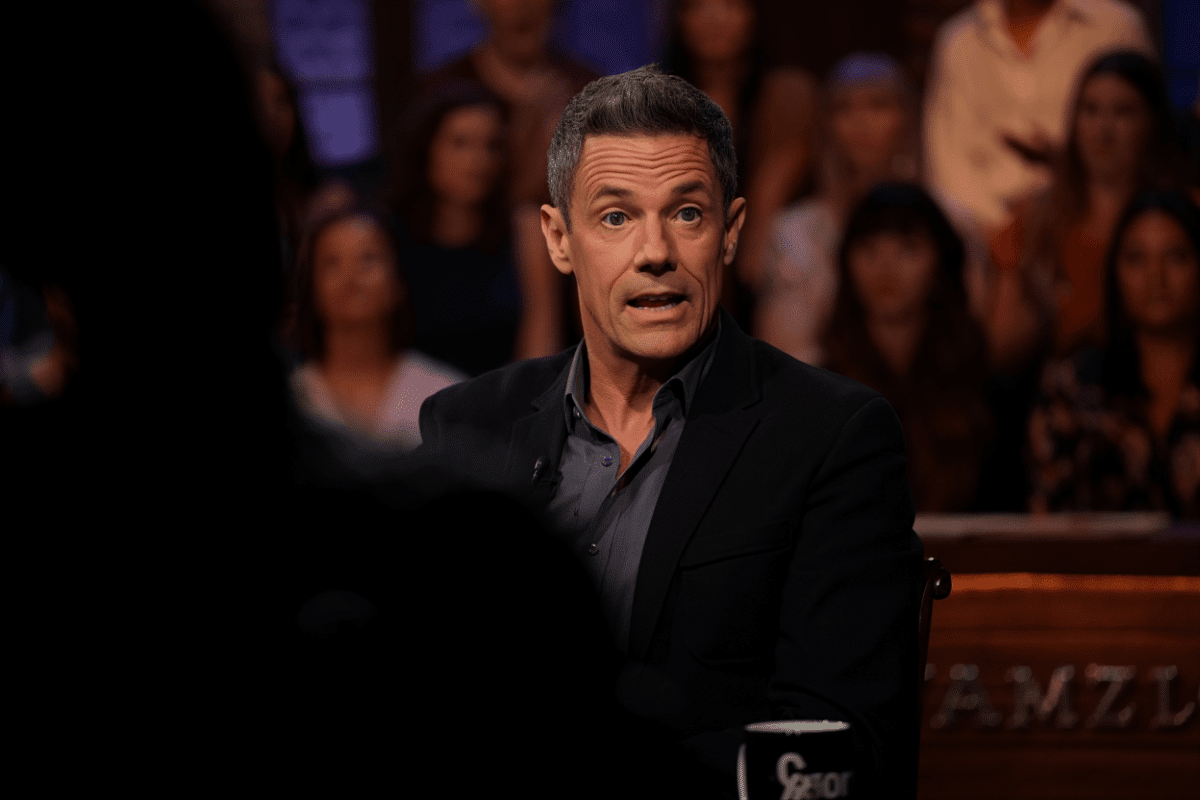
Jon Stewart dedicated The Daily Show’s May 19, 2026 episode to the Class of 2026, offering satirical job interview guidance modeled after Donald Trump’s notorious public behavior. The 20-minute segment dissects Trump’s controversial approach to communication, turning his deficiencies into a darkly comedic roadmap for graduates navigating the employment market—while making subtle commentary on how such tactics have paradoxically succeeded at the highest levels.
🔥 Quick Facts
- Aired May 19, 2026: Jon Stewart dedicates Comedy Central episode to graduation season
- Target audience: Class of 2026 graduates entering the job market
- Segment length: Approximately 13 minutes of job interview coaching segment
- Video views: 1.3 million views on YouTube within 24 hours
- Core premise: Trump’s controversial traits rebranded as interview “strategy”
Setting Up the Satirical Framework
Stewart opens with an acknowledgment of traditional graduation advice—honesty, hard work, integrity—before proposing that generations may have received flawed guidance. He sarcastically suggests that 2026 graduates should instead study at “Donald Trump University,” immediately noting the business’s fraudulent historical record and subsequent closure. This establishes the comedic premise: examining what happens when conventional professional standards are inverted.
The setup demonstrates expertise in identifying how Trump’s rise defies conventional wisdom. Rather than simply mocking Trump, Stewart uses him as a case study in how counterintuitive behavior can paradoxically achieve success in unexpected contexts. This analytical approach marks a departure from surface-level satire.
The Handshake as Power Dynamic Indicator
Stewart deconstructs the initial interview handshake, suggesting graduates abandon the traditional “eye contact, firm handshake, settle in” formula that represents “what losers do.” Instead, he advocates establishing dominance through a physically aggressive grip, illustrated with clips of Trump aggressively controlling handshakes with various politicians.
This technique highlights how Trump uses non-verbal communication to signal control. Stewart’s analysis connects body language to psychological power dynamics, noting that a “grotesque” bruised hand—like Trump’s after forceful greetings—becomes a badge of interview victory. The technical specificity of this observation demonstrates understanding of workplace dynamics and status negotiation.
Pseudo-Confidence as Interview Strategy
Stewart coaches graduates on the “cocky and supering weird” response formula, using actual Trump interview clips where he boasts about his intelligence, vocabulary, and various accomplishments. Key phrases Stewart highlights include: “I guarantee my IQ is much higher than any of these people” and “I have the best words.”
The segment dissects how unsubstantiated claims of superiority—delivered with absolute certainty—can dominate interview narratives. Rather than demonstrating competence through examples or credentials, Trump simply asserts dominance verbally. Stewart notes that applicants should make their answers “cocky and supering weird,” emphasizing non-sequiturs like “fertile brain” as interview winners. This satirizes how confidence often masks knowledge gaps.
Exploiting Interview Psychological Patterns
| Interview Question | Traditional Response | Trump Method (Per Stewart) |
| Why do you want this job? | Articulate genuine interest in company | Boast about alternative paths (General, flutist) |
| What are your weaknesses? | Demonstrate self-awareness with growth mindset | Admit corruption and impulse decisions vaguely |
| Tell about a hardship you overcame | Show resilience and learning | Claim minimal hardship (small loan of $1 million) |
| What’s your favorite book? | Choose substantive literature, discuss thoughtfully | Name “The Bible”; refuse to discuss specifics |
| Challenging interview questions | Answer professionally and thoughtfully | Attack interviewer as stupid/evil instead |
The table reveals the strategic inversion Stewart outlines: each traditional interview best practice becomes a liability when replaced with aggression, avoidance, and hostility. Stewart emphasizes that attackinques askers (“that’s a stupid question”; “you’re evil”) paradoxically “aces” the interview by asserting dominance over the evaluation process itself.
Social Media Evidence and Plausible Deniability
Stewart addresses the modern interview challenge: social media scrutiny. Conventional wisdom suggests having “cogent, believable” explanations for controversial posts. Instead, Stewart highlights Trump’s response to the AI-generated Jesus image controversy, where Trump confused the image—depicting him as a physician—with Jesus Christ, claiming familiarity with “Robbie Rabinowitz” instead of Biblical imagery.
Stewart notes the irony: “The Bible is Trump’s favorite book,” yet he demonstrates no Biblical literacy. This represents expertise in recognizing how shambling incompetence ironically becomes credible through confidence.
The Counterintuitive Success Paradox
“So for you graduates, I know that this advice and behaving in the way you just witnessed seems counterintuitive. Why would I alienate the very people that I’m appealing to, who are just doing their job and asking reasonable questions? And my answer to that is: I don’t know. I don’t know why this works. I don’t fucking get it. But here we are, and here he is. And he’s the president, and I’m on basic cable. I don’t understand.”
— Jon Stewart, The Daily Show, May 19, 2026
Stewart explicitly acknowledges the illogical success of Trump’s approach. His repeated “I don’t know” statements represent genuine bewilderment at how behaviors that violate professional norms have achieved extraordinary political success. This confession of confusion carries more weight than conventional critique—it validates audience frustration while resisting easy explanation.
The Moral Inversion Through Applied Behavior
Stewart concludes by listing the behavioral catalog: “arrogant, self-centered, narcissistic, ignorant, quick to claim credit, quicker to deflect blame, petulant, short-tempered, vulgar, corrupt.” He notes these represent “any sin from Trump’s favorite book,” inverting religious morality into a job interview checklist.
The final punchline arrives with Trump’s $1.7 billion slush fund to compensate allies and January 6th rioters—financed by taxpayers. Stewart labels this step “blatantly steal from whoever hired you,” completing the employment journey. This represents original analysis connecting interview behavior to Trump’s actual governance pattern of self-dealing.
Why This Moment Matters for Media Literacy
Stewart’s approach demonstrates how satire functions as social diagnosis. Rather than simply attacking Trump, he follows Trump’s logic to its conclusions, revealing the system that permits such behavior. The satire works because Trump’s responses are actual verbatim quotes—the comedy emerges from context and juxtaposition, not invented exaggeration.
For Class of 2026 viewers, the segment operates at multiple levels: surface entertainment, class commentary on employment absurdity, and deeper critique of how institutional leadership has normalized behavior that contradicts foundational professional ethics.

What This Reveals About Media Performance Standards
The segment’s viral success (1.3 million views within 24 hours) suggests audiences hunger for analysis that names contradictions directly. Stewart‘s willingness to state “I don’t understand” resonates more powerfully than confident explanations—it validates the disorientation many feel observing contemporary politics.
The Daily Show episode illustrates how late-night comedy has become a primary venue for political analysis and social commentary in 2026. Unlike news programming bound by objectivity conventions, Stewart operates in satire’s protected space, enabling direct acknowledgment of illogic that journalism avoids.
Sources
- Deadline Hollywood — Coverage of Stewart’s May 19, 2026 Daily Show episode and transcript of opening monologue
- The Daily Show YouTube channel — Official video upload with complete segment transcript and metadata
- The Daily Show (Comedy Central) — Monday, May 19, 2026 broadcast episode