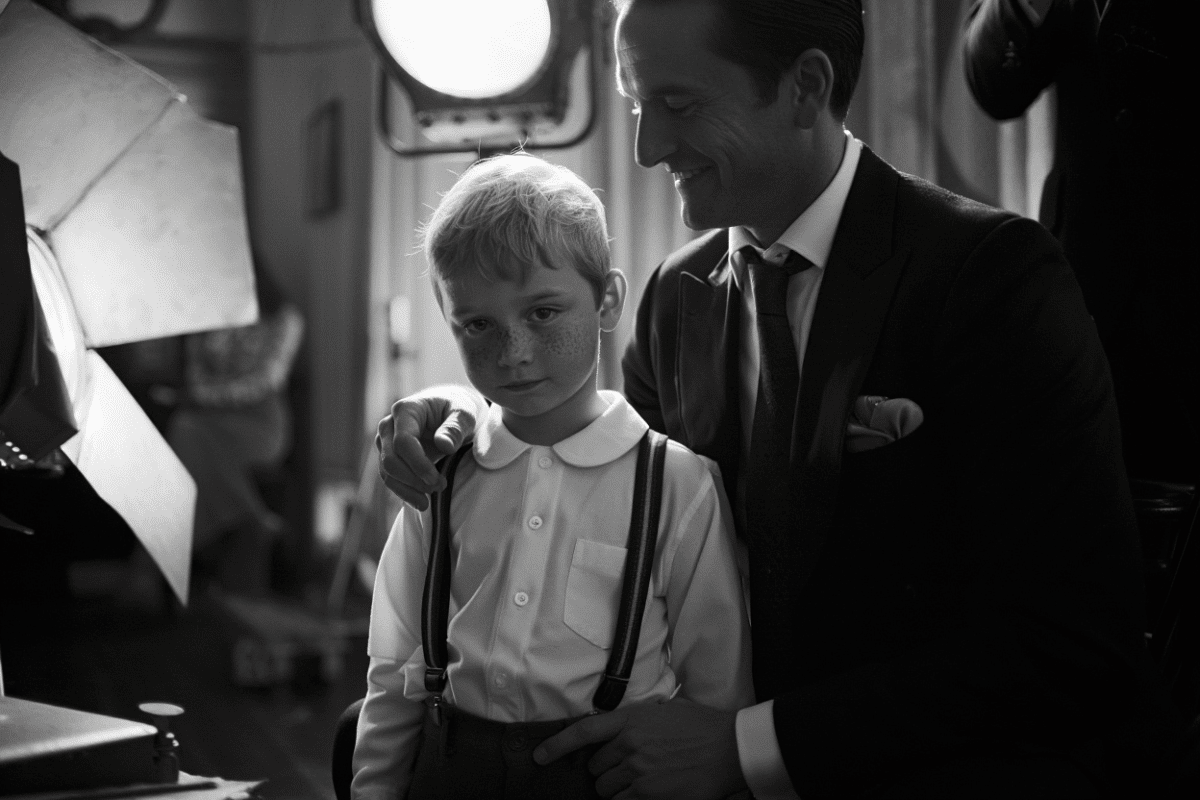
Dennis Rush, the beloved child actor who portrayed young Lon Chaney Jr. opposite James Cagney in the 1957 classic “Man of a Thousand Faces” and played Howie Pruitt, one of Opie’s closest friends, on the iconic television series “The Andy Griffith Show,” passed away on May 9, 2026, at age 74. According to reports, Rush was diagnosed with leukemia the previous month and died en route to the hospital in the San Diego area where he had been residing.
🔥 Quick Facts
- Dennis Rush made his film debut at age 4 in “Man of a Thousand Faces” (1957)
- He appeared in 8 episodes of “The Andy Griffith Show” between 1963-65
- Rush appeared in numerous 1950s-60s television series including “Wagon Train,” “Laramie,” and “Alfred Hitchcock Presents”
- Born June 10, 1951 in Philadelphia; died May 9, 2026 in San Diego
The Discovery by James Cagney
Dennis Eugene Rush was born in Philadelphia on June 10, 1951. When he was just one year old, his father Jack relocated the family to Los Angeles and secured employment as a film archivist at Universal Studios. Rush later recalled that a trip to the studio lunch counter would change his life forever. While sitting with his father, James Cagney himself approached and explained that he was searching for a young boy to play his son in an upcoming film called “Man of a Thousand Faces.” The opportunity seemed unlikely—Rush had no acting experience and still needed to attend school. Cagney‘s response was memorable: “Trust me.”
The youngster’s screen test involved riding a tricycle around a Christmas tree. He was cast and spent six months on set alongside Cagney, Dorothy Malone, and Jim Backus. In one pivotal emotional scene, Cagney employed a memorable technique to draw authentic tears from the young actor. “He kept that up for a walk around the soundstage and had me in tears,” Rush remembered decades later in a 1989 interview.
A Prolific Child Acting Career in Hollywood’s Golden Age
Rush’s career as a child actor spanned the late 1950s through the mid-1960s, a period marked by consistent work across television and film. His filmography included the 1957 classic “Man of a Thousand Faces,” followed by “No Name on the Bullet” (1959) and “Follow Me, Boys!” (1966). On television, Rush appeared in eight different series during this era. His most memorable role came on CBS’s “The Andy Griffith Show,” where he played Howie Pruitt alongside child star Ron Howard (who played Opie). Rush appeared in eight episodes over approximately two and a half years between 1963-65.
One notable moment occurred during the 1964 episode “Barney’s Physical,” when Rush inadvertently ad-libbed a line about Don Knotts’ character “hanging himself in the closet” after blanking on the scripted dialogue. The spontaneous line remained in the final broadcast, becoming part of television history. Rush also worked on “Wagon Train” (appearing in seven episodes from 1960-62, including one directed by John Ford) and “Laramie” (three episodes from 1962-63). Additional television credits included “The Millionaire,” “Checkmate,” “Alfred Hitchcock Presents,” “Perry Mason,” “The Lucy Show,” “Gunsmoke,” “My Favorite Martian,” “My Living Doll,” and “The Magical World of Disney.”
Life After Childhood Fame and Personal Details
| Life Phase | Details |
| Military Service | Served in the U.S. Marines after outgrowing child acting roles |
| Education | Graduated from Notre Dame High School and San Diego State University in 1977 |
| Career Path | Worked in the hotel and restaurant industry after his acting career concluded |
| Significant Loss | Discovered his parents had spent his childhood acting earnings (made as much as $500 a week) by the time he returned from military service |
| Family | Survived by siblings Sally, Monica, Patrick, and Megan; brother Jack died in February 2026 |
Rush reflected on the unpredictable nature of child acting. “Every month or so you would do a number of things and then six months would go by and you wouldn’t do anything,” he explained. “Then you’d get a call and go on an interview and you might be with 20 kids or you might be with 200 kids vying for the same job.” Despite competition, he maintained steady work throughout the late 1950s and 1960s.
A Lasting Relationship with James Cagney and Legacy
“You know, this has all been make-believe. But you know how much fun Christmas can be and being with your folks and all that? Well, this little boy is never going to see his mom or his dad again. No more Christmases. No more good food.”
— James Cagney, coaching young Rush before an emotional scene on “Man of a Thousand Faces” (1957)
The relationship forged between Risk and Cagney endured until the legendary actor’s death in March 1986. “He said, ‘I just got word that my old buddy Dennis Rush, a fine actor and a great friend passed away at the age of 74,” actor-musician Keith Thibodeaux (who also appeared on “The Andy Griffith Show”) told The Hollywood Reporter. The two exchanged Christmas cards every year before Cagney’s passing.
Rush became a treasured figure in the “Mayberry” fan community, regularly attending the Mayberry Days Festival in Mount Airy, North Carolina, and the Mayberry-I Love Lucy Festival in Granville, Tennessee. Attendees consistently praised his warmth and authenticity. In a tribute posted to the official Mayberry Days website, organizers wrote: “Dennis was an absolute joy to be around and one of the sweetest men you could ever meet. It was always a pleasure to welcome him to Mayberry Days, where he shared smiles, stories, hugs and kindness with fans from all over the world.”
What Makes His Story Endure?
Perhaps what stands out most about Dennis Rush is not merely his work alongside Cagney or his appearances on one of television’s most beloved series, but rather his grace in transitioning from childhood stardom to an ordinary life. He never sought the spotlight after his acting years ended. Instead, he built a career in hospitality, earned his college degree, and became known in retirement for his genuine kindness and accessibility to fans of the shows he appeared in. He attended fan festivals and conventions not as a jealous guardian of his past roles, but as a gracious participant in television history who understood what those programs meant to generations of viewers.
Sources
- The Hollywood Reporter — Comprehensive obituary and career overview with primary source reporting
- IMDb — Complete filmography and television credits
- Mayberry Days Festival — Official tribute and festival attendance records
- Los Angeles Times — 1989 interview on acting techniques from James Cagney