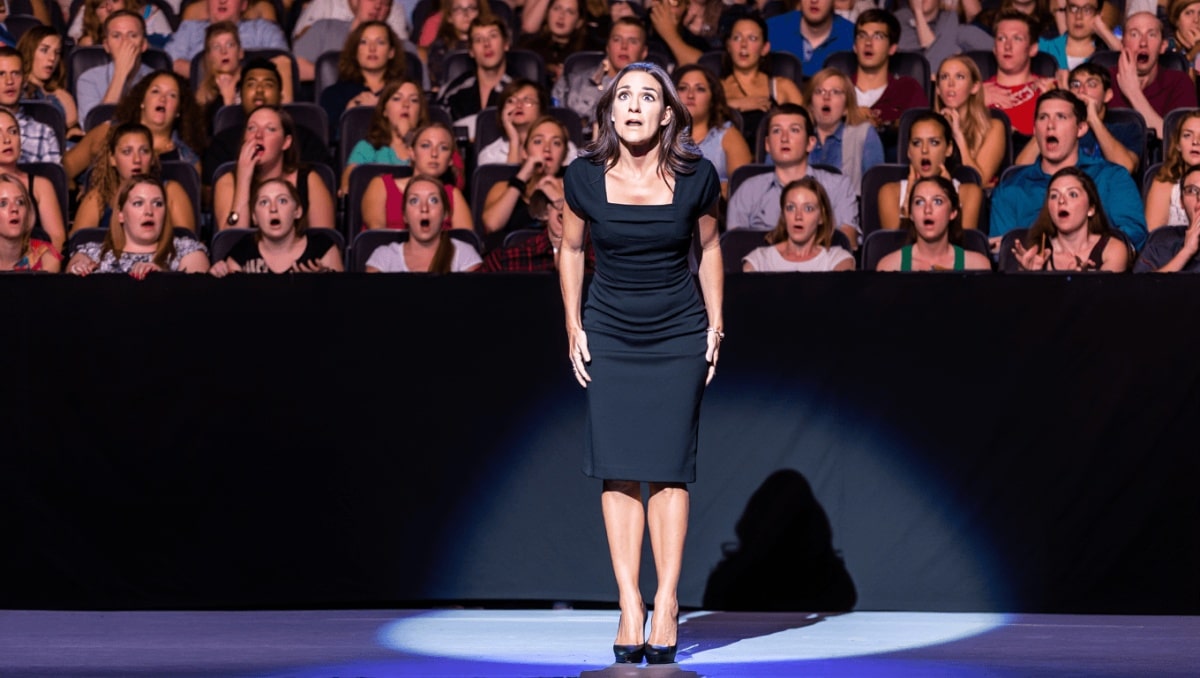
Nikki Glaser says the most unsettling moment of her career unfolded in the middle of a routine — a sudden, unexpected interruption that forced the show to stop and left the comedian reassessing what it means to be onstage. Her account, shared in a recent interview, underscores how quickly live performances can shift from routine to chaotic and why performers and venues are rethinking safety and protocols.
The interruption that changed the set
Glaser described a moment when an audience member unexpectedly surged from the crowd and rushed the stage. The person tried to grab the microphone and shouted, cutting through the set and creating an immediate security concern.
She said the response was instinctive: staff and other audience members moved quickly to restrain the intruder, while Glaser stepped back and the show was paused. The incident didn’t result in lasting physical harm, she emphasized, but the shock of having a stranger enter her personal space had a visible emotional toll.
How comedians respond in real time
Veteran performers often build on-the-fly defenses into their acts — verbal redirects, crowd work, and light physical space management. But Glaser’s story highlights a gap between routine heckling and events that pose genuine safety risks. What looks like an improvisational moment can become a security situation in seconds.
She also noted that industry expectations can push comedians to continue after disruption, even when doing so feels unsafe or emotionally taxing. That pressure affects how incidents are handled onstage and behind the scenes.
- Immediate risks: loss of control over the stage, potential injury, and trauma for performers or audience members.
- Emotional impact: performers may need time off, counseling, or changes in their stage approach.
- Operational changes: venues often revise security protocols and audience screening after high-profile incidents.
Wider implications for live entertainment
Glaser’s experience feeds into a larger conversation about how live events balance accessibility with safety. Comedy depends on intimacy — close quarters and spontaneous interaction — but that very closeness can produce vulnerabilities.
For venue operators, the takeaway is practical: clear security plans, visible staff, and rehearsed responses reduce the chance that an unexpected interruption escalates. For performers, it’s a reminder to set boundaries and to lean on promoters and managers when incidents occur.
Industry observers say these moments can also ripple outward, affecting ticket sales and artist willingness to tour certain markets. While many shows go on without incident, a few high-profile disruptions have prompted conversations about liability, insurance, and audience behavior standards.
Advice from the front line
- Keep a short, rehearsed plan for handling onstage intrusions.
- Work with venue staff to establish clear exit routes and a rapid response team.
- Make mental-health support available to performers after traumatic events.
- Clearly communicate audience conduct policies at the time of ticket purchase and on arrival.
Glaser, who remains active on the comedy circuit, framed the episode not as a reason to stop performing but as a lesson in preparedness. The moment was shocking, she said, but it also sharpened the conversation about what it takes to keep live entertainment safe — for comics, crews and audiences alike.