Show summary Hide summary
CBS Sunday Morning explores overtourism in Venice, Paris, Amsterdam on May 3, 2026. Correspondent Seth Doane travels to iconic European destinations revealing how 1.5 billion annual tourists are transforming the world’s most beloved cities. The epic story asks a troubling question: can beautiful places survive their own popularity?
🔥 Quick Facts
- Global tourism boom: Travel now represents 10% of the world economy and 1 in 10 jobs worldwide
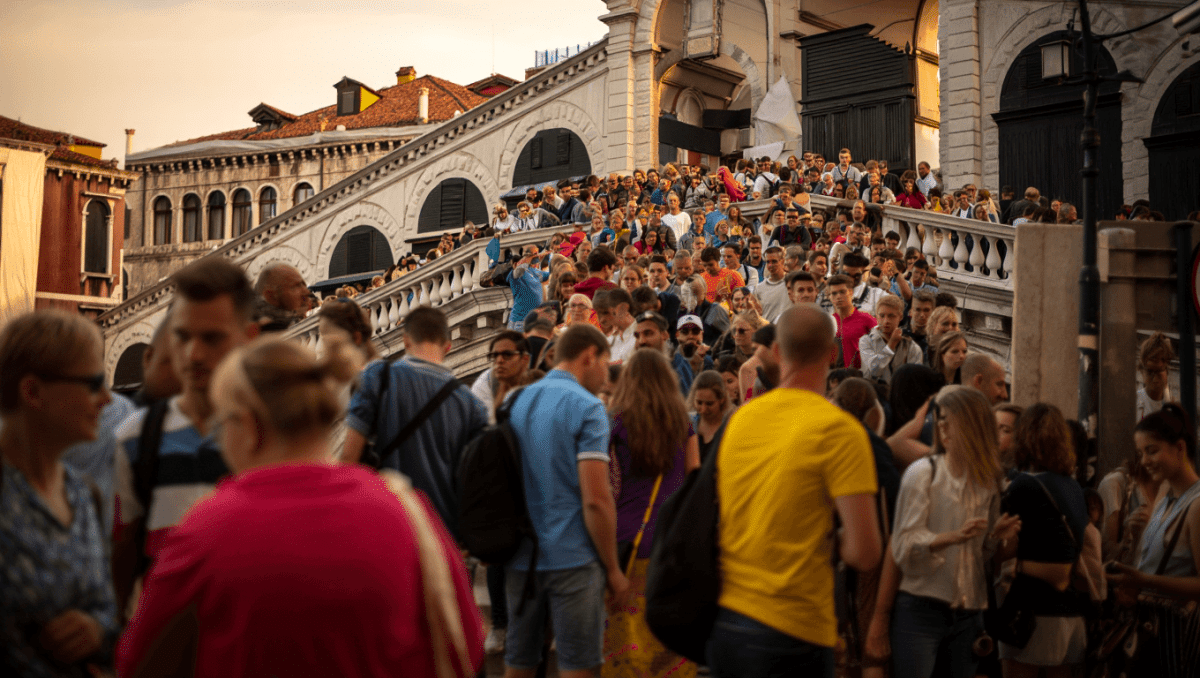
- Venice overwhelmed: Around 30 million visitors annually, or 600 times the local population
- Amsterdam’s crisis: Record 23 million tourists in 2024 with resident backlash and higher taxes
- New rules emerging: Venice charges €5-€10 entry fees, Portofino bans barefoot visitors
Social Media Fuels a Tourism Explosion
Travel writer Paige McClanahan traces how the tourism industry exploded from 25 million arrivals in 1950 to today’s 1.5 billion travelers yearly. Guidebooks, budget airlines, and social media have weaponized wanderlust, making even the most obscure locations famous overnight. McClanahan explains, “Where we see neighborhoods starting to serve tourists more than residents, that’s where we start to see problems.”
The evidence is stark. A Justin Bieber music video forced Iceland to close an entire canyon due to overcrowding. An Italian farmer installed a turnstile charging admission to an Instagrammable spot in the Dolomites. These aren’t isolated incidents but symptoms of a global tourism crisis spreading across continents daily.
CBS Sunday Morning explores overtourism in Venice, Paris, Amsterdam
Kash Patel cold open features Aziz Ansari as FBI director in Iran briefing sketch
The Louvre’s Breaking Point
Paris faces grinding pressure at the world’s most-visited museum, the Louvre. In June 2025, employees went on strike, unable to manage the crushing crowds anymore. McClanahan notes: “The Louvre epitomizes some of the pressures we’ve been talking about.” The museum’s iconic status on social media makes it a pilgrimage site that’s becoming physically unsustainable.
McClanahan observes a broader cultural shift unfolding across Europe: “Tourism is having a coming-of-age moment, where destinations are waking up to the fact that tourism needs regulation, taxes, urban planning laws, and physical infrastructure.” Cities are finally acknowledging that infinite growth destroys the very beauty attracting visitors in the first place.
Venice, Amsterdam, and Portofino Fight Back
| City | Annual Visitors | Key Measure |
| Venice, Italy | 30 million | €5-€10 day-tripper fees, cruise ship bans |
| Amsterdam, Netherlands | 23 million (2024 record) | 12.5% tourist tax, highest in Europe |
| Portofino, Italy | Undisclosed | €500 fines for barefoot, shirtless behavior |
Venice charges day-trippers €5 to €10 and has banned massive cruise ships from entering its fragile lagoon. Portofino banned drinking alcohol, sitting on ground, and being barefoot in peak times with hefty €500 fines. These aren’t aspirational policies but desperate measures.
“Whether tourism is going to be more of a force for good in the world or more of a destructive force is really up to us to decide. If we all come together and treat tourism with the respect and scrutiny and responsibility that it deserves, we can use our power to turn tourism into a constructive force for humanity.”
Paige McClanahan, Travel Writer and Author
Amsterdam Residents Push Back Against Invasion
Edwin Scholvinck has lived in Amsterdam’s famous red-light district for 33 years, but friends stopped visiting because of overwhelming tourist mobs. Tours are banned in his neighborhood now, and bars close earlier. He joined a community campaign called “We Live Here” to remind visitors that residents matter too, not just party scenes.
Tour operator Anouschka Trauschke felt the moral conflict acutely. She wanted to be “an ambassador” but recognized she was “part of the problem.” Now she leads “Tours That Matter,” which explores less-trafficked neighborhoods like North Amsterdam’s former shipyard. But is this enough? With over 20 million visitors annually, boutique solutions feel like drops in an ocean.
Can Traveling Responsibly Save These Cities?
McClanahan argues solutions must be tailored to each community, but much responsibility rests on travelers themselves. Spain removed tens of thousands of illegal Airbnbs, and Amsterdam’s 12.5% tourist tax is Europe’s highest. Yet cities like Amsterdam somehow exceeded their own 20 million visitor cap, with economist Jasper van Dijk saying current measures arrived “quite a little too late.”
The real question isn’t whether cities can cope with tourism but whether tourism can be reformed before beloved destinations become hollow theme parks. McClanahan insists: whether travel becomes constructive or destructive depends entirely on how we, the travelers, choose to act moving forward today.
Sources
- CBS News Sunday Morning – May 3, 2026 episode on overtourism featuring correspondent Seth Doane
- Paige McClanahan – Author of “The New Tourist: Waking Up to the Power and Perils of Travel” (Scribner)
- Travel & Tourism World – Coverage of European overtourism crisis in 2026