Noah Kahan’s new album, The Great Divide, is finding a surprising home among younger listeners — and not just because of catchy hooks. Released this month, the record has become a focal point for conversations about mental health, online culture and what it means to feel rooted in a place while your life accelerates elsewhere.
The album opens quietly with “End of August,” a piano-led piece that continues the reflective mood Kahan established on his previous work. Rather than chasing a different sound, he leans into familiar landscapes and small, specific moments — road trips, interstate loneliness, late-night conversations — to build an intimate atmosphere that feels immediate to fans.
Why Gen Z is responding
Beyond streaming numbers, the response on social platforms has been distinct: clips of songs from The Great Divide are being repurposed as personal testimony. One track in particular, “All Them Horses,” has become a soundtrack for short videos documenting therapy progress, late-night thinking and transition moments. Creators label it everything from an “eldest daughter anthem” to a theme for midlife jokes, and several clips have attracted hundreds of thousands of views.
- Authenticity: Kahan frames anxiety and self-doubt without glamour or grandstanding.
- Relatable details: New England imagery and road-trip scenes make his songs easy to visualize and remix.
- Humor as relief: Wry lines and self-deprecation give heavy topics a human scale.
- Community-building: Concerts and social posts turn private pain into something shared.
Kahan’s approach to difficult subjects
In an era when mental health language often becomes shorthand or aesthetic, Kahan’s songwriting feels purposely grounded. He resists turning suffering into a trend; instead, he offers space for discomfort. That restraint is part of the appeal — listeners can dwell in an emotion without being asked to perform it.
Take “Downfall”: on its surface the refrain could read as bitterness, but the song unspools as a study of attachment and inability to move on. The repetition in the final lines underscores the stuck quality of the narrator, not triumph at another’s expense.
Live shows as collective processing
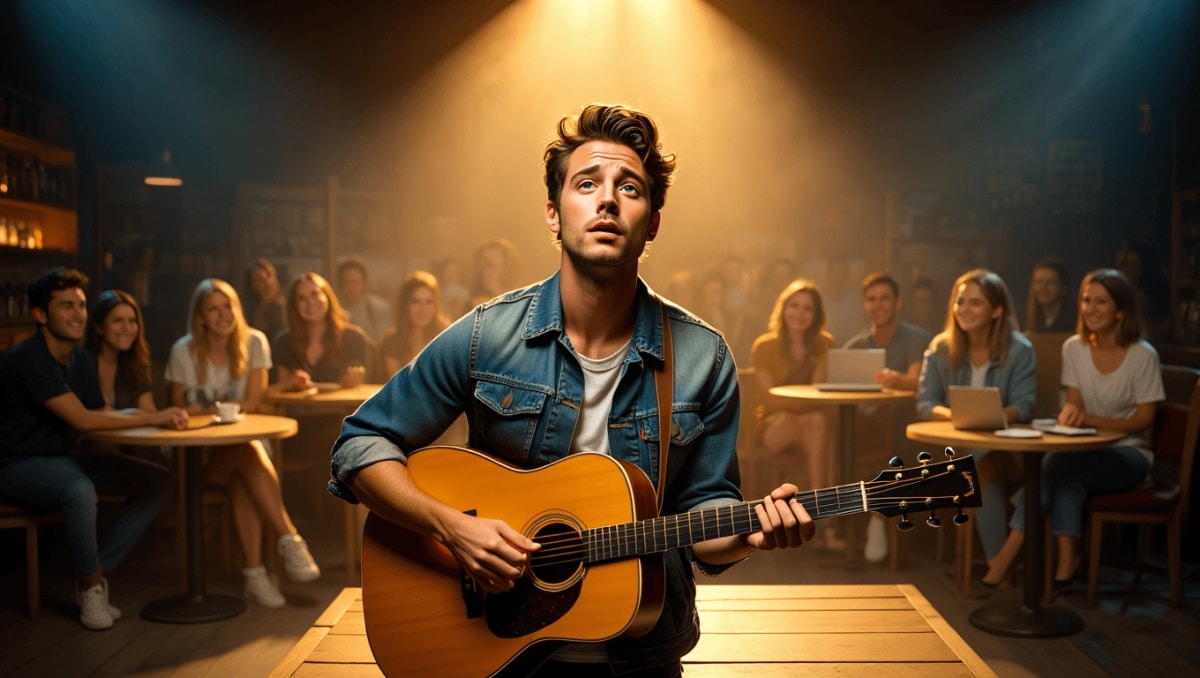
Attending a Kahan concert often feels less like a pop set and more like a shared therapy session. He’ll joke about therapy, reference fractured families, and sometimes admit the conflicting feelings fame brings. Those moments — equal parts levity and confession — let crowds release emotions in public without spectacle.
For many fans, that public processing is crucial: a ticket becomes access to a room where sadness, nostalgia and small mercies are all allowed.
Behind the scenes, Kahan has spoken openly about the pressures that followed his previous breakthrough. He went from regional folk scenes to Grammy attention and arena dates, and he’s been candid about how that rapid elevation complicates a sense of home and satisfaction. The new album, he says, is the result of years of conflicting emotions — fear, gratitude and the quiet steadiness of personal relationships and collaborators.
Tracks to know
- End of August — A soft piano opening that sets a contemplative tone.
- All Them Horses — The TikTok-favorite that users have paired with therapy and transition stories.
- Downfall — A cyclical meditation on holding on to past connections.
- Dan — A late-album reflection on mortality and savoring brief, ordinary nights.
The final moments of the record are quietly philosophical: a song written around a campfire that considers loneliness and the small consolation of being present with friends. It’s a thread back to Kahan’s earlier work — not a reinvention, but a deepening.
For readers, the takeaway matters beyond fandom: The Great Divide is part of a larger shift in how younger audiences use music. Songs are no longer only entertainment; they’re a language for processing therapy, grief and identity in public. That makes albums like Kahan’s culturally relevant — not because they offer answers, but because they offer a place to sit with complicated feelings together.
Whether you stream it, watch concert clips online, or hear a snippet in someone’s social post, this album is shaping how a generation talks about emotional labor. For those tracking music, mental health narratives or online trends, The Great Divide is one to watch.