Chappell Roan’s 2023 single “Pink Pony Club” briefly woke the crew of Artemis II during a live NASA broadcast, a small moment that underscored how pop culture is finding its way into humanity’s return to deep-space flight. The cue played for roughly a minute before being cut off, prompting laughter from the astronauts and a lighthearted promise from mission control to “try again next time.”
Short soundtrack, big symbolism
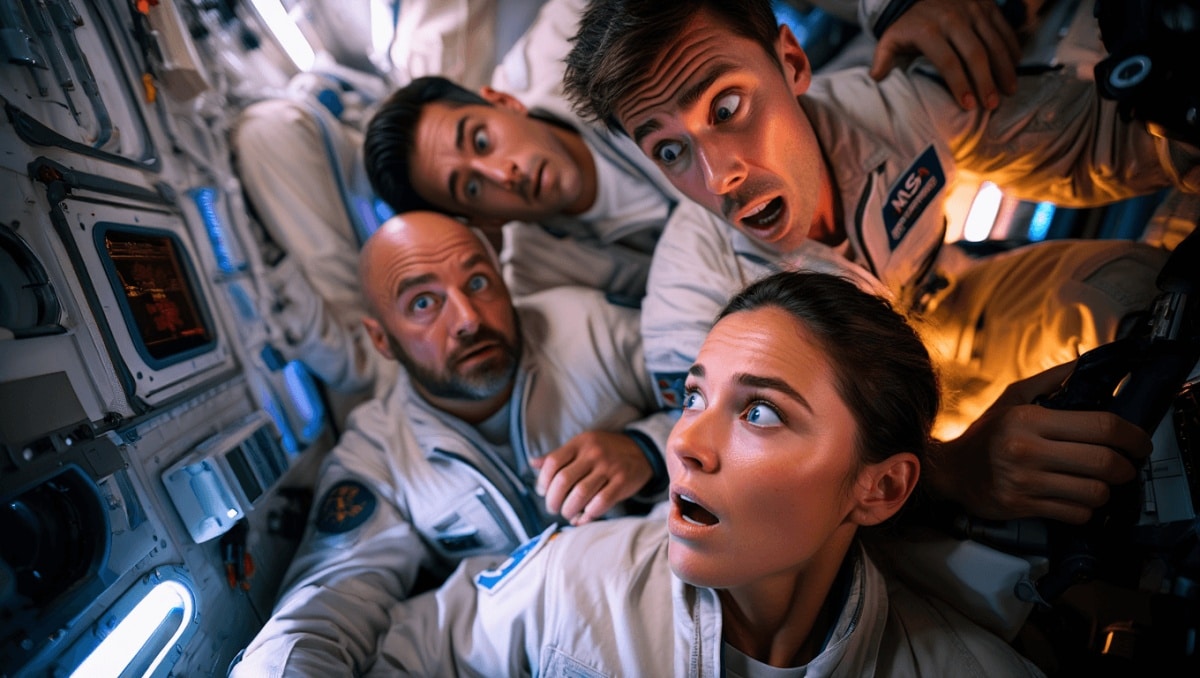
On the morning of April 4, flight controllers used Roan’s pop anthem as a wake-up tone for the four-person Orion crew during a widely viewed NASA livestream. The track ended unexpectedly after about sixty seconds, and Commander Reid Wiseman joked with mission control about everyone waiting for the chorus. The Capsule Communicator offered a brief apology and outlined the crew’s schedule for the day.
This moment matters beyond the gag: wake-up songs are a long-standing NASA custom intended to keep morale high on demanding missions, and the choice of a contemporary pop hit highlights how the agency’s work intersects with everyday culture — and how the public follows missions not only for science but for human moments.
Where Artemis II stands now
The mission launched from Kennedy Space Center in Florida and left low Earth orbit in the days that followed. The four crew members — Commander Reid Wiseman, Victor Glover, Christina Koch and Canadian Space Agency astronaut Jeremy Hansen — are on a lunar flyby that will give them rare views of the moon’s far side. NASA says that during a roughly six‑hour window on April 6 the spacecraft, sun and moon will align so the team can see about 20 percent of the far side illuminated by sunlight.
- Mission: Artemis II, crewed lunar flyby
- Wake-up track: “Pink Pony Club” by Chappell Roan
- What happened: Song played as alarm; cut after ~1 minute; crew reacted with laughter
- Crew: Reid Wiseman, Victor Glover, Christina Koch, Jeremy Hansen
- Key dates: Launch from Kennedy Space Center in early April; notable far-side viewing window on April 6
Artist context and public reaction
Roan, a Grammy-winning performer who has gained significant attention in recent years, recently faced scrutiny over an incident in Brazil while on tour. She posted a video explaining that the security personnel involved were not her personal guard and disputed suggestions of inappropriate behavior toward a mother and child. The wake-up-song selection aboard Artemis II comes amid that public scrutiny and serves as a reminder of how quickly artists’ work can circulate across different forums — from concert stages to space missions.
Social media viewers and space fans reacted with amusement and curiosity. For many, the brief audio clip was a light counterpoint to technical updates and a humanizing snapshot of life on a complex mission.
What this says about public engagement
Small touches like wake-up music help bridge the gap between technical achievement and public interest. They make spaceflight relatable and offer moments that are easy to share across mainstream and social channels — which can increase attention to scientific milestones and sustain engagement over a mission’s duration.
As Artemis II continues its trajectory, these human moments — a song cut short, a shared laugh, a promise to try again — will likely draw people back to NASA’s streams and coverage, keeping the mission visible as it pursues its scientific and exploratory goals.