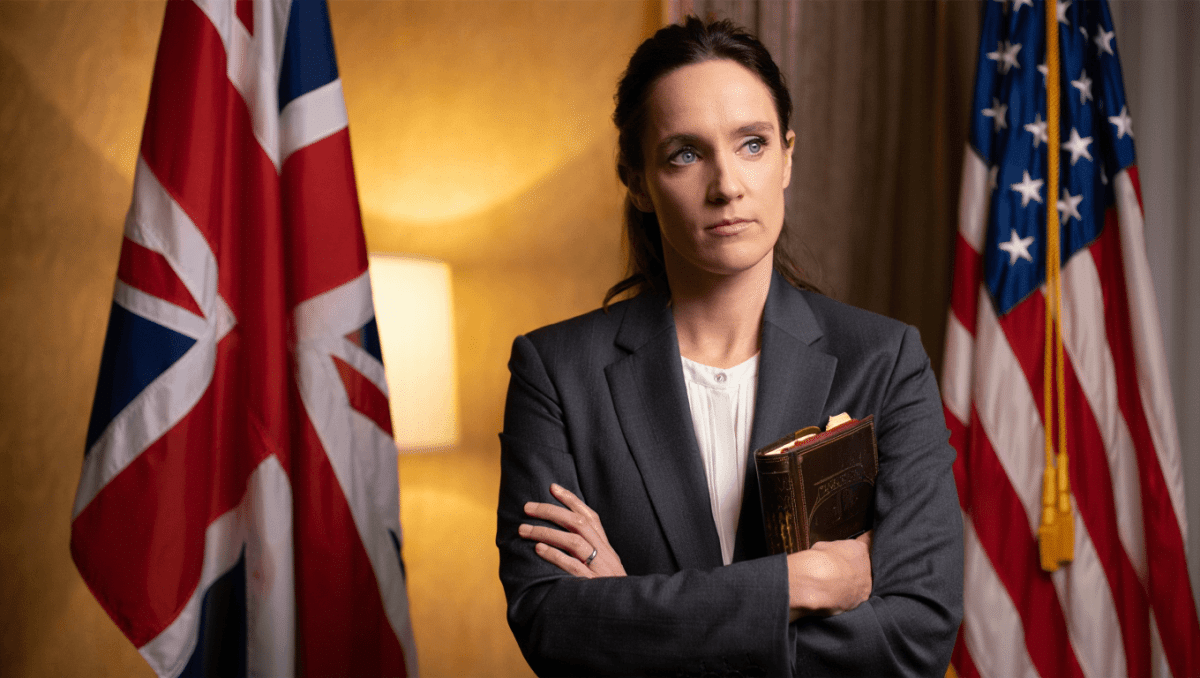
Lucy Worsley flips American Revolution history tonight, framing the nation’s 250th anniversary story as something far more complicated than triumph. The British historian premieres her groundbreaking PBS series exploring the revolution through London’s eyes, where it felt like a messy divorce rather than a defeat.
🔥 Quick Facts
- Premiere Tonight: April 7, 2026 at 9 p.m. ET on PBS and local stations
- Two Episodes: ‘The Breakup’ (Apr 7) and ‘A Messy Divorce’ (Apr 14)
- Worsley’s Angle: British perspective on emotional fallout of American independence
- Key Theme: Revolution could have had different outcome with couple’s therapy
From Perfect Union to Broken Hearts
Lucy Worsley opens her investigation with a stunning premise: Great Britain and the American colonies began as a nearly perfect match. King George III studied hundreds of books about colonial life. The colonies saw themselves as proud British subjects. Then everything fractured.
The documentary examines what changed. The Seven Years’ War left Britain in debt. Parliament demanded the colonies pay their share. In 1765, the Stamp Act imposed new taxes. The colonists responded with fury: they boycotted British goods with such force that parliament repealed the act within months without collecting a single cent.
This could have been the ending, Worsley suggests. Instead, Britain remained obsessed with control, passing the Townshend Acts in 1767, taxing everything from glass to tea. The celebrations stopped. The fractures deepened.
When Love Turns to Resentment
Benjamin Franklin played the ultimate marriage counselor, representing colonial interests in London from 1757 to 1775. He believed the relationship could be salvaged on more equal terms. The colonies didn’t want to stop being British. They wanted respect, representation, autonomy.
King George III refused to compromise. He sent 3,500 British troops to Boston, a city of only 16,000 people. The soldiers competed for local jobs. Tensions exploded on March 5, 1770, when gunfire erupted. The Boston Massacre killed five colonists. British newspapers and American papers told completely different stories about what happened. The them versus us mentality hardened on both sides.
The Breaking Point: Documents You’ll See Tonight
| Event | Date | Impact |
| Stamp Act | 1765 | Colonial boycott forces repeal within months |
| Townshend Acts | 1767 | Taxes on goods reignite anger |
| Boston Massacre | Mar 5, 1770 | British soldiers kill 5 colonists |
| Boston Tea Party | Dec 16, 1773 | Colonists destroy 92,000 lbs of tea |
| Declaration of Independence | July 4, 1776 | Break becomes official rupture |
Worsley examines documents including Thomas Jefferson’s early drafts of the Declaration. They read less like a patriotic anthem and more like a breakup letter. Jefferson wrestled with regrets and nostalgia even as he penned humanity’s most famous independence statement. He didn’t want the brutal cut history demanded.
“This was a perfect union that went wrong. It could have gone a different way with couple’s therapy.”
— Lucy Worsley, British Historian
Britain’s Secret Perspective on the War
The documentary reveals how King George III himself nearly gave up his throne. In 1782, he drafted a letter threatening abdication. He felt the weight of losing empire. He feared that losing the American colonies meant losing everything: the Caribbean, India, British superpower status. This wasn’t the image of a tyrant. It was a man drowning under pressure.
Worsley argues George III wasn’t evil, just trapped by ministers obsessed with debt and control. British merchants opposed the war because they had money invested in the colonies. British working people didn’t understand why they fought their own cousins. The Gordon Riots of 1780 broke out over Catholic military service, but really reflected exhaustion. Britain was bleeding resources. The public wanted out.
Can You Watch It Tonight, and Why Should You Care?
Yes, tonight’s premiere airs at 9 p.m. ET on PBS, online at PBS.org, and via the free PBS app. The second episode, ‘A Messy Divorce,’ follows April 14. Worsley offers something missing from American history classes: the emotional, complicated British experience of losing an empire. She interviews historians, examines primary documents, and challenges the triumphant narrative with nuance. On America’s 250th anniversary year, understanding the other side transforms how we remember 1776.
Sources
- Smithsonian Magazine – In-depth feature on Worsley’s reframing of the American Revolution as a messy divorce
- PBS – Official series information and historical analysis of British perspectives during the war
- PBS Stations (WPBS, KPBS, AZPBS) – Confirmed premiere dates and episode information for April 2026