
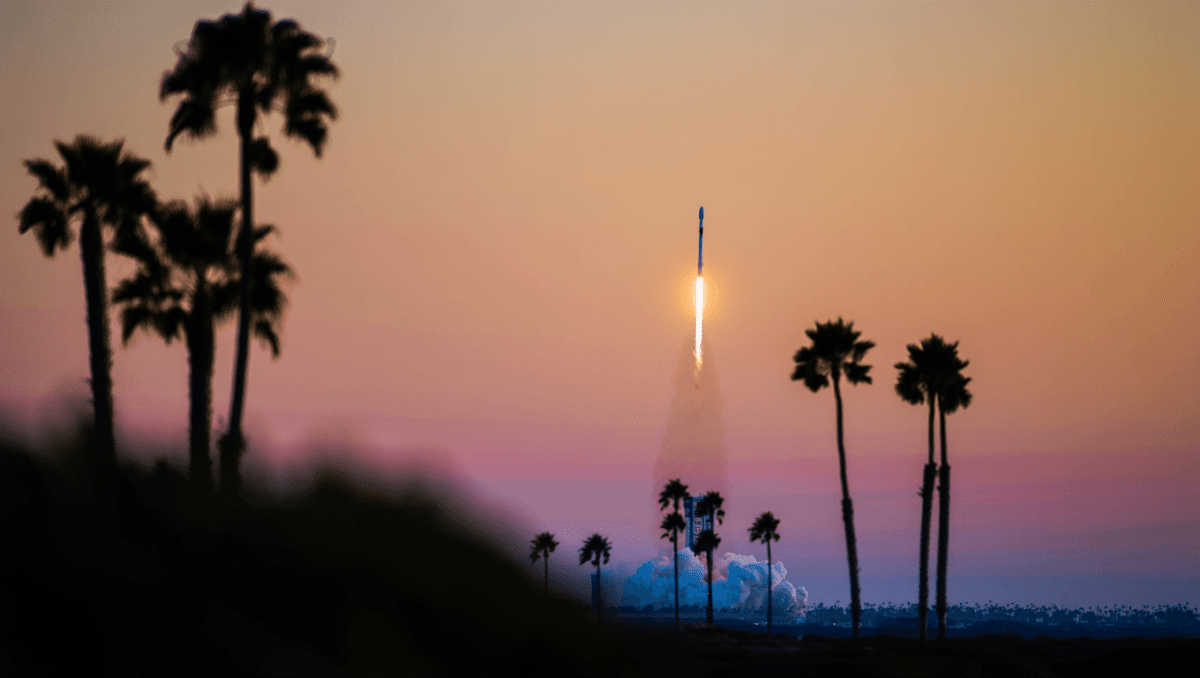
SpaceX just delivered a spectacular light show across Southern California on Monday evening. 25 Starlink satellites launched into orbit in a mission that had stargazers craning their necks skyward. Here’s everything you need to know about the breathtaking display.
🔥 Quick Facts
- Launch Time: Monday, April 6 at 7:49 p.m. PT from Vandenberg Space Force Base
- Satellite Count: 25 Starlink internet satellites deployed to low-Earth orbit
- Visibility: Bright, visible streak across Southern California skies just after sunset
- Booster History: Falcon 9 B1103 completed its 10th successful flight
The Moment The Sky Lit Up
SpaceX’s Falcon 9 roared to life at 7:49 p.m. Pacific Time, launching from Space Launch Complex 4 East at Vandenberg Space Force Base in California. The timing was perfect. By launching just after sunset, the rocket’s trajectory created an unmistakable glowing streak across the darkening sky. Residents from Los Angeles to San Diego reported witnessing the stunning display.
The launch was originally scheduled for Sunday evening but was postponed due to unfavorable conditions. Monday’s window proved ideal, delivering one of the most visually captivating rocket launches in recent memory. The bright plume remained visible for several minutes as the rocket climbed higher into the upper atmosphere.
Meet The Starlink Constellation
Starlink represents SpaceX’s ambitious vision for global broadband connectivity. The constellation now includes over 9,000 active satellites in orbit, with more launching regularly. These 25 newest additions will join the existing network at an altitude of approximately 550 kilometers above Earth. The satellites operate in coordinated patterns to provide seamless internet coverage across the globe.
Each satellite is equipped with advanced technology enabling high-speed internet capable of supporting streaming, video calls, and online gaming. The system works by connecting to small antennas that users install at their homes, eliminating the need for traditional fiber optic cables in remote areas.
Technical Details of The Mission
| Mission Element | Details |
| Mission Name | Starlink 17-35 |
| Rocket | Falcon 9 Booster B1103 (10th flight) |
| Launch Site | Vandenberg Space Force Base, California |
| Liftoff Time | 7:49 p.m. PT, April 6, 2026 |
The first stage booster successfully performed a controlled landing on the droneship positioned in the Pacific Ocean. This marks another milestone in SpaceX’s sustainability mission, as the company continues improving rocket reusability. The 10th flight of Booster B1103 demonstrates the reliability of the Falcon 9 platform.
How To Spot Starlink Satellites Tonight
Starlink satellites frequently become visible from Southern California in the days following deployment. These bright points of light move rapidly across the sky in coordinated formations. The best viewing windows occur shortly after sunset or just before sunrise, when darkness allows visibility but the satellites still catch direct sunlight.
Free tracking apps like Find Starlink and Starwalk provide real-time predictions of when satellites will pass over your location. Simply enter your city and receive notifications. Recent observers reported seeing distinct trains of satellites moving together, a spectacular sight that requires no telescope or special equipment.
What Does This Mean For California’s Sky Watchers?
The April 6 launch marks another chapter in SpaceX’s mission to blanket Earth with broadband access. For Southern California residents, these launches continue inspiring wonder and curiosity about space exploration. The visible rocket plumes have sparked countless conversations about humanity’s expanding reach beyond our atmosphere.
Astronomers have noted that while Starlink satellites pose challenges for ground-based observatories studying distant stars, the constellation’s internet service bridges connectivity gaps for underserved communities. SpaceX continues optimizing satellite design to reduce light reflection and minimize impact on astronomy. Will future launches be even more spectacular, or will stealth technology change how we experience rocket launches from Earth?
“SpaceX successfully launched 25 Starlink satellites from its Falcon 9 rocket on Monday evening, just after sunset, visible over Southern California.”
— CBS 8 San Diego, Launch Coverage
Sources
- CBS 8 San Diego – Local coverage of SpaceX Starlink 17-35 mission launch and visibility
- SpaceX Official Website – Confirmed mission details, launch time, and satellite specifications
- Starwalk Space – Starlink visibility tracking and viewing instructions for Southern California