Kyle MacLachlan’s new memoir, released in 2026, opens a window onto one of cinema’s most chaotic shoots: David Lynch’s 1983 production of Dune. The recollections matter now because they retrace how practical effects, costume decisions and on-set improvisation shaped a film whose influence still ripples through contemporary production design and special effects.
Morning cold, midday furnace
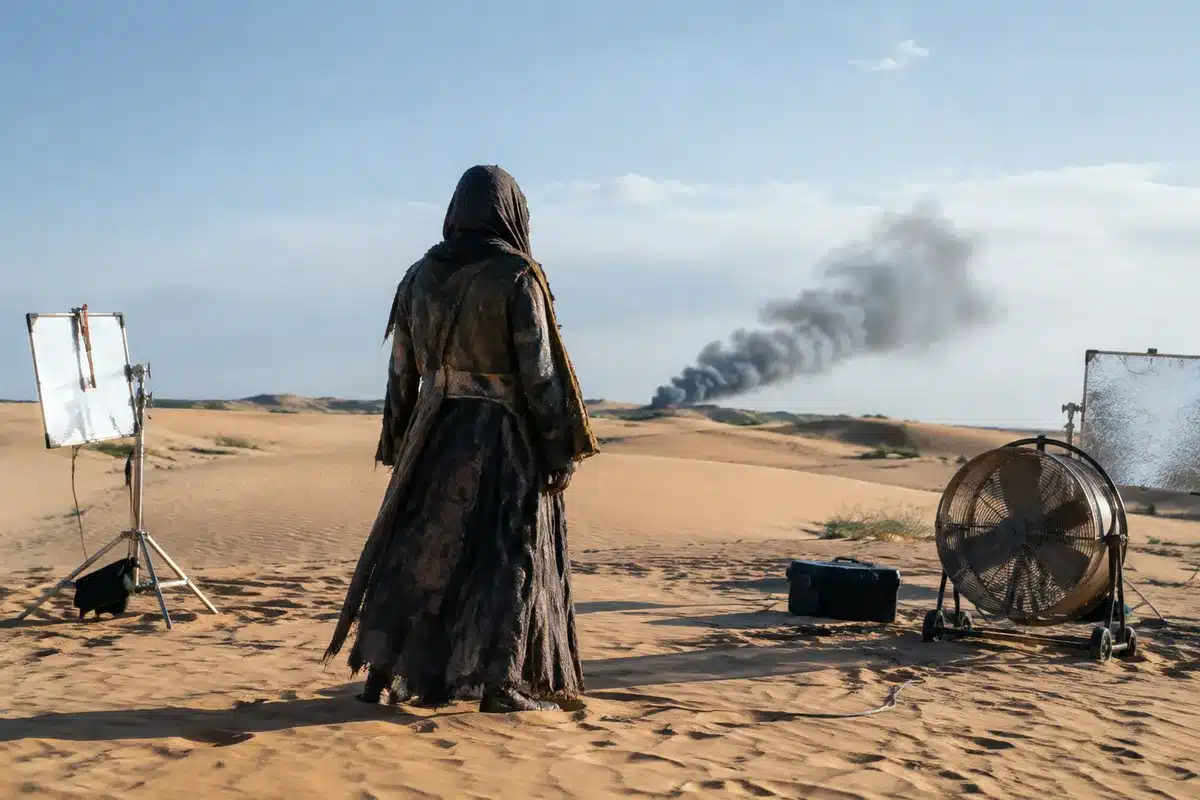
The book returns repeatedly to the physical reality of shooting in the Chihuahuan Desert—nippy before sunrise, then searing as the day climbs. Actors wore heavy, custom-fitted suits that trapped sweat and bound movement; MacLachlan describes them as constraining, forcing him to conserve every motion on camera. The costumes aimed for world-building, but they came at a cost: discomfort, limited mobility, and lengthy make-up rituals each night.

On another practical level, the crew tried to recreate Arrakis’s bleak, sunless sky by burning tires on distant dunes. When the wind blew the wrong way, the whole sequence had to be paused: you could design a scene, but you could not command the wind.
On-set improvisation and visible craftsmanship
MacLachlan’s account highlights how the production leaned on tactile solutions rather than digital fixes. Giant reflectors were used to sculpt faces; airplane-style fans hurled a calcium-based clay—fuller’s earth—across actors’ hair and teeth to give frames a lived-in texture; effects teams built analog props on the fly when a scene’s internal logic needed reinforcement. One example involved constructing a gauge so a line about a sandworm’s distance would read convincingly in-frame.

- Key practical effects: burning tires for sky color, fans flinging fuller’s earth, on-set prop fabrication.
- Costume realities: latex-glued hair extensions, restrictive stillsuits that limited arm movement, and a throat-mounted “weirding module” that could be jarring in close contact.
- Production constraints: brownouts and generator reliance in Mexico, customs and logistics hurdles, and frequent weather-dependent delays.
- Legacy notes: costume aesthetics from this shoot later influenced major designs in Hollywood, including armored suits seen in later blockbusters.
Those improvisations were not performed by anonymous hands. MacLachlan names a slate of seasoned collaborators—Oscar-winning technicians, established designers and actors at various stages of their careers—who kept the shoot moving despite the obstacles.
Actors finding a rhythm amid the chaos
The memoir paints intimate portraits as well as logistical snapshots. Patrick Stewart, then transitioning from stage to screen, is remembered for a resonant, theatrical voice and a careful curiosity about the film’s internal logic. MacLachlan recounts moments of gentle mentorship and mutual bewilderment as two theater-trained actors adapted to the technical demands of a sci‑fi epic.
Everett McGill, who played the Fremen leader Stilgar, appears as the seasoned counterpoint: taciturn, grounded, and full of set stories. MacLachlan writes about McGill’s ritual of inhaling moisture from a converted bottle to protect his vocal cords—an idiosyncratic detail that underlines how actors devise personal techniques to survive demanding shoots.
There were also clashes between fidelity to the source material and commercial calculus. When MacLachlan pressed for costume elements that mirrored Frank Herbert’s book—hoods, sealed mouthpieces, more protective gear—producers pushed back, arguing that star faces needed to be recognizable on screen. The tension between narrative authenticity and box-office visibility is a throughline in his recollections.
Small moments, lasting impressions
MacLachlan’s anecdotes are specific and tactile: the taste of desert clay that lingers in the mouth, the sting when a prop impinges an actor’s throat during a hug, the brief camaraderie formed by waiting together for an unpredictable take. Those vignettes do more than entertain; they illuminate how large-scale filmmaking is often a sequence of tiny, stubborn problems solved under pressure.
They also show why practical filmmaking still matters. Techniques born of necessity—hand-built gauges, on-set dusting, improvised props—continue to inform modern productions that prize texture and realism over purely digital creation. For students of film craft, the memoir supplies a trove of working methods and reminders that constraints can sharpen creativity.
Why this matters today
As studios increasingly balance practical effects with CGI, MacLachlan’s account is a timely document of hands-on filmmaking. It connects the 1983 shoot to current debates about authenticity in visual storytelling and the value of artisanal problem-solving on set. For readers curious about the early careers of well-known actors, the memoir offers a front-row seat to formative professional moments—and to a director whose approach remains divisive and influential.
Excerpts and anecdotes in the book make clear that big productions are not only technical exercises but communal endeavors shaped by improvisation, personality and the weather. That combination—craft, ego, and contingency—remains central to how films are made today.
Fictional Selves by Kyle MacLachlan is published by Crown (Penguin Random House), 2026. The memoir supplies the firsthand recollections summarized here.