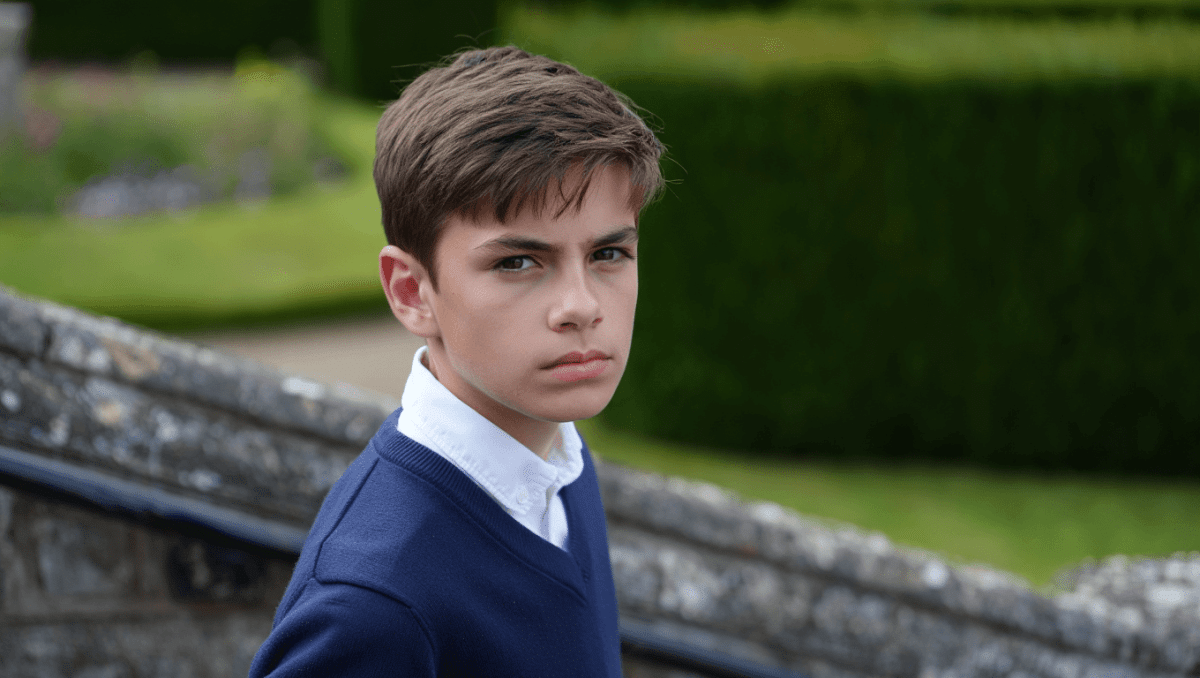
As Prince George moves into his teenage years, recently circulated photographs are prompting widespread commentary about his resemblance to his father. The images—quiet, candid and widely shared—have reignited public interest in the young prince and what his appearance may mean to onlookers watching the royal family evolve.
At a glance, the likeness is striking: commentators and social feeds point to familiar facial lines, a similar profile and the same measured expression often seen in public photos of Prince William. Observers note that this resemblance feels especially pronounced now that George is growing taller and his features are maturing.
Visual echoes between generations
Some specifics stand out when comparing recent pictures of the teenager with earlier images of his father. The way he holds his head in portraits, the slope of the nose and the set of his mouth have drawn repeated mention, though lighting and angle naturally influence perception.
These comparisons are common when a public figure’s child enters adolescence. Physical likeness is an easy visual shorthand for audiences and can shape early impressions about personality or temperament—even though such inferences are superficial and often premature.
- Facial structure: Commentators point to a similar jawline and cheek contours.
- Expression: A reserved, composed look that recalls William’s public photographs.
- Profile: Side views in recent images have highlighted comparable nose shape and forehead slope.
- Posture: Instances of poised, upright bearing have also invited parallels.
Why this matters now
Physical resemblance alone would be a mild curiosity if George were not already a public figure by birth. Entering adolescence brings increased media attention and conversation about identity, family lineage and the long arc of public life. For the royal household, images like these feed existing narratives—continuity, generational succession and the idea of a recognizable family visage.
There are practical consequences as well. Photographs that go viral can intensify scrutiny on a young person who has limited control over their public image. That raises routine ethical questions about privacy and the responsibilities of outlets and social users when sharing images of minors.
Public reaction and broader context
Responses to the photos have been mixed: some commenters celebrate the resemblance as a tender sign of family continuity, others caution against treating a child like a public commodity. Media outlets typically treat such visual comparisons as eye-catching but lightweight news—brief, shareable items rather than investigative pieces.
Beyond the immediate chatter, the episode underlines a steady media dynamic: as members of prominent families age, everyday personal milestones—first day at secondary school, sports achievements, or birthday portraits—become moments of public interest. That attention influences how the individual is presented and perceived over time.
For now, the takeaway is straightforward. The photographs offer a momentary lens into family likeness and public fascination, but they reveal little about the young person himself beyond outward appearance. Observers will continue to notice similarities; what matters most for George’s future will be the choices made by his family and the media around him as he grows up in the spotlight.