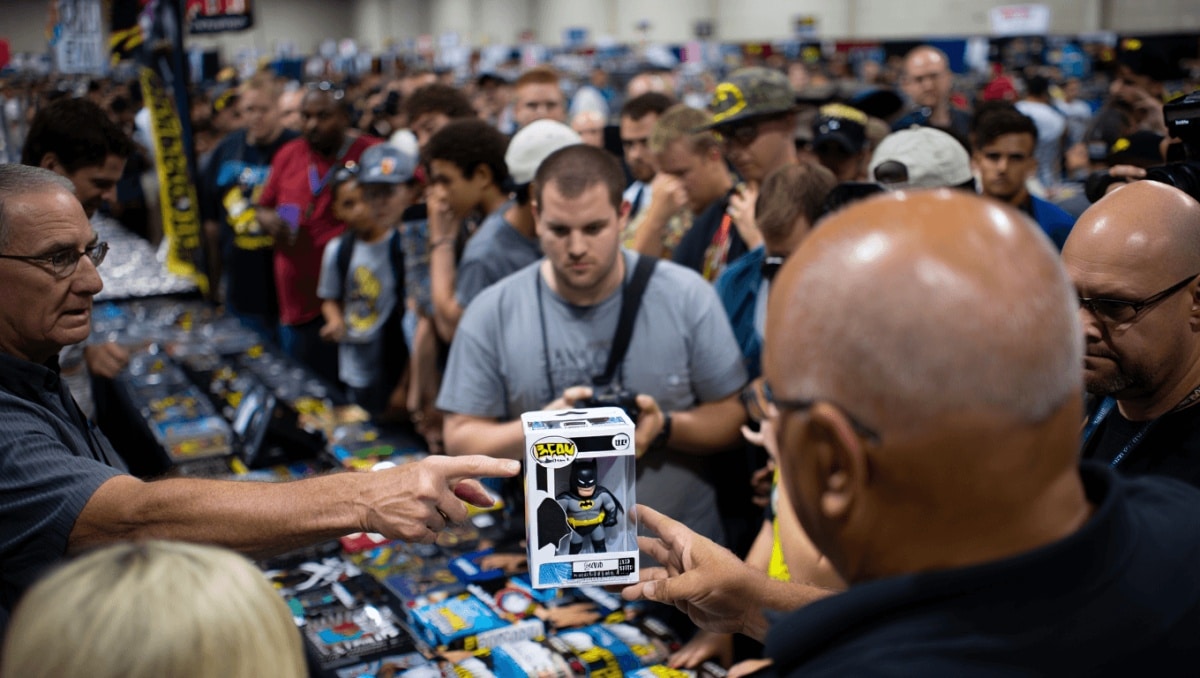
At this year’s San Diego Comic-Con, Funko’s sprawling booth became the must-visit attraction for collectors and casual fans alike, drawing long lines and selling out exclusive releases within hours. The company’s blend of limited drops, in-person experiences and event-only products turned the convention into a live marketplace where scarcity—and the secondary market—drive huge attention.
The Funko space occupies a far corner of the San Diego Convention Center, a showroom-size presence amid the mix of publishers, studios and toy makers that converge on the annual festival — which attracts roughly 130,000 attendees. Instead of quiet autograph tables, much of the hall now feels like a trade fair for major brands: Lego, Hasbro, Nickelodeon and others share the floor with comic creators, but few draws match the frenzy around Funko’s displays.
What’s selling out — and why it matters
Funko’s appeal is twofold: the familiar Pop! figures remain impulse-friendly collectibles, and the company deliberately restricts quantities of certain pieces to create urgency. That approach fuels excitement at the booth and feeds high prices on resale platforms, a dynamic that has shaped the collectibles market for years.
Funko frames the convention presence as a chance to meet buyers directly. CEO Josh Simon has emphasized that the company values face-to-face interaction with attendees and prefers products to land in the hands of real fans rather than automated resellers. Still, limited-edition runs and daily drops make many items attractive targets for flippers.
- Mondo Wizard of Oz poster — a run of 100 prints, with a fraction produced in Wicked Witch green for greater rarity.
- DC Absolute Pops — three stylized figures reimagining Batman, Superman and Wonder Woman from the popular Absolute line.
- Invincible daily drops — Funko released a different character each day tied to the Amazon animated hit; one example, Movincihawk, was limited to under 500 units and sold for $60 at the booth.
- Pop! Yourself (Spider-Man theme) — an on-site customization experience that lets fans create a Pop of themselves, packaged as an event exclusive.
- Pop! Mystery — a blind-bag series previewed at the show (themes include K-pop Demon Hunters, One Piece and classic Warner Bros. horror); one one-of-a-kind figure will be repurchased by Funko for $10,000.
These items are designed to reward attendance: some are day-only releases, others are intentionally scarce. For collectors, that means either lining up in person or paying a premium on the secondary market — a tension Funko acknowledges but does not eliminate.
Beyond the toys: events and community
Funko also staged social events tied to the convention, including its ticketed Funko Fun Days party. The gathering, which mixes industry guests and fans, includes exclusive swag, games and raffles; tickets reportedly sold out within minutes when they went on sale. The company has a habit of distributing prototypes and rare pieces through on-site contests, which amplifies buzz among attendees.
That mix of festival atmosphere and limited commerce has consequences. For fans who want guaranteed access, attending in person or joining official raffles increases the odds of securing an item at retail price. For casual buyers, the secondary market may be the only realistic option — often at dramatic markups: listings for Movincihawk climbed into the thousands on auction sites within days.
Practical takeaways for collectors
- Plan ahead: review official schedules and daily-drop announcements so you’re ready for timed releases.
- Use official channels: enter booth raffles or on-site experiences rather than relying on online scalpers.
- Set a budget: exclusives can be tempting, but resold prices often far exceed retail.
- Verify provenance: if buying on secondary sites, check seller history and photos to avoid fakes.
Funko’s Comic-Con playbook — limited runs, experiential activations and carefully curated scarcity — keeps collectors engaged and the secondary market lively. For attendees, the payoff can be a prized shelf piece and a story about the chase; for the broader market, it’s another example of how pop-culture events increasingly function as launchpads for high-demand collectibles.