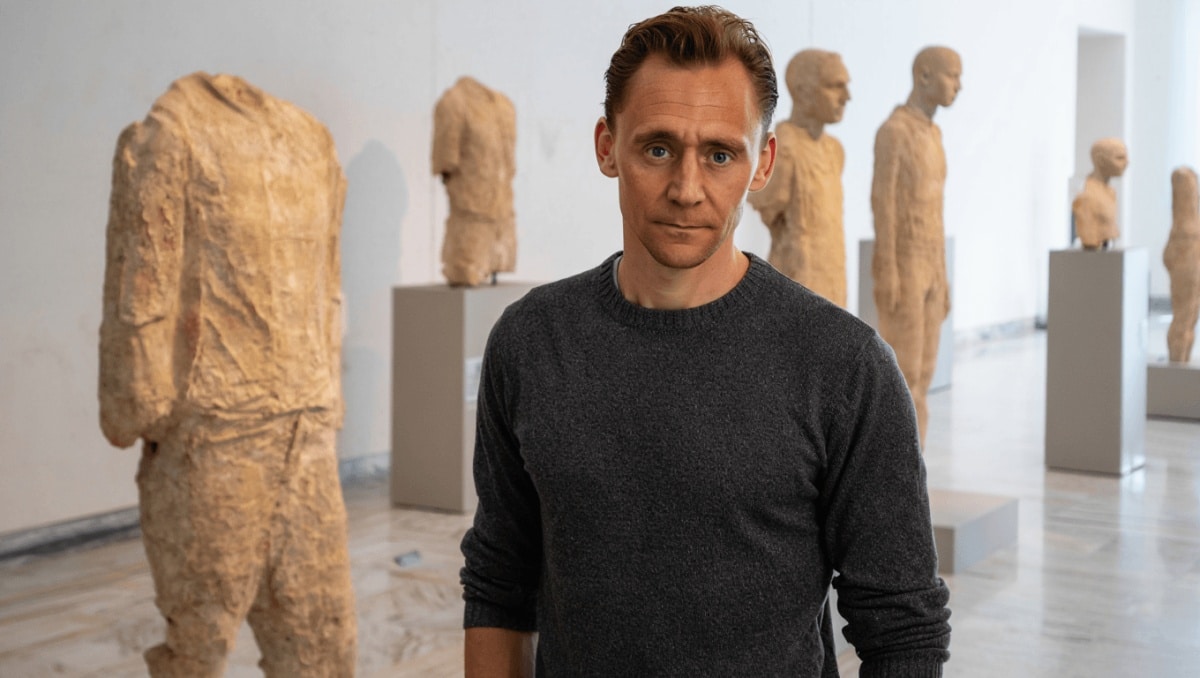
Tom Hiddleston has urged audiences to see the plaster casts of Pompeii’s victims not as curiosities but as reminders of lived lives—remarks that arrive as museums and broadcasters reassess how ancient remains are presented. In a recent interview, the actor described an encounter with the casts that shifted his thinking about history, empathy and the responsibilities of storytelling.
Up close with Pompeii’s plaster forms
Hiddleston said viewing the casts—created when archaeologists filled voids left by bodies in volcanic ash—felt unexpectedly intimate. The shapes, he noted, capture frozen moments of ordinary people and their final gestures, turning archaeological display into a human encounter.
That reaction is echoing a wider conversation among curators, filmmakers and educators about how to balance scientific interest with respect for the dead. It’s not just academic: the way museums frame these objects shapes public perception of ancient communities.
Why this matters now
For contemporary audiences, engagement with antiquity is often mediated through visual spectacle. Hiddleston’s comments underline a cultural shift toward emphasizing the individual stories behind historical artifacts, rather than treating remains solely as evidence or entertainment.
There are practical consequences. Institutions are revisiting exhibit labels, display methods and visitor guidance to avoid dehumanizing those represented. The debate touches on preservation practices, ethical display standards and how dramatizations handle material remains.
Pompeii casts therefore function on multiple levels: as archaeological records, pedagogical tools and, importantly, objects that demand ethical reflection.
What storytellers can learn
Actors, directors and producers who engage with historical material are increasingly mindful of context. Hiddleston said that encountering the casts altered his approach to portraying people from the past—prompting him to foreground nuance and dignity over spectacle.
That stance matters for television and film projects that reconstruct disaster, conflict or social collapse. When creatives foreground the humanity of historical figures, audiences often respond with greater empathy and a deeper engagement with the subject.
- Humanization: Emphasize personal details that restore individuality to historical subjects.
- Context: Provide clear background so viewers understand the circumstances behind an artifact or image.
- Respectful display: Avoid sensational framing and consider ethical guidelines when presenting remains.
- Educational value: Use interpretive material to connect artifacts to broader social history.
Broader cultural implications
Hiddleston’s remarks have sparked commentary beyond the arts community. Advocates for museum reform say this is a useful moment to push for policies that center dignity when human remains are part of public exhibitions.
At the same time, historians caution against simplifying the past into individual anecdotes alone: empathy should be balanced with rigorous context so audiences grasp the full complexity of ancient societies.
Viewed together, these perspectives suggest a pragmatic path forward—one that treats artifacts as both sources of knowledge and as traces of real lives, deserving of care and thoughtful interpretation.
For readers, the takeaway is immediate: encountering the material past—whether in a museum case or on screen—carries ethical choices. How institutions and creators handle those choices shapes what we learn about history and how we relate to people long gone.