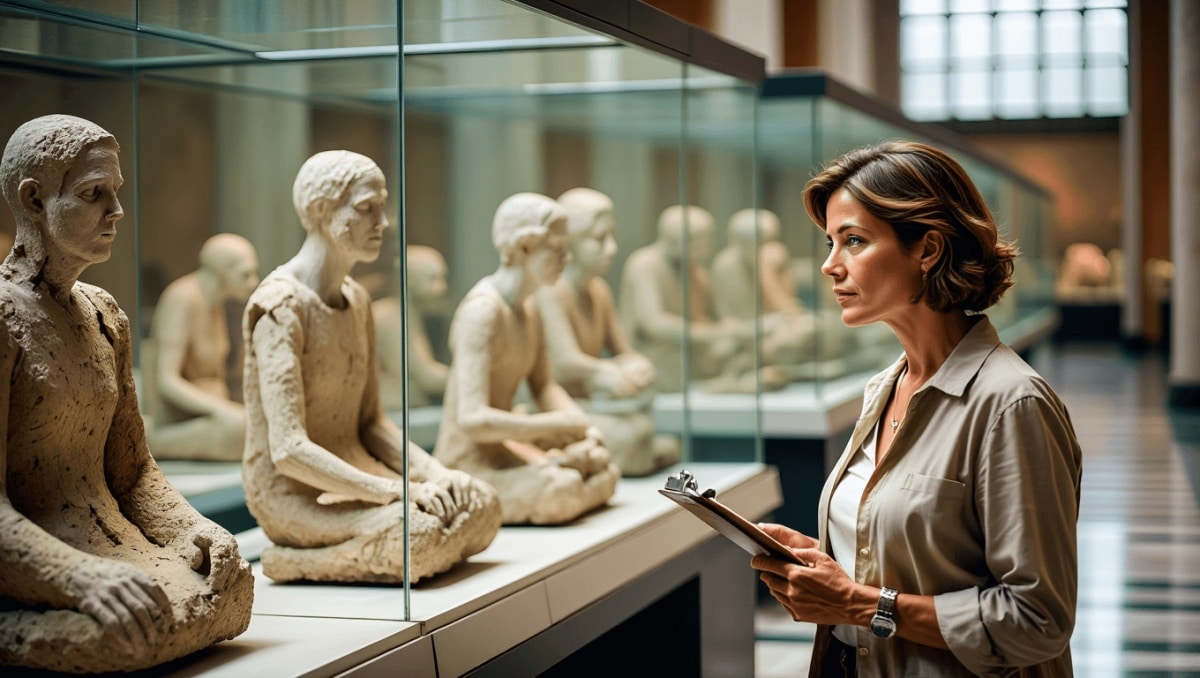
Tom Hiddleston says he hesitated to show the infamous moulded figures from Pompeii — not because they lack power, but because he feared they could be seen as spectacle rather than people. His new three-part National Geographic series reframes those impressions through recent archaeological and forensic work, arriving just as fresh techniques are reshaping how we understand ancient disasters.
That timing matters: by recasting relics as evidence of real lives, the series asks modern viewers to reconsider what it means to witness trauma from the distant past.
Why the casts stayed offscreen at first
For many, the plaster impressions — produced when archaeologists poured plaster into voids left by decomposed bodies — are the iconic image of Pompeii. Hiddleston told producers he worried that showing them early in the narrative would flatten the people behind those impressions into anonymous figures.
Instead, the documentary delays those visuals until viewers have met individual residents through objects, reconstructed moments and scientific analysis. The effect is deliberate: by establishing context first, the series aims to treat the remains as human traces rather than museum curiosities.
New science, renewed stories
Pompeii: Out of Time leans on recent advances in archaeology, geology and forensic methods to move beyond the headline of catastrophe. Excavations, isotopic analysis and reinterpreted artifacts help researchers build fuller portraits of daily life — and, in some cases, final hours.
Across three episodes, specialists follow threads that connect households, professions and social rank, showing how a single eruption disrupted a complex urban world.
- Forensic reconstruction: techniques revealing age, diet and injuries.
- Material culture: jewelry, pottery and household items that map occupations and status.
- Escape and survival: newly studied routes and shelters hint at who fled and who stayed.
- Herculaneum evidence: carbonized loaves and domestic remains that illuminate ordinary routines.
- Preservation ethics: debates about display, photography and public access.
One artifact highlighted in the series is a richly decorated necklace found in a luxurious house thought to belong to a prosperous woman associated with the Shrine of Isis. The producers use objects like this to reconstruct personal histories and push back against the flattening effect that time and spectacle can have on archaeological finds.
Hiddleston’s personal connection
Hiddleston’s interest in the ancient world began as a teenager during a Eurail trip in the late 1990s. He later studied classics at Cambridge, then trained in drama — a background that informs his approach as narrator and guide: scholarly curiosity combined with a storyteller’s instinct.
He says visiting sites such as Pompeii and nearby Herculaneum convinced him that remnants of the past are living traces. That sensibility underpins the series’ careful treatment of the dead: not as static displays, but as people with names, trades and relationships.
Herculaneum still preserves everyday objects in startling detail — even charred loaves of bread — offering a tangible connection between ancient routines and modern life. The series emphasizes those continuities to prompt viewer empathy, rather than morbid fascination.
What viewers will see
The show follows the lives and last moments of several individuals found across the sites, including a young apprentice, a high-status woman linked to the jewelry find, and a member of the imperial guard. Their stories are pieced together from bones, belongings and the built environment.
Experts in the series walk through how forensic techniques and contextual archaeology resurrect details that would otherwise be lost to time — from diet and disease to social networks and economic roles.
When and where to watch
Pompeii: Out of Time with Tom Hiddleston premiered July 22 on National Geographic and became available for streaming on Disney+ and Hulu the following day. Kevin R. Wright, who has worked with Hiddleston on other projects, returns as executive producer.
For audiences interested in cultural heritage, the series offers more than reconstructions: it raises questions about how we display the dead, how new science alters old narratives, and what responsibility storytellers have when translating ancient suffering for contemporary viewers.