Photo Credit: Cosmedica
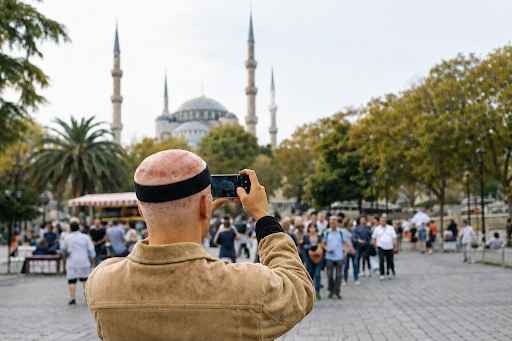
Every year, thousands of people from the US, UK, and Europe board a flight to Istanbul, not for the sights, but for their hair. A hair transplant in Turkey has become one of the most sought-after medical procedures globally, and Istanbul has quietly become the world’s busiest hub for it.
At Cosmedica, led by Dr. Levent Acar, the combination of specialized technique, high patient volume, and a seamless experience for international patients has put Istanbul in a league of its own.
Why Does Turkey Lead the World in Hair Transplants?
Turkey’s dominance in hair transplants in Istanbul isn’t an accident. The country has specialized in the field for decades, attracting patients from all over the world and developing refined protocols in response. Because Istanbul sees the highest volume of procedures globally, clinics have invested in proprietary tools and surgical systems that go well beyond standard practice elsewhere.
Top reasons Turkey leads the field :
- Surgeons with years of experience performing high volumes of cases annually.
- Advanced equipment developed specifically for hair restoration work.
- Competitive pricing that makes quality accessible, not just for the wealthy.
- Comprehensive, all-inclusive packages designed for international patients.
- A culture of specialization that general clinics in the West rarely match.
As Dr. Acar puts it, “Many patients used to come only for the price. Now, even wealthy patients come because of the quality. Our prices are fair because we want everyone to have access, but quality is always our focus.”
Why is a Natural Hairline Considered an Architectural Craft?
Restoring a thinning scalp requires much more than just moving hair from one spot to another. True success relies on understanding intricate facial anatomy, the golden ratio, and the natural exit angles of original hair strands.
A skilled medical team maps out the face to ensure the new design perfectly balances a person’s natural facial features. “Hair transplantation has been practiced for over 80 years,” notes Dr. Acar, who specializes in hair restoration. “Now, we’ve developed methods that look completely natural, so nobody can tell it was transplanted.”
When building a natural look, the medical team pays close attention to the source material. They analyze the donor area to ensure the hair follicles match the texture needed for the frontal frame.
For anyone curious about realistic expectations, it’s worth looking at hair transplant before and after photos from real patients.
What Is the Micro Sapphire DHI Method?
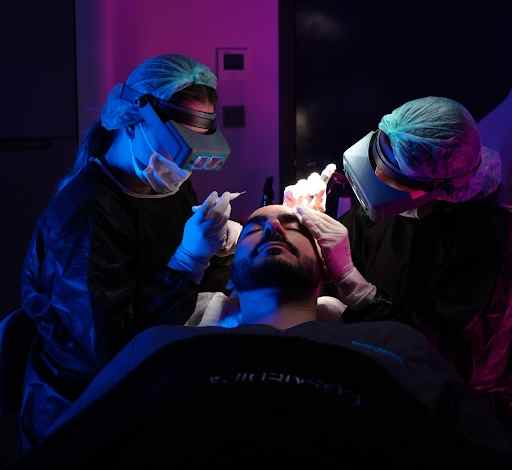
Photo Credit: Cosmedica
Not all hair transplant procedures are created equal. The Micro Sapphire DHI method used at Cosmedica combines two key technical advances that set it apart from conventional FUE techniques. First, Sapphire FUE uses blades made from genuine sapphire crystal, resulting in smaller, more precise incisions than steel blades. This means less tissue trauma, reduced scabbing, and a significantly faster healing window, a real advantage for busy professionals who can’t take weeks off work.
The second component is DHI (Direct Hair Implantation). A specialized pen-shaped tool loads and implants each individual hair follicle directly, without the need to pre-make incisions. This allows for higher-density placement and better control over the angle and direction of each strand. The result is a hairline that looks completely natural, because each follicle is placed with the precision of a design process, not just transplanted at random.
Dr. Acar explains: “Hair transplantation has been practiced for over 80 years… Now, we’ve developed methods that look completely natural, so nobody can tell it was transplanted.”
How Is a Natural Hairline Actually Designed?
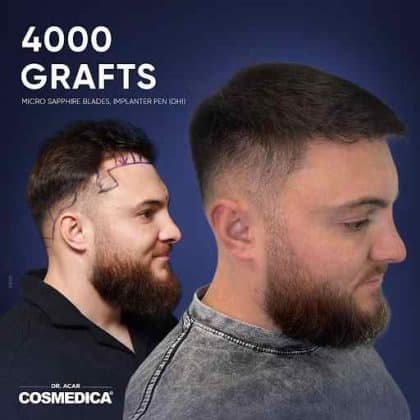
Photo Credit: Cosmedica
One of the most misunderstood aspects of a hair transplant is the hairline. It’s not simply a matter of placing hair follicles in a line; it’s a meticulous design process. Dr. Acar’s approach takes into account the golden ratio, the patient’s facial structure, the natural angles at which hair exits the scalp, and the overall frame the hairline creates around the face.
“When people look at a face, the density and hairline are immediately connected with youthfulness and health,” says Dr. Acar. This is why the design phase is just as important as the surgical one. If the hairline sits too low, too high, or at the wrong angle, it’ll look unnatural no matter how well the surgery went.
The donor area is carefully selected to match the texture and density required for the recipient zone. Because the follicles taken from the donor area come from the permanent zone, they aren’t affected by DHT hormones. As Dr. Acar notes: “As the hair we take comes from the permanent donor zone, those follicles are not affected by DHT hormones, so once transplanted, they last for life.”
Is Hair Restoration Becoming a Career Investment?
Think about how much of your professional life happens on screen now. Video calls, LinkedIn photos, client presentations, your face is on display more than ever. It’s no surprise that more people are connecting their appearance to their confidence at work.
Hair loss can hit hard, especially for people in client-facing roles. And more professionals are deciding to do something about it, not out of vanity, but because they want to feel like themselves again.
“Hair transplant used to be seen as something only for celebrities… Now, anyone can get it. The quality is equal, or better, than what Hollywood stars get,” says Dr. Acar.
That shift in access is one of the most meaningful changes in the field. Quality care is no longer reserved for the wealthy.
What Does the 3-Day Istanbul Experience Look Like?
For patients flying from New York, LA, Chicago, or anywhere else, flying abroad for a medical procedure sounds complicated. It really isn’t, at least not with Cosmedica. The clinic has designed the whole experience around international patients. From the moment your flight lands, they’ve got you covered. There’s a VIP transfer waiting, a five-star hotel right next to the clinic, and a dedicated English-speaking coordinator.
Here’s what those three days actually look like:
- Day 1: You land in Istanbul, and your Cosmedica coordinator is already waiting. The VIP transfer takes you straight to your five-star hotel. Once you’ve settled in, you meet Dr. Acar for your pre-procedure consultation. By the end of Day 1, you know the plan, and you’ve had a good night’s sleep before the procedure.
- Day 2: This is the big day. The transplant procedure itself, typically 6–8 hours for larger sessions, is fully pain-managed. By the evening, it’s done. You head back to the hotel, and your coordinator checks in to make sure you’re comfortable.
- Day 3: A quick morning visit to the clinic. The team checks the area, cleans everything up, and gives you a take-home aftercare kit with clear, written instructions. Then you’re on your way. Flying the next day is completely safe.
As Dr. Acar confirms: “Flying the next day is safe.” Most patients are back at their desks within a week.
So, is a Hair Transplant in Turkey worth the Trip?
For most people? Absolutely yes. You get a world-class procedure with an experienced surgeon, the latest technology, and an all-in experience that handles every detail, all for less than you’d pay at home. And you’re back to normal life within days.
Istanbul didn’t become the global leader in hair restoration by luck. It got there through years of focused expertise, constant innovation, and a genuine commitment to results. If you’ve been thinking about it, now’s a good time to take the next step.
Ready to take the next step? Explore Turkey hair transplant cost and what’s included, or get in touch with Cosmedica’s international patient team to begin your consultation.