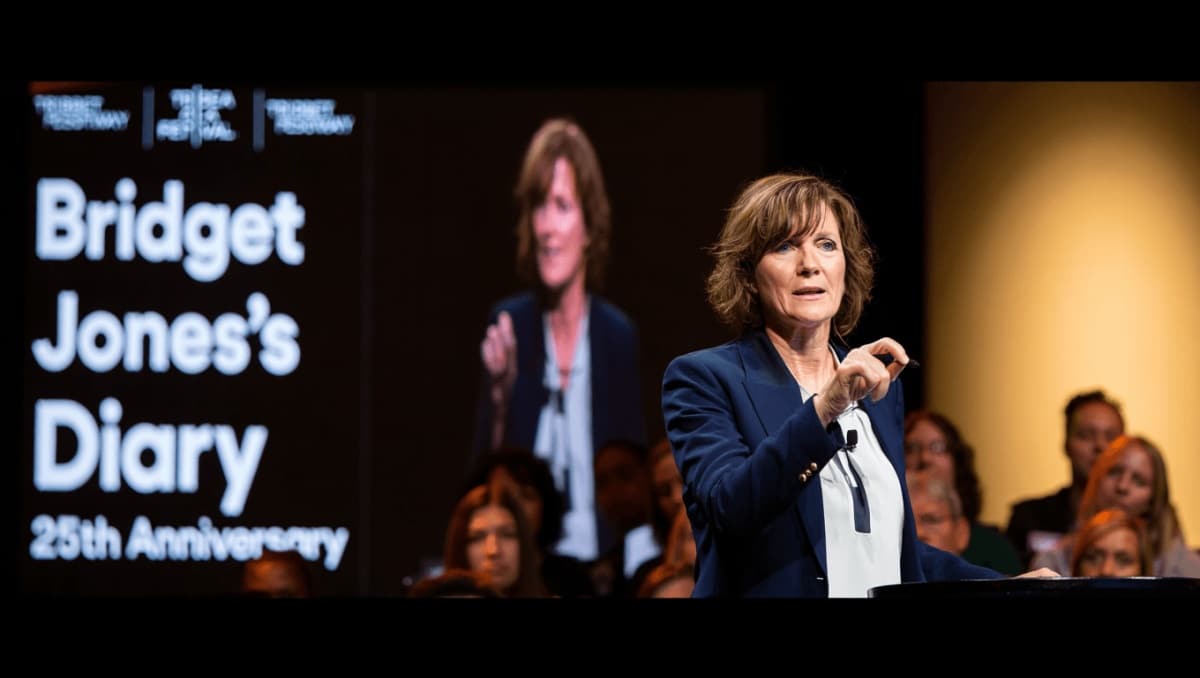
At a Tribeca Festival conversation marking the 25th anniversary of Bridget Jones’s Diary, Renée Zellweger pushed back on years of media attention that zeroed in on her weight. Her comments highlighted how the film quietly challenged Hollywood norms — and why that still matters now.
When Zellweger and director Sharon Maguire took the stage on June 12, the discussion quickly turned to how the press treated the actress’s physical transformation for the role back in 2001. Zellweger gained roughly 20 pounds to inhabit the character — a change that dominated tabloid headlines at the time rather than conversation about the movie itself.
Journalists onstage pointed out how reductive that coverage was, and Zellweger agreed, saying the focus on appearance missed the point of the character. She described Bridget as someone shaped by her choices and routines — fond of wine and indulgence, not a polished archetype — and argued that those details helped make the character relatable, not a problem to be solved.
Why the conversation matters now
The exchange at Tribeca did more than revisit old headlines. It underlined an ongoing debate about representation in film — who is allowed to be a romantic lead and how the industry and press frame those bodies. Zellweger said playing Bridget was freeing because it removed pressure to appear flawless on screen, and she noted that audiences around the world still identify with the character.
That global connection is striking: despite four films in the franchise, including the most recent entry, Zellweger told the crowd that Bridget remains the role people ask her about most. She called the experience “liberating” for an actor and surprisingly enduring in its cultural reach.
There were lighter moments, too. Zellweger laughed about being starstruck when she first met co-star Hugh Grant and remembered sitting quietly at a pub after rehearsal, nervous and tongue-tied — an anecdote that underlined how personal and human many of the film’s off-screen memories remain.
Bridget Jones did more than win hearts; it nudged the industry toward questioning narrow definitions of attractiveness for leading roles. For viewers and creators, that shift has practical consequences.
- For audiences: Greater recognition that on-screen protagonists can reflect ordinary lives and habits.
- For actors: Permission to play characters without conforming to rigid beauty standards.
- For filmmakers: Evidence that commercially successful romantic comedies can feature imperfect, complex leads.
- For the press: A reminder to cover performances and storytelling rather than reduce coverage to actors’ bodies.
At its core, the Tribeca Q&A was a reminder that a film’s cultural legacy is measured as much by the conversations it sparks as by box-office totals. Zellweger and Maguire used the anniversary screening to push back against old tabloid narratives and to highlight a ripple effect that still influences casting and audience expectations nearly a quarter-century later.
Whether the industry has fully caught up is debatable, but the dialogue sparked by Bridget Jones endures — and the actor who brought the character to life says that, despite the early fixation on her appearance, the role remains one of the most meaningful of her career.