What if the solution to energy independence was already sitting in your old laptop? One visionary has spent over a decade proving that 650-plus recycled laptop batteries can power an entire home, turning e-waste into a reliable energy source that challenges everything we thought we knew about renewable power.
From Tech Trash to Energy Gold
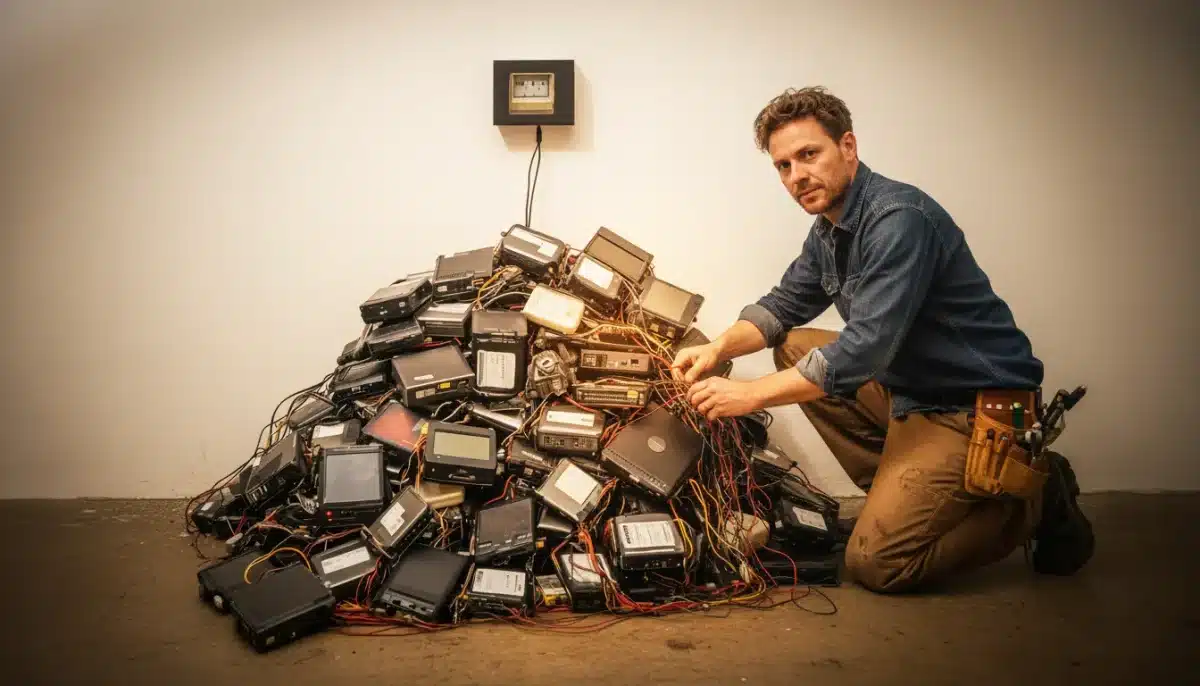
In a world where innovation and sustainability collide, one energy autonomy enthusiast discovered an unexpected way to transform technological waste into an inexhaustible energy source. Since 2016, he has powered his home using a growing collection of more than 650 laptop batteries, illustrating the untapped potential hidden in forgotten resources.
The context matters here. Battery longevity has become a major concern for both businesses and consumers alike, driving numerous innovations. Among the most promising advances are batteries capable of running devices for decades without needing a recharge. This visionary took that concept and ran with it, launching an audacious project: creating an energy system for his home using over 1,000 recycled laptop batteries to achieve complete independence from the traditional electrical grid.
The System: Simple Yet Ingenious
His setup centers on a shed located approximately fifty meters from his house. This humble structure is the heart of his system, where he combines aging batteries with solar panels to generate durable, off-grid energy. What makes this unconventional approach remarkable is its track record: the system has operated without major incidents for nearly a decade. He reports experiencing no fire hazards or swollen batteries, testament to the robustness of his engineering.
The project launched in November 2016. At that time, he was already generating some electricity through solar panels, an old forklift battery, charge controllers, and an inverter. Starting with his initial 650 batteries, he built the shed to assemble battery packs of approximately 100 amp-hours each. To ensure efficient connections, he chose copper cables, a smart decision that contributed significantly to his installation’s durability.
Solving Real-World Challenges
The early days presented several technical hurdles. Unequal discharge rates between batteries posed a particular challenge. To overcome this, he had to balance the batteries and add supplementary cells as needed. Rather than using complete battery units, he decided to disassemble individual cells and organize them into custom racks. This technical choice maximized both efficiency and longevity.
Over the years, the installation evolved significantly. He expanded capacity by adding 24 solar panels rated at 440 watts each, boosting energy production considerably. Thanks to these improvements, the system has operated continuously without interruption since 2016. Remarkably, he has not needed to replace a single battery cell, demonstrating the reliability and sustainability of his approach. The project showcases the real potential of e-waste recycling, transforming obsolete components into valuable resources.
Inspiration for a Sustainable Future
Beyond his personal success, this initiative highlights the possibilities offered by energy autonomy. It encourages us to rethink our relationship with energy consumption and consider sustainable, innovative solutions. As environmental and economic pressures push more people to explore alternatives to traditional energy sources, his project could inspire similar initiatives worldwide.
His experience illustrates human capacity for innovation and adaptation in a world where energy has become crucial. His system not only meets his personal energy needs but also opens interesting perspectives for sustainably reusing existing technologies. As energy transition becomes increasingly urgent, his project stands as an inspiration for all those seeking to embrace the path toward energy independence.