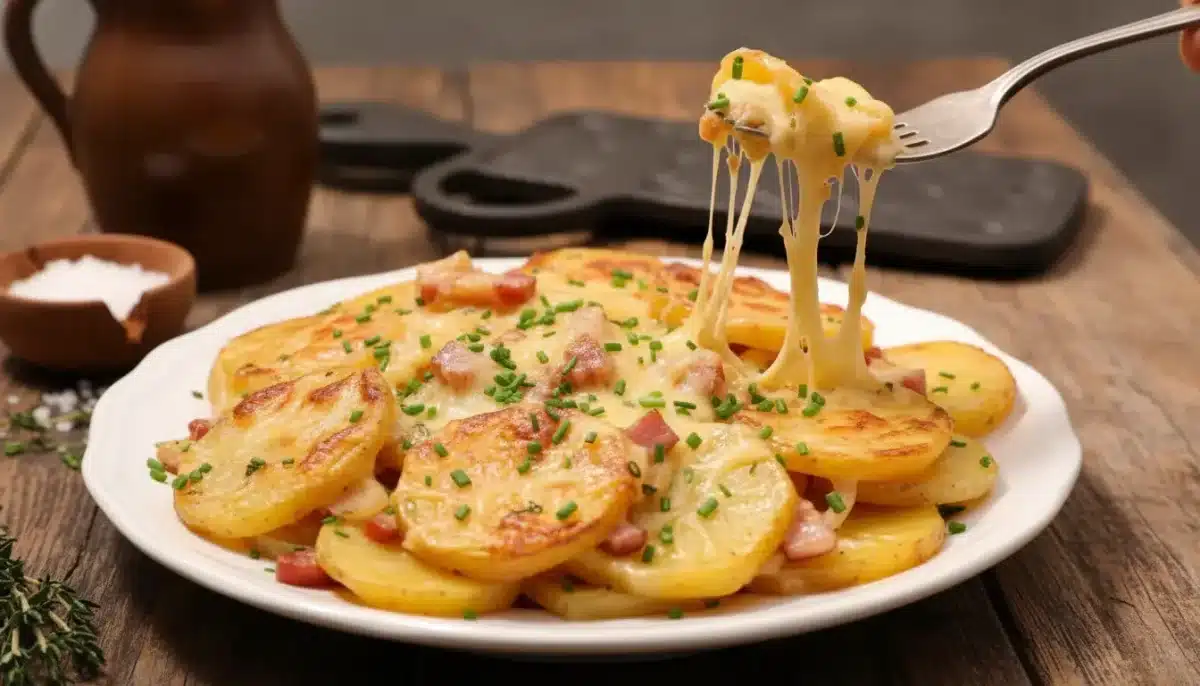
In 2026, a centuries-old peasant dish born in the mountain huts of the Auvergne region is making an unexpected comeback. Truffade, the humble potato-and-cheese skillet that once fueled entire workdays for herders on the Cantal plateaus, has become one of the most sought-after recession-busting recipes across social media and everyday kitchens alike. Between rising inflation, climbing bills, and a genuine hunger for real comfort food, this rustic dish checks every box: basic ingredients, straightforward skillet cooking, and that show-stopping moment when melted cheese stretches across the table.
From Poor Man’s Food to Social Media Star
The name truffade comes from trufa or trufada, the Occitan word for potato. The vegetable arrived in the Massif Central region at the end of the 18th century, offering an affordable way to feed households. Born on the plateaus of Cantal, truffade was the hot snack of buronniers, the herders who watched over livestock. A simple base of local potatoes and tomme cheese was enough to sustain entire days of hard labor.
What made sense centuries ago still works perfectly today. The ingredient list is refreshingly short: potatoes, pressed-paste cheese, a touch of garlic or onion, and fat. These basics remain affordable compared to meat or fish prices. Served with green salad and a few slices of ham, truffade can feed an entire table without breaking the budget while delivering that comfort food appeal that’s crushing it on TikTok and Instagram.
The Science Behind the Simplicity
The satisfaction this potato-and-cheese skillet delivers is far from accidental. Professional culinary manuals recommend approximately 30 to 40 percent cheese by weight relative to the potatoes to achieve that stretchy texture without excess grease pooling on the surface. Here’s where the magic happens: starch released by the potatoes swells with heat and traps the cheese fat, acting like a natural adhesive.
One critical rule separates success from disappointment. Do not rinse potato slices after cutting them. Water would carry away the surface starch, the very starch that helps bind the truffade together and anchor the cheese. Instead, pat the slices dry with a cloth, then sear them directly in hot fat to achieve crispy edges and a melting center.
The Path to Perfect Truffade
Begin with firm-fleshed potatoes like Charlotte or Amandine varieties, sliced into thin rounds approximately 3 to 4 millimeters thick, as Auvergnat chefs advise. Consistent cuts guarantee even cooking and prevent hard pieces in the middle of your skillet.
Start by gently browning your onion or garlic in a small amount of duck fat, lard, or butter, just until they lose their moisture and become tender. Next, add the potatoes, salt lightly, and let them brown without constant stirring, allowing a golden crust to form. Once they’re tender at the core, remove the skillet from heat.
Now add fresh tomme or young Cantal cheese cut into cubes and gently lift the mixture from bottom to top using a spatula, without breaking the cheese strands. The cheese melts, stretches, and coats each potato slice, transforming this simple peasant dish into a moment of celebration.
Nothing Goes to Waste
If any truffade remains, it recycles beautifully into a crispy hash cake the next day, as a hot sandwich filling, or as a small evening skillet. This zero-waste approach perfectly extends the anti-inflation, anti-waste spirit right through to the final bite.