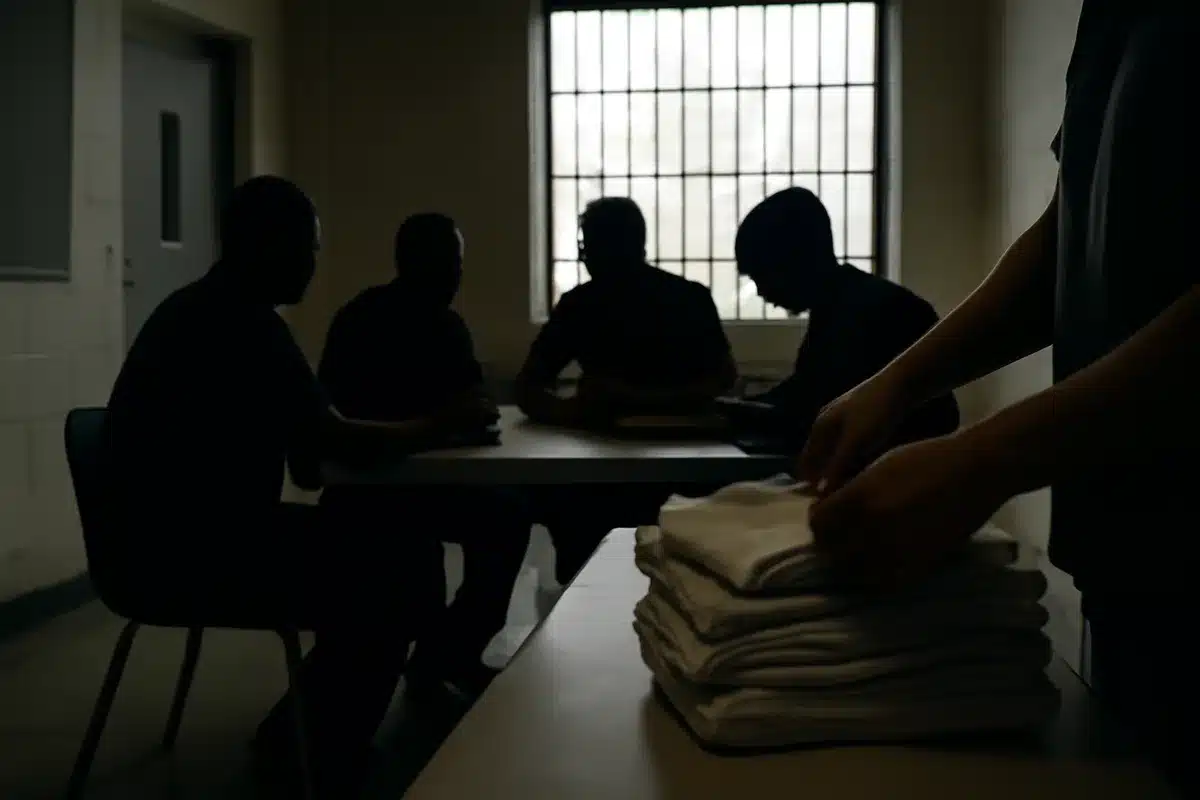
John Safran’s latest documentary, ‘Shut Your Big Fat Mouth’, premieres tonight (Sunday, May 24) at 7:30 PM on SBS and SBS On Demand, diving into one of Australia’s most contentious debates: where free speech ends and censorship begins. The provocative filmmaker, known for challenging social boundaries through satire and investigative storytelling, examines how Australian society navigates offensive speech, cancel culture, and the limits of public discourse in a multicultural democracy.
🔥 Quick Facts
- Documentary premiere: Sunday, May 24, 2026 at 7:30 PM (AEST)
- Channel: SBS and SBS On Demand (streaming available immediately)
- Creator: John Safran, acclaimed Australian satirist and filmmaker based in Melbourne
- Central theme: Exploring offensive speech, censorship, and free expression in modern Australia
- Format: Documentary feature examining controversial topics including sex work, exorcism, and media censorship
Who Is John Safran and Why This Documentary Matters
John Safran has built a 20-year career as an Australian boundary-pusher, combining provocative humor with serious investigative journalism. Born in Melbourne in 1972, Safran first gained prominence with his 2004 series ‘John Safran vs. God’, which satirically explored religious extremism. His work often examines uncomfortable social realities—from his book ‘Murder in Mississippi’ (which won the Ned Kelly Award for Best True Crime) to ‘Puff Piece’, an investigation into Big Tobacco (shortlisted for the Prime Minister’s Literary Awards).
The timing of ‘Shut Your Big Fat Mouth’ reflects a broader cultural moment. Australia has experienced intensified debate around free speech following high-profile controversies, including the recent Bondi terror attack and ongoing discussions about what can and cannot be said publicly. Safran’s documentary arrives amid legislative proposals for stricter hate-speech laws and mounting pressure to regulate online discourse.
What the Documentary Explores: A Preview of Key Themes
Rather than offering easy answers, Safran interrogates the question itself: In a robust multicultural society, should everyone be free to say what they want? Or is it time to place limits on offensive speech? The documentary confronts several flashpoint issues. Coverage includes perspectives on sex work legalization, religious freedom debates, and the Antoinette Lattouf controversy—a significant media censorship case that sparked national conversation. Safran’s approach is characteristically provocative, featuring interviews with cultural figures across Australian entertainment and media, advocacy groups, and people directly affected by censorship or offensive speech incidents.
The documentary also returns to Safran’s own past work, questioning whether his offense-intended comedy still resonates in 2026. As cultural norms shift and social media amplifies every provocative statement, Safran examines whether being deliberately offensive remains a valid form of social critique or has become outdated. This reflective angle—examining his own career trajectory—adds intellectual depth beyond simple controversy-generation.
Production Context and Critical Reception
Part of SBS’s ‘Australia Uncovered’ documentary series, ‘Shut Your Big Fat Mouth’ was conceived as a direct response to Australia’s intensifying free-speech tensions. The documentary features Melinda Tankard Reist, a prominent Australian advocate for ethical media standards, alongside other experts and activists invested in the debate. Early reviews from critics have praised the production for balancing entertainment with serious intellectual inquiry.
| Production Detail | Information |
| Director/Creator | John Safran |
| Broadcaster | SBS (Australia’s Special Broadcasting Service) |
| Release Date | May 24, 2026 (Sunday, 7:30 PM AEST) |
| Streaming Access | SBS On Demand (available same-day) |
| Series Context | Australia Uncovered documentary series |
| Content Subtitles | Arabic subtitles available on SBS On Demand |
Critics have noted that unlike typical documentaries that settle disputes, Safran deliberately leaves the central question unresolved. The Sydney Morning Herald’s review observed that Safran mocks both Nazi rhetoric and the culture of taking offense, creating an deliberately uncomfortable viewing experience designed to provoke thought rather than consensus. This approach aligns with Safran’s established style: provocation as pedagogy.
“It is not a crime to offend someone, okay?”
— John Safran, from the opening sequence at a free speech summit featured in the documentary
Why This Documentary Resonates in 2026 Australia
The free speech debate has intensified significantly across Australia over the past 18 months. Following security events and escalating online harassment, lawmakers have proposed expanding hate-speech legislation. Simultaneously, activists argue that existing laws inadequately protect vulnerable communities from targeted abuse. ‘Shut Your Big Fat Mouth’ enters this polarized landscape without claiming to resolve it. Instead, Safran documents the complexity: interviewing those who’ve been harmed by offensive speech, those who’ve been censored, and those who question whether censorship itself causes harm.
For American audiences following Australian culture, the documentary offers insights into how a developed Western democracy grapples with free-expression limits. Australia’s multicultural character means the free-speech debate involves immigration policy, religious protection, and competing community standards—issues mirrored in American discourse but handled through a distinctly Australian lens.
How to Watch and What to Expect
Broadcast time: 7:30 PM on SBS (Australia’s national public broadcaster). Stream time: May 24, 2026 onwards on SBS On Demand, available both nationally and internationally to Australian subscribers. The documentary is approximately 60 minutes in length, designed as a self-contained feature rather than a series premiere. Content warning: The documentary contains discussion of offensive language and sensitive topics; viewer discretion advised.
Viewers should expect Safran’s signature style: satirical editing, unexpected interview juxtapositions, and deliberate discomfort. The documentary doesn’t follow a conventional three-act structure; instead, it spirals through interconnected examples and contradictions, mirroring the intellectual messiness of the debate itself. For those accustomed to traditional documentary narration that guides conclusions, Safran’s approach may feel unsettling—which is precisely his intent.
Will John Safran’s Latest Documentary Change the Conversation?
In Australia’s current political climate, can a documentary actually shift the free-speech debate—or does Safran’s provocative method simply reinforce existing polarization? Some viewers will interpret the film as defending offensive speech; others will see it as critiquing censorship overreach. That intentional ambiguity may frustrate those seeking clear moral guidance, but for viewers interested in intellectual complexity, it represents sophisticated documentary craft. The film raises a final unsettling question: If free speech is essential to democracy, who gets to decide what counts as “speech” versus “harm”?
Sources
- SBS Media Release (May 14, 2026) — Official premiere details and series context
- Screen Hub Australia — Critical review and thematic analysis
- The Sydney Morning Herald — Documentary review and film criticism
- The Jewish Independent — Documentary context and free-speech framing
- Screen Australia — Official synopsis and production information