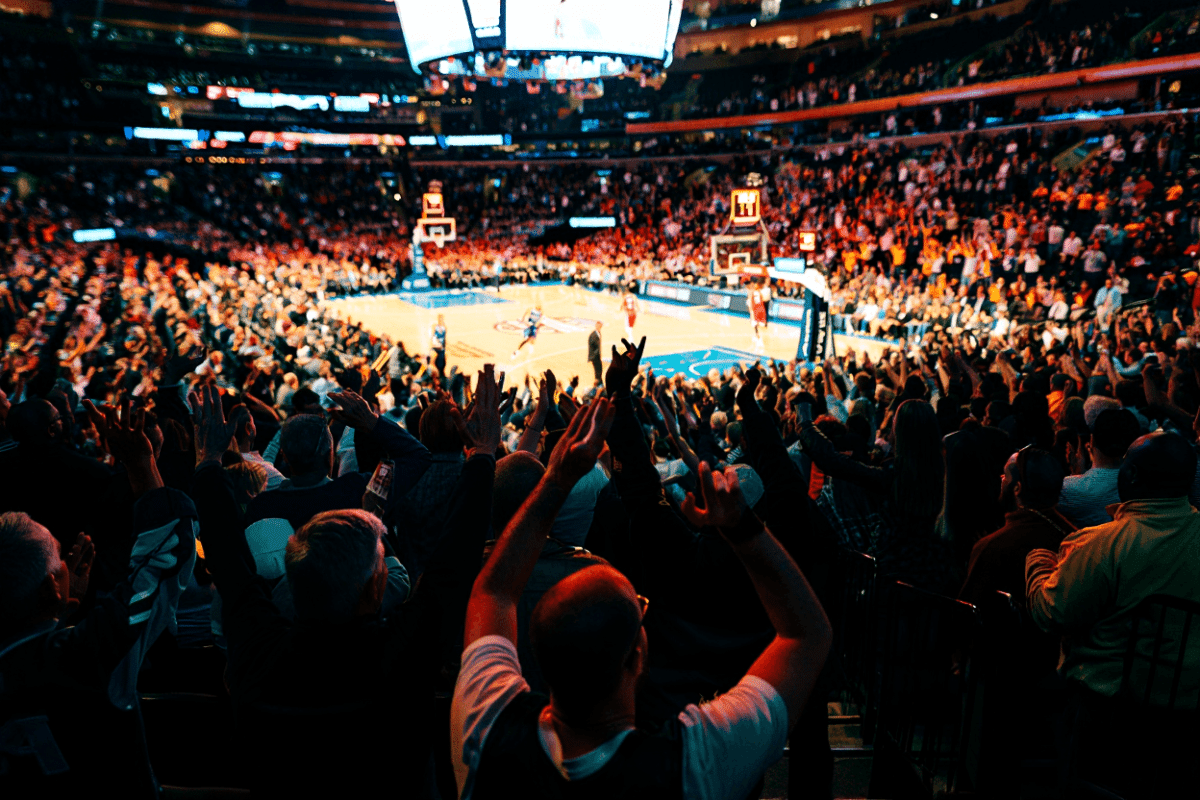
Carmelo Anthony assessed the New York Knicks’ championship potential following their stunning 22-point playoff comeback at Madison Square Garden, describing the team’s identity as fundamentally different from squads of previous seasons. The Eastern Conference Finals Game 1 victory over the Cleveland Cavaliers—a 115-104 overtime win on May 19, 2026—demonstrated the hallmarks Anthony highlighted in his analysis: resilience, complete two-way play, and the depth that separates contenders from pretenders.
🔥 Quick Facts
- Knicks overcame a 22-point fourth-quarter deficit against the Cavaliers in Game 1
- Jalen Brunson scored 38 points, including 17 in the final eight minutes and overtime
- Final score: 115-104 in overtime at Madison Square Garden on May 19-20, 2026
- Carmelo Anthony called this Knicks team “the most complete team in the East”
The Complete Team Identity
Anthony’s commentary centered on a specific observation: completeness. During the Eastern Conference Finals, the former Knicks superstar emphasized that this roster combines elite offensive execution with championship-caliber defense—a rare alignment in modern NBA basketball. The Knicks rank among the league’s top defensive units while maintaining scoring depth that extends far beyond a single creator.
Karl-Anthony Towns and Mikal Bridges provide Brunson with complementary scoring options that force opponents into impossible defensive rotations. This versatility reflects a philosophical shift from the Knicks’ recent history, where individual brilliance often masked systemic limitations. Anthony recognized that this team’s architecture—built around Brunson’s playmaking, Towns’ floor spacing, and Bridges’ perimeter defense—represents the kind of balanced construction that NBA championships require.
The Comeback Blueprint and Execution
The Game 1 comeback itself illustrated the principles Anthony identified. Down 104-82 entering the final quarter, the Knicks engineered a 44-11 run to edge the Cavaliers in overtime. The execution during that stretch revealed multiple championship markers: Brunson attacked defensive vulnerabilities rather than forcing isolation plays, Towns converted three-pointers created through ball movement, and the perimeter defense tightened when it mattered most.
Brunson’s 17-point surge in the final eight minutes didn’t arrive through volume or selfishness—six of his 10 fourth-quarter field goals came from catch-and-shoot situations or secondary actions within the offense. This restraint, combined with aggressive play-making for teammates, demonstrates the guard’s maturation as a postseason performer. The Knicks didn’t erase a 20-point deficit through heroics; they did it through the kind of systematic, unselfish basketball that Anthony implied separates championship teams from talented rosters.
Statistical Context: Defense and Depth
The numbers backing Anthony’s assessment reveal depth across multiple dimensions:
| Statistical Category | Knicks 2025-26 Ranking | Implication |
| Defensive Rating (Team) | Top 5 in NBA | Elite rim protection and perimeter lockdown |
| Three-Point Shooting (Team) | 18 makes per game (Playoffs) | Spacing prevents traditional defense adjustments |
| Assist-to-Turnover Ratio | 1.8 in Eastern Conference Finals | Ball security under pressure increases winning |
| Bench Scoring (Game 1) | 31 points | Role-player contributions reduce star burden |
| Playoff Points in Paint | 48.4 per game | Interior finishing complements perimeter shooting |
Championship teams typically rank in the top 10 in both scoring and defense. The Knicks sit comfortably in that range—a rarity in modern basketball where offensive firepower often comes with defensive compromises. Anthony’s emphasis on completeness directly reflects these metrics.
The Contrast with Previous Eras
Carmelo Anthony played during the 2011-2012 Knicks season, when the roster reached the Eastern Conference Finals largely on his individual brilliance. He averaged 27.4 points that postseason while defending four positions out of necessity. That team lacked the distributed scoring and defensive specialization the current roster possesses.
The implicit comparison in Anthony’s statement acknowledges a structural reality: his Knicks squads succeeded despite architectural limitations, while the current team appears designed from inception for sustainable excellence. Brunson doesn’t replicate Anthony’s scoring volume, yet the Knicks offense runs more efficiently through five-player movement. Towns provides floor spacing Anthony never accessed. Josh Hart offers switchable defense no single perimeter player could guarantee.
“The Knicks is the most complete team in the East. I’ll talk to the step further. I’ll say in the East, they the most complete team in the East.”
— Carmelo Anthony, NBA Legend and Knicks Analyst, May 19, 2026
What Championship Identity Means in the Playoffs
Playoff basketball exposes architectural flaws. Defensive schemes tighten. Officiating parameters shift. Teams without secondary scoring sources collapse when primary options face coverage. The Knicks navigated the Game 1 comeback precisely because of this completeness: when Brunson faced fourth-quarter pressure, Towns found open threes. When the Cavaliers trapped Brunson, role players executed. When the Knicks needed defensive stops, multiple players could credibly defend Donovan Mitchell and Darius Garland.
Championship identity, by Anthony’s definition, means every quarter offers multiple paths to victory. The 22-point comeback wasn’t miraculous in the sense of improbable luck; it was miraculous in the sense of flawless execution against an opponent that couldn’t adjust. The Cavaliers maintained their defensive approach despite its ineffectiveness, while the Knicks exploited weaknesses with surgical precision.
Looking Forward: The Finals Path
Anthony’s assessment carries weight because he understands what separates Finals teams from Conference Finals teams. The champion team in recent NBA seasons typically features either superstar depth (multiple All-Stars) or defensive versatility that opponents cannot neutralize in seven-game series. The current Knicks possess both.
Brunson ranks among the East’s elite guards. Towns provides the stretch-five flexibility that Finals defenses cannot adequately guard. Josh Hart’s combination of ball-handling, defense, and three-point shooting creates lineup flexibility that generates mismatches. This depth means that even when Cavaliers or other opponents identify defensive solutions, viable alternatives exist.
If the Knicks advance, their opponent will face the same arithmetic: defend the perimeter, and the Knicks attack the paint. Defend the paint, and role players shoot threes. Apply individual pressure, and cut defenders punish the adjustment. That’s what championship identity means in the modern NBA.
Why This Run Feels Different
The conversation surrounding this Knicks team differs markedly from previous contender narratives. The discourse isn’t centered on Brunson’s individual heroics—though he delivered them in Game 1. Instead, analysts increasingly cite systemic factors: spacing, versatility, depth, and defensive identity. This represents the kind of structural completeness that Anthony explicitly praised.
Knicks fans waited since 2012 for a roster this thoughtfully constructed. Anthony, having experienced both the highs and limits of individual-driven basketball, recognized what those fans are sensing: this team can win in multiple ways, which is precisely how NBA championships are claimed.