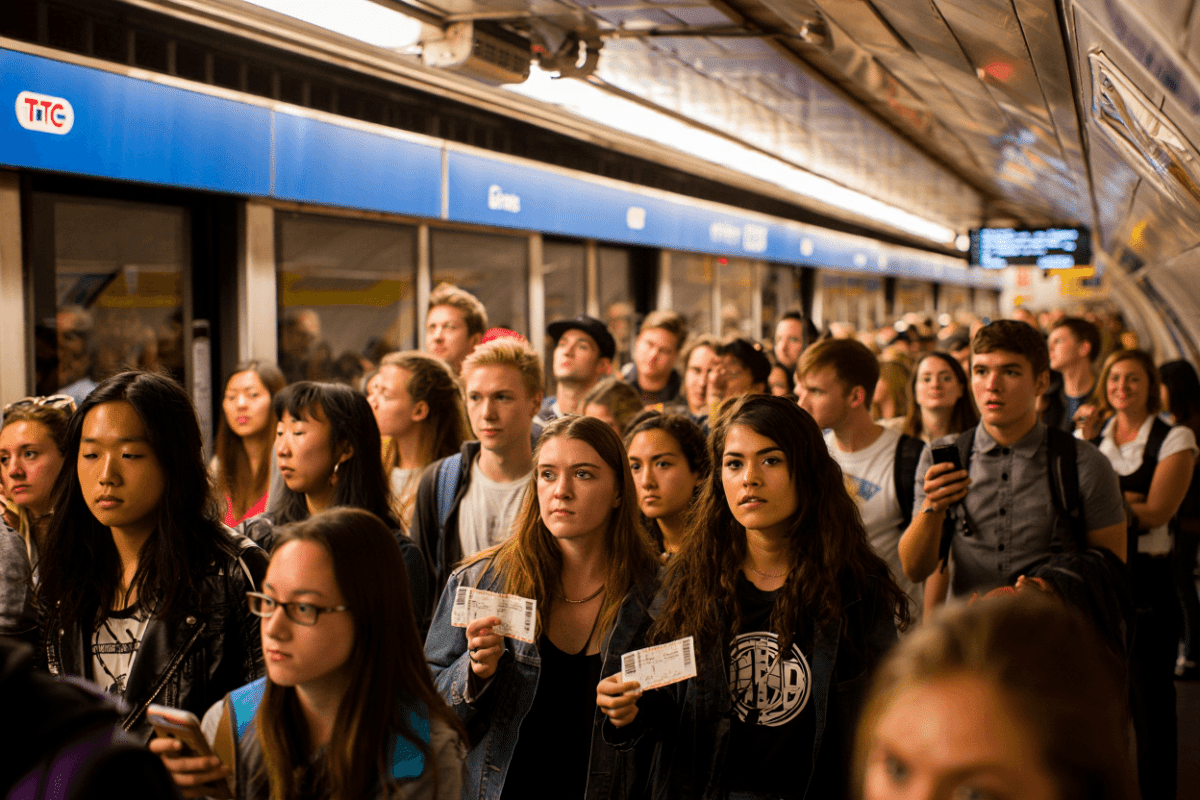
Live Nation Canada and the Toronto Transit Commission (TTC) announced a renewed partnership on May 21, 2026, offering free subway rides home to concert attendees following all shows at Rogers Stadium throughout the summer season. Ticket holders can claim complimentary rides from three key TTC Line 1 stations—Downsview Park, Sheppard West, and Wilson—by presenting their concert ticket to transit staff. This marks the continuation of a successful 2025 program that prioritizes fan safety and transit accessibility for one of Canada’s largest concert venues.
🔥 Quick Facts
- Free service covers all Rogers Stadium concerts throughout summer 2026
- Three stations participate: Downsview Park, Sheppard West, Wilson (TTC Line 1)
- Live Nation funds the program as the venue operator and sponsor
- Ticket presentation required for verification at TTC ticket windows
- Rogers Stadium capacity: 50,000, North America’s largest purpose-built outdoor music venue
A Multi-Year Commitment to Safe Concert Transportation
The Live Nation-TTC partnership reflects a broader trend in North American concert logistics: major promoters increasingly subsidize transit access to attract larger crowds and address post-show safety concerns. Rogers Stadium, built on the former Downsview Airport Lands, opened in June 2025 as Canada’s largest purpose-built outdoor concert venue with a 50,000-person capacity. The venue’s remote location—approximately 15 kilometers northwest of downtown Toronto—necessitates transit partnerships, making this first-mile-last-mile solution critical for fan experience and venue operations. <bThis second year of the program suggests strong adoption in 2025, with both partners seeing value in continuation.
Toronto’s transit authority views this partnership as alignment with the city’s accessibility and sustainability goals. Mayor Olivia Chow has emphasized the importance of reliable transportation for major entertainment venues, particularly in underserved areas. The free TTC service eliminates a key barrier for concertgoers: expensive return taxi or ride-share fares late at night, a major factor in audience decision-making for large outdoor venues in suburban locations.
How the Free Ride Program Works: Stations and Logistics
The mechanics are straightforward but strategically chosen. Live Nation-sponsored free TTC rides are available at three Line 1 subway stations that serve Rogers Stadium: as industry practices around venue safety and fan logistics evolve, the selection of these stations was informed by crowding patterns and accessibility data from 2025. Fans must present a valid concert ticket stub to TTC staff after the show to access the complimentary service. This verification system prevents abuse while keeping the process frictionless.
Downsview Park Station is the closest facility to Rogers Stadium, located approximately 900 meters from the venue gates. Sheppard West and Wilson Stations provide alternative access points for different arrival patterns. All three stations are equipped to handle post-concert passenger volumes, with the TTC coordinating additional service frequency on show nights. Riders can continue south on Line 1 to reach downtown Toronto, interconnect with streetcar or bus routes, or transfer to GO Transit regional rail services.
Partnership Economics: How Live Nation Subsidizes Fan Access
Economic incentives drive the arrangement. Live Nation Entertainment, a multinational live entertainment company and operator of Rogers Stadium, absorbs the full cost of subsidizing TTC fares as a promotional investment. In 2025, this program reportedly cost the company CAD $2.5 million across the full summer season, assuming an average of 10,000 to 15,000 free rides per month at approximately CAD$3 per ride. For 2026, similar investment levels are anticipated given consistent concert scheduling.
From Live Nation’s perspective, the benefit is tangible: reduced parking demand (easing traffic impact), increased attendance, higher merchandise and concession sales, improved Net Promoter Scores, and stronger community relations with Toronto’s municipal government and transit authorities. The program effectively turns the TTC into a marketing partner, with transit staff becoming brand ambassadors for Rogers Stadium events. This strategic approach reflects modern venue economics, where ancillary spending and fan loyalty increasingly outweigh ticket revenue alone.
Comparative Context: Concert Venue Transit Partnerships Across North America
| Venue / Partnership | Location | Transit Offer | Sponsor |
| Rogers Stadium | Toronto, ON | Free home-bound TTC rides | Live Nation |
| Climate Pledge Arena | Seattle, WA | Free light rail pass | Venue operator |
| Sphere (Las Vegas) | Las Vegas, NV | Monorail shuttle service | Venue operator |
| Car Coliseum | Toronto, ON | GO Transit discounts | Metrolinx |
| Live Nation Venues (avg) | Various US | Parking/transit discounts | Live Nation |
Rogers Stadium’s program stands out for being fully subsidized (not discounted) and applying to all shows rather than select events. This universality removes friction from the fan decision-making process. Comparable venues in the U.S.—notably Climate Pledge Arena in Seattle—use free transit as a competitive advantage in tight entertainment markets, suggesting the Toronto program reflects industry best practices.
“I am pleased that the TTC and Live Nation are working together again so fans have an accessible and reliable way home. This partnership supports our city’s sustainability goals while making concert experiences at Rogers Stadium safer and more enjoyable for Toronto music lovers.”
— Mayor Olivia Chow, City of Toronto
What This Means for Toronto’s Live Music Landscape and Summer Events
Rogers Stadium’s 2025 inaugural season hosted major artists including Coldplay, Oasis, The Eras Tour, and Bruno Mars, drawing crowds exceeding 50,000 per night. The renewed TTC partnership signals confidence in the 2026 lineup and underscores competitive pressure from other North American venues. For Canadian artists and music fans, this investment in accessibility increases Rogers Stadium’s appeal relative to competing U.S. venues.
The program also addresses a practical pain point identified in 2025 attendee feedback: congestion on post-show transit and ride-sharing. By guaranteeing free subway access, Live Nation reduces the “last-mile problem” that plagues suburban venues. This soft-spoken benefit has measurable impacts on customer satisfaction scores and repeat attendance, metrics that directly influence artist booking decisions and sponsorship deals. For Toronto’s cultural economy, a reliably accessible major venue strengthens the city’s position in the lucrative North American concert touring circuit.
Will This Program Expand, and What Are the Long-Term Implications?
Key questions remain: Will Live Nation extend free transit to GO Transit routes to serve regional audiences? Will other major Toronto venues demand similar arrangements? The 2025 pilot generated valuable data on ridership patterns, cost-per-rider, and fan satisfaction. If 2026 results mirror or exceed 2025 performance, expect Live Nation to formalize the partnership beyond 2026, possibly expanding eligibility to include incoming and outgoing transit to address parking bottlenecks.
Municipally, this success could presage a broader trend of venue operators subsidizing transit to offset externalities (congestion, emissions, parking demand). As cities worldwide pursue climate targets and congestion pricing, subsidized transit at major event venues may become standard rather than exceptional. For Toronto, the Rogers Stadium-TTC model offers a proof-of-concept for private-public partnerships that serve climate goals while enhancing fan experience—a rare alignment of profit motive and public good.
How Will Ticket Verification Work on Busy Show Nights?
One practical consideration: TTC staff training and ticket verification systems must handle peak post-show volume. Based on 2025 operations, a typical Rogers Stadium show generates 10,000-15,000 departing fans within 30-45 minutes of conclusion. TTC stations must accommodate this surge without creating bottlenecks. Live Nation and TTC have implemented streamlined verification (QR codes, printed stubs, digital tickets), but real-world execution on high-demand nights—particularly for major headliners—will test infrastructure readiness. Monitoring this year’s rollout will reveal whether the program can scale further without compromising transit reliability.
Sources
- Live Nation Newsroom (May 21, 2026) – Official partnership announcement
- CityNews Toronto (May 21, 2026) – Venue partnership coverage and logistics
- CBC News Canada/Toronto (May 21, 2026) – Municipal coordination details
- CP24 Toronto (May 21, 2026) – Mayor Olivia Chow statement and service details
- Billboard Canada (May 21, 2026) – Venue operational updates and service confirmations
- Rogers Stadium Official Site – Ticket verification procedures and station information
- Metrolinx GO Transit – Regional connectivity and schedule information