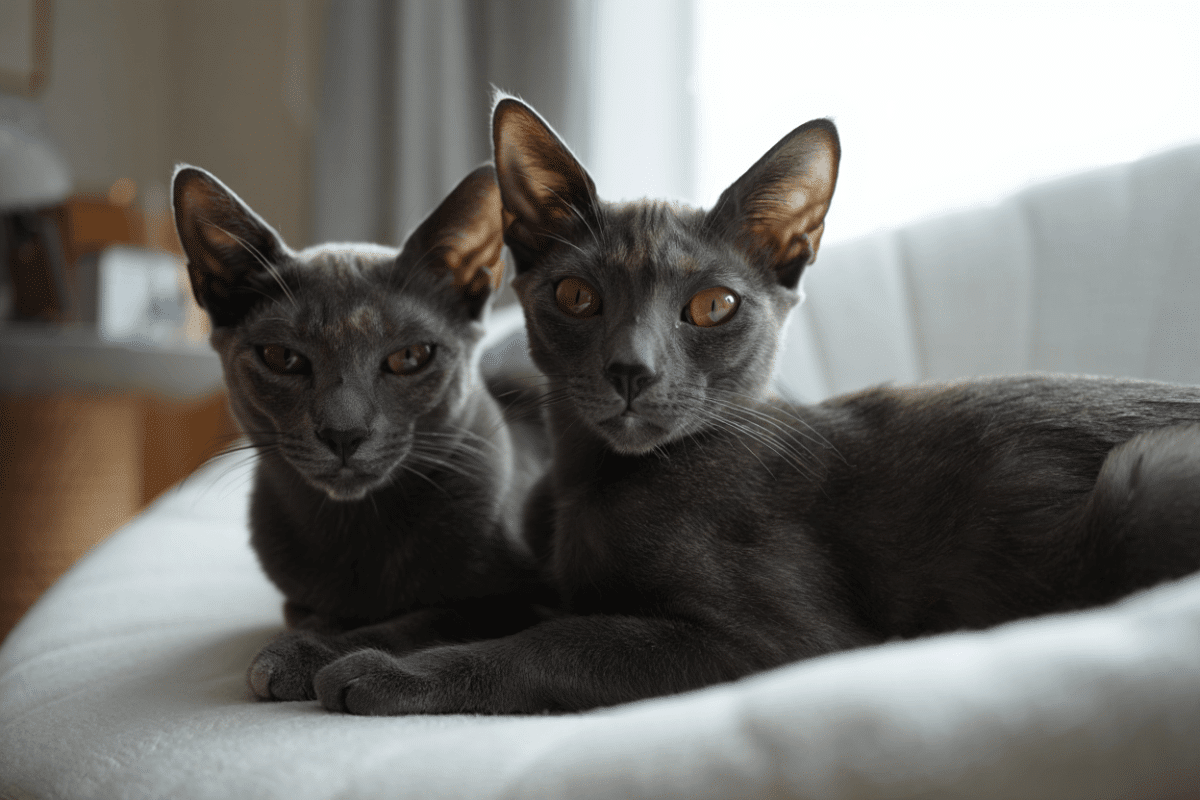
Khloé Kardashian revealed on the May 20, 2026 episode of her podcast “Khloé in Wonder Land” that she deeply regrets the decision to declaw both of her cats, Grey Kitty and Baby Kitty. During the candid discussion, the 41-year-old reality star admitted she was “completely misadvised” about the procedure and now feels “really, really terrible” about removing her feline companions’ natural defense tools. Kardashian’s public acknowledgment shines a light on a widely debated veterinary practice that major animal welfare organizations consider harmful.
🔥 Quick Facts
- Khloé Kardashian declawed both her cats, Grey Kitty and Baby Kitty, before understanding the procedure’s implications
- She publicly regretted the decision on May 20, 2026 during her podcast episode
- Declawing is a surgical amputation of the last bone in a cat’s toe, not a simple nail trim
- Research shows declawed cats face 290% increased risk of back pain and 720% increased risk of litter box avoidance
- The procedure is now banned or restricted in numerous countries and U.S. cities
Understanding Declawing: What Kardashian Didn’t Know
Khloé Kardashian emphasized that she had never owned cats before Grey Kitty arrived in late 2022, meaning she lacked foundational knowledge about feline care. She stated she didn’t even realize declawing “was a thing” until after the procedure was already completed. This gap in pet ownership experience illustrates how easily misinformation can lead well-meaning individuals to make irreversible decisions.
From a veterinary perspective, declawing is fundamentally different from the nail trim many people imagine. The procedure involves surgically removing the last bone of each toe—essentially amputating the equivalent of human fingertips at the first knuckle. This invasive operation causes permanent structural changes that can lead to chronic pain throughout a cat’s life.
The Physical and Behavioral Consequences
Research published in veterinary journals reveals the true cost of declawing. A 2017 study in the Journal of Feline Medicine found that declawed cats experience substantially elevated risks across multiple health categories. Specifically, declawed cats showed a 2.9 times greater likelihood of developing back pain, a troubling statistic that relates to altered gait and reduced mobility.
The behavioral impacts were equally severe. Indoor house soiling rates increased 720% among declawed cats compared to their clawed counterparts—a pattern Kardashian herself acknowledged during her podcast. She mentioned her cats constantly urinate inside the house, forcing her to theorize they are “possessed.” This insight directly connects to documented medical consequences of the procedure rather than quirky personality traits.
| Health or Behavioral Outcome | Risk Increase | Scientific Basis |
| Back Pain | 290% (OR 2.9) | 2017 study, 69+ citations |
| House Soiling/Litter Avoidance | 720% (OR 7.2) | PMC peer-reviewed analysis |
| Increased Biting Behavior | 450% (OR 4.5) | Behavioral consequence study |
| Excessive Hair Loss (Barbering) | 306% (OR 3.06) | Stress-related symptom tracking |
| Chronic Pain (General) | Documented Long-term | AVMA statements |
Beyond these primary issues, declawed cats develop secondary complications including nerve damage, bone spurs, lameness, and occasionally regrowth of improperly removed claws. The cumulative effect transforms a once-agile animal into a creature experiencing persistent pain during everyday activities like walking and using the litter box.
Celebrity Influence and Broader Industry Shift
Kardashian’s public regret arrives at a pivotal moment in veterinary history. Major professional organizations, including the American Association of Feline Practitioners and the American Veterinary Association, have issued formal position statements against elective declawing. These institutions recognize that scratching is a core feline behavior—not a behavioral disorder requiring surgical correction.
The decision by prominent public figures acknowledging mistakes carries measurable weight in shifting cultural norms around pet care. When celebrities with massive platforms admit to having made poor choices, audiences reconsider their own assumptions about standard practices.
Currently, declawing is outright banned in over 50 countries including the United Kingdom, Australia, Germany, France, Italy, Japan, and throughout much of continental Europe. In North America, multiple U.S. cities and Canadian provinces have restricted the procedure to cases where claws present a documented human health risk—a narrow exception rarely invoked by veterinarians.
What Kardashian’s Admission Reveals About Pet Care Education
A critical takeaway from this situation involves the gap between celebrity status and specialized knowledge. Kardashian explicitly stated she was “misadvised,” indicating she relied on veterinary recommendations without fully understanding the procedure. This speaks to a broader issue: pet owners often defer expert decisions to veterinarians without realizing that some practices—while legal—conflict with evolving medical consensus.
The late 2022 timeline when she first acquired Grey Kitty is notable. By 2022, major veterinary bodies had already published their opposition to routine declawing. Yet this information had apparently not reached Kardashian’s advisors, suggesting that even high-profile individuals had access to outdated guidance or providers who hadn’t updated their practices.
For cat owners facing pressure from landlords, parents, or upholstered furniture concerns, certified behavior consultants recommend a hierarchy of alternatives: nail trimming (every 2-3 weeks), scratching posts made from various materials, nail caps applied to claws, controlled environmental adjustments, and as a last resort, outdoor cat management changes. None of these approaches involve permanent surgical alteration.
Living with the Consequences
Khloé Kardashian’s ongoing challenge with her declawed cats—managing constant inappropriate urination in her home—represents one of the most common post-declawing problems. While she joked about her cats being “possessed,” the reality is that declawed cats often avoid traditional litter boxes due to pain when their sensitive toe pads contact granular litter. This creates a cascading problem: guilt-ridden owners, damaged furniture and flooring, behavioral confusion on both sides, and a permanently uncomfortable cat.
The reversibility question here is grim: declawing cannot be undone. Regrowing amputated bone segments is medically impossible. Owners who realize the mistake can only focus on pain management, environmental modifications, and accepting that their decisions created a permanently altered reality for their animal.
Will Kardashian’s Regret Change Industry Practices?
The entertainment and celebrity sphere holds outsized influence over cultural practices, particularly among younger pet owners who follow social media personalities. Kardashian’s 41.5 million Instagram followers received a clear message on this topic: declawing causes regrettable harm. Whether this translates into concrete policy changes remains to be seen, but public figures bearing witness to mistakes carry real power in shaping perspective.
Veterinary clinics continue to offer declawing services in jurisdictions where it remains legal, though an increasing percentage of practitioners have personally opted out of the procedure. The American Animal Medical Association has documented that younger graduating veterinarians more frequently refuse elective declawing compared to older practitioners, suggesting the profession is slowly shifting in response to accumulating evidence.
The question now becomes: will Kardashian’s candid regret on her podcast inspire policy discussions among other celebrity pet owners, and will it accelerate the cultural pivot away from a procedure that medical evidence has thoroughly discredited?
Sources
- People Magazine – Documented Kardashian’s podcast episode and direct quotes about being misadvised
- PetMD – Provided veterinary expertise on declawing risks and alternatives (September 2025)
- PMC (National Center for Biotechnology Information) – Published 2017 peer-reviewed research on declawed cat outcomes with 69+ citations
- American Veterinary Association – Official position statement on declawing (July 2019)
- AAFP (American Association of Feline Practitioners) – Claw-friendly toolkit and scientific literature repository
- AVMA (American Veterinary Medical Association) – Professional guidance on elective declawing restrictions
- USA Today & Yahoo Entertainment – Coverage of the May 20 podcast episode announcement