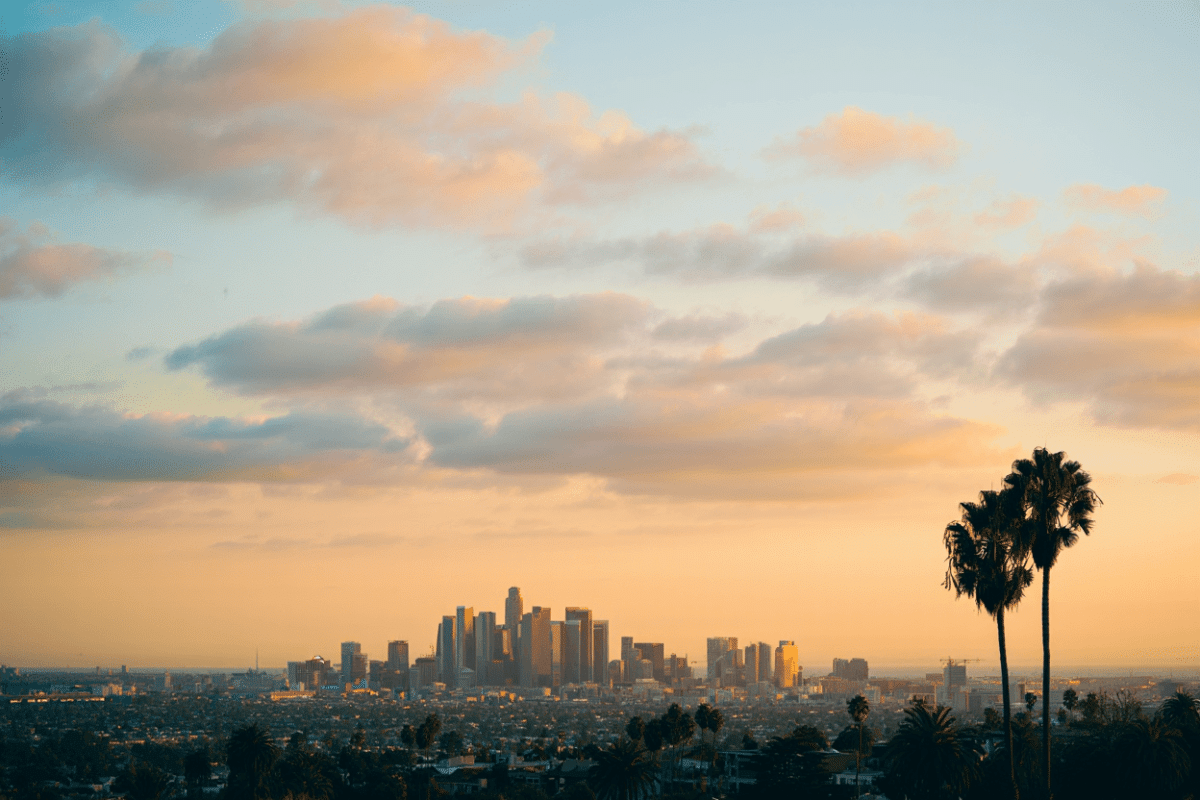
Los Angeles is experiencing typical late spring conditions on May 20, 2026, with a daytime high of 82°F, partly cloudy skies, and sunset approaching at 7:52 PM PST. This marks the transition into the warmest period of spring before summer heat arrives, with humidity hovering around 53–65%—a comfortable level for outdoor activities across the city.
🔥 Quick Facts
- May 20, 2026: High of 82°F — Within the typical May range of 70–87°F
- Sunset at 7:52 PM PST — Longest daylight hours approaching summer solstice
- Humidity: 53–65% relative — Moderate levels typical of coastal Southern California
- Partly cloudy skies — Beginning of “May Gray” marine layer season along coast
- May average high: 74–76°F — Today remains slightly above monthly norm
Understanding May Weather Patterns in Los Angeles
May represents a critical transition month for Southern California’s weather. The rainy season officially ends by mid-May, marking the shift from spring into the drier summer months. Los Angeles positioned on the Pacific Coast experiences distinct seasonal rhythms driven by ocean temperature variations and marine layer dynamics.
The average high temperature for May is 74–76°F, with lows typically between 60–62°F. Today’s reading of 82°F runs slightly above the monthly average, typical of late May patterns as warming accelerates. This gradual temperature climb reflects the sun’s increasing angle and lengthening daylight hours—critical factors in Southern California’s climate system.
Historical data from AccuWeather and Climate Data shows May highs range from 70–87°F, with the warmest days arriving toward month’s end. May 31 can push toward 97°F in some years, while the coolest periods early in the month stay near 70°F.
The Marine Layer and Partly Cloudy Conditions
Partly cloudy skies characterize today’s conditions as Los Angeles enters the “May Gray” season. This meteorological phenomenon results from cool Pacific Ocean water (around 60–64°F) meeting warming spring air. The temperature contrast creates marine stratocumulus clouds—low-level formations that typically burn off by afternoon in inland areas.
The cloud cover today provides natural cooling and moderates humidity. While coastal neighborhoods like Santa Monica and Manhattan Beach may experience persistent marine layer throughout the day, inland communities from Downtown Los Angeles to the San Fernando Valley will see afternoon clearing as heating intensifies. This geographic variation—coastal coolness versus inland warmth—defines the regional weather pattern.
According to Weather West, a “muted May Gray/June Gloom” is expected this year, particularly across Southern California. This differs from intense marine layer years when clouds persist through midday. The lighter cloud cover on May 20 allows sunset viewing conditions to be favorable across most of the city.
Humidity and Comfort Levels Through the Day
Relative humidity in Los Angeles during May follows a predictable daily cycle. According to CurrentResults.com humidity data, the morning peak typically reaches 83%, dropping substantially through midday to around 63% by afternoon. Today’s range of 53–65% indicates moderate afternoon humidity—comfortable for outdoor exercise, dining, or evening activities.
| Time of Day | Typical Temperature | Typical Humidity | Cloud Cover |
| Early morning (6 AM) | 64–66°F | 80–85% | High (marine layer) |
| Midday (12 PM) | 76–79°F | 60–65% | Partly cloudy |
| Afternoon (3 PM) | 80–82°F | 53–60% | Mostly sunny |
| Evening (7 PM at sunset) | 74–76°F | 65–70% | Partly cloudy |
May represents one of the least humid months in Los Angeles, with humidity averages around 60% daily. This contrasts sharply with summer months when moisture increases. The combination of 82°F temperatures and 60% humidity creates what meteorologists classify as “comfortable” conditions—ideal for outdoor activities without excessive heat stress.
“May and June together are usually the cloudiest months in coastal California, driven by the temperature contrast between warming inland air masses and the cool Pacific Ocean surface.”
— June Gloom Research, Wikipedia Climate Analysis
What This Weather Means for Southern California Activity Planning
Today’s 82°F and partly cloudy conditions support diverse outdoor activities. The moderate temperature prevents excessive heat stress, making this ideal for hiking in Griffith Park, beach outings, or rooftop dining. The sunset at 7:52 PM provides extended early evening light—the latest of the year approaching rapidly.
The partly cloudy pattern also moderates ultraviolet (UV) radiation exposure compared to clear days, though UV index remains substantial in late May (typically reaching 8–9 out of 11). Sunscreen protection remains advisable. For indoor activities, the marine layer cloud cover keeps interior temperatures moderate without requiring aggressive air conditioning.
Evening cooling trends toward 64°F tonight—still warm enough for evening activities but cool enough to require a light jacket for those sensitive to temperature changes. This mild overnight low represents typical late spring behavior in the city.
What Changes Bring This Late Spring Weather to Los Angeles?
El Niño conditions emerging in summer 2026 will influence atmospheric patterns, but May 20 reflects classical late spring dynamics independent of this larger climate phenomenon. The transition from spring to early summer depends on three mechanisms:
First, the sun’s declination increases daily, raising solar angles and heating intensity. By May 20, the sun reaches its highest point since winter solstice, directly explaining temperature increases. Second, the North Pacific High-pressure system strengthens in late May, suppressing moisture and storm systems. Third, the Pacific jet stream moves northward, reducing the latitude bands where low-pressure systems form.
According to NOAA’s Climate Prediction Center, El Niño conditions have an 82% probability of emerging May-July 2026. This development could increase precipitation slightly in Southern California during winter months ahead, but May 2026 remains in the typical dry season unaffected by the phenomenon’s early stage.
Will Tomorrow’s Weather Follow Similar Patterns?
The remainder of May 2026 continues warming trends typical of the season. May 21–31 forecasts call for progressive temperature increases, with highs approaching 85–87°F by month’s end. Marine layer persistence may decline as additional heating strengthens inland thermal gradients. June introduces “June Gloom” proper—intensified marine layer with possible afternoon cloud cover preservation even inland.
Rainfall remains essentially absent through May, with the annual dry season firmly established. The next significant moisture system unlikely arrives until fall or winter, depending on developing El Niño patterns. For context, May 2026 has delivered only 0.02–0.05 inches total precipitation through the 20th—well below the negligible May average of 0.1 inches.
Sources
- AccuWeather — May 2026 Los Angeles monthly forecast and historical temperature ranges
- World-Weather.info — Specific May 20, 2026 forecast data with sunrise/sunset times
- Weather Spark — May average temperatures and humidity patterns in Los Angeles
- CurrentResults.com — Relative humidity daily cycles for Los Angeles May weather
- Climate-Data.org — Historical May climate statistics and extremes
- Weather West — Pacific coast weather system analysis and marine layer forecasting
- NOAA Climate Prediction Center — El Niño diagnostics and probability assessments
- Wikipedia / June Gloom — Coastal California seasonal cloud pattern analysis