The Boys series finale delivered a blood-soaked reckoning against Homelander on May 20, 2026, concluding the five-season saga with depowered brutality and moral emptiness. The 90-minute finale saw Billy Butcher kill a defenseless Homelander after Kimiko drained all three remaining supes of their powers, leaving viewers contemplating whether destroying the villain truly ends the darkness he represented.
🔥 Quick Facts
- 57 million global viewers per episode — highest viewership in series history
- 97% Rotten Tomatoes score — critical consensus praises final season
- Finale runtime: 90+ minutes — extended length for series conclusion
- Homelander death occurs midway through episode — not the climax itself
- Five years after premiere — from 2019 to 2026 completion
Homelander’s Fall: When Power Becomes Powerlessness
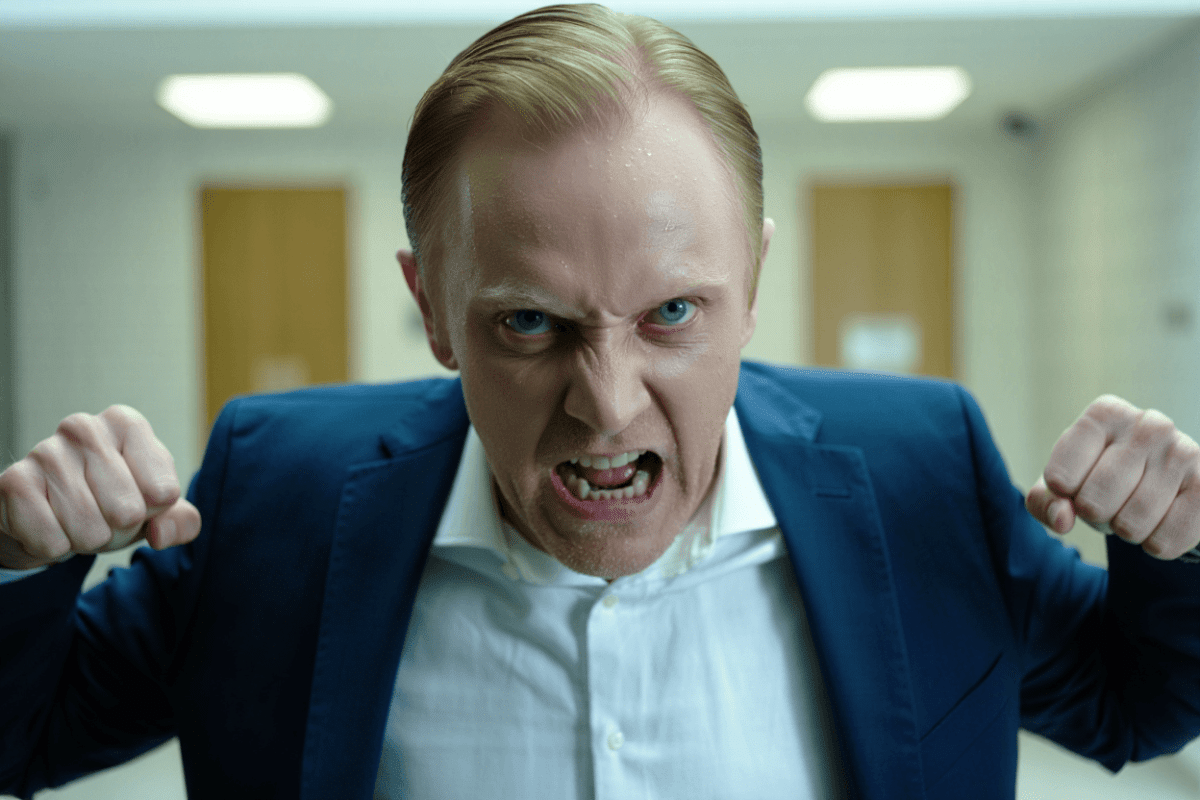
The series finale structured its narrative around a counterintuitive choice: killing its primary antagonist halfway through the episode. Homelander, who spent five seasons as an unstoppable force, faces his end not in epic combat but as a whimpering, depowered human. Butcher executes him without resistance, a mercy killing disguised as victory. The writers understood that defeating a god requires stripping away divinity first, forcing Homelander to confront mortality as an ordinary man.
This structural choice reflects the show’s thematic evolution. Violence alone cannot defeat fascism or narcissism; only the removal of power can expose the fragility beneath. Antony Starr’s performance earned widespread praise, with critics calling him “one of the greatest villains in television history.” His death scene capitalized on that legacy by rendering him helpless, inverting the power dynamics that defined his entire arc.
Wrapping 14+ Characters, 8 Episodes: The Pacing Question
Showrunner Eric Kripke defended Season 5’s pacing in recent interviews, noting that with 14 major characters requiring proper endings, the writers avoided “action scene every episode” in favor of character development. This approach generated online backlash from some viewers who compared the final season to Game of Thrones Season 8, citing “filler episodes” and sluggish pacing in the lead-up to the finale.
The Hollywood Reporter reported Kripke stating: “I’ve learned the online world is not the actual world. That’s a fraction of very loud, opinionated people.” The 57 million global viewers per episode supported his confidence—Season 5 broke all Prime Video records despite critical controversy. The finale’s emotional beats worked better than earlier episodes, suggesting the payoff justified the slower setup.
Critical vs. Audience Reception: 97% on Rotten Tomatoes
| Metric | Rating/Data |
| Rotten Tomatoes Critics | 97% Fresh |
| Global Viewership Average | 57 million per episode |
| Three-Week Ratings Surge | Prime Video’s largest for any show |
| Social Media Sentiment | Mixed — praise for finale, criticism of build-up |
| IMDb Rating (Season 4 Finale) | 9.3 out of 10 |
Critical reception remained overwhelmingly positive, with reviewers emphasizing the finale’s thematic closure and Starr’s masterclass performance. However, individual reviews acknowledged a divide: critics praised character arcs and emotional payoff, while some viewers found the season’s slower episodes uninspired. Den of Geek gave the finale a 3 out of 5, noting the series “has rather faded away” compared to earlier seasons, though acknowledging it delivered on its dark DNA.
The Pyrrhic Victory: Why Homelander’s Death Changes Nothing
The finale’s boldest narrative choice was making Butcher realize that killing Homelander solves nothing. Homelander’s death merely proves that one powerful individual can nearly destroy democracy—and that the same cycle will repeat elsewhere. Ryan, Homelander’s son, rejects Butcher’s offer of family. Butcher himself contemplates using a virus to wipe out Vought, only to be stopped by Hughie in their final confrontation.
This ending subverts typical superhero finales by refusing cathartic resolution. The boys face an empty victory. Hughie and Annie start a family. Kimiko travels to France to honor Frenchie. President Singer’s administration begins repair. Yet the show’s parting message warns that fascism’s seeds remain planted, awaiting another charismatic supe willing to exploit power. The finale asks: can democracy survive without eternal vigilance?
“It’s both a relief and a pleasant surprise that The Boys goes out exactly how it arrived: as the best, most incisive, and radical superhero show on TV.”
— Jeremy Mathai, Slashfilm
Legacy Impact: One of Television’s Defining Superhero Sagas
Over five seasons, The Boys evolved from a simple deconstruction of superhero mythology into a commentary on power, fascism, and the weaponization of media. The finale’s darkness—Homelander’s death registering as relief rather than triumph—reflects this maturation. By Season 5, the show understood that defeating individual villains matters far less than addressing systemic corruption.
Rotten Tomatoes critics declared The Boys “one of the greatest superhero television shows of all time,” citing its sophisticated satire, brutal violence, and sharp writing. With Vought Rising greenlit for 2027, the universe expands beyond the original saga—a spinoff acknowledging that one series finale cannot contain all the stories within this dark world. The show’s five-season run proved that superhero TV could provoke thought, challenge conventions, and refuse easy answers.
What Remains After the Blood Dries: Unanswered Questions
Despite extensive closure, the finale leaves critical threads deliberately unresolved. Soldier Boy survives. Gen V characters exist in the margins. Sage’s death opens questions about remaining supes’ fates. Butcher’s death—from a gunshot wound late in the episode—transforms him from hero to casualty. This refusal to reward heroes with simple peace defines the show’s moral framework.
The May 20 release coincided with a special 4DX theatrical presentation, offering audiences an immersive finale experience. This hybrid approach—streaming premiere plus theatrical event—reflected Prime Video’s confidence in the episode’s cultural significance. Viewership patterns suggest the finale lived up to expectations, delivering the “bloody big screen” experience promised.
Sources
- The Hollywood Reporter — May 19 coverage of record-breaking viewership and Kripke’s response to online backlash
- Den of Geek — Detailed finale breakdown and thematic analysis of Butcher-Homelander resolution
- Rotten Tomatoes Editorial — Comprehensive critical consensus on Season 5 quality and performance significance
- ComicBookMovie — Plot summary and character exit details for all major players
- Variety — Coverage of Frenchie death scene emotional impact and cast reactions