ESC.Vote 2026 just opened for the Eurovision Grand Final, and millions of viewers worldwide are preparing for tonight’s epic showdown in Vienna. With 25 countries competing and Finland’s entry commanding 36.9% of poll support, the stage is set for one of the most intense voting battles in Eurovision history. Here’s everything you need to know to cast your votes before the final performances conclude.
🔥 Quick Facts
- Voting Open Now: ESC.Vote launched today, May 16 for international audiences starting at midnight CEST
- Finland’s Dominance: Linda Lampenius & Pete Parkkonen lead polls with 36.9%, crushing nearest competitors
- Grand Final Time: Show begins 9:00 PM CEST (3:00 PM US Eastern) from Vienna’s Wiener Stadthalle
- Your Voting Window: Cast up to 10 votes for different countries from opening through 40 minutes after final song
How to Vote on ESC.Vote 2026 Right Now
The Rest of the World voting platform is live at esc.vote. If you’re watching from outside the 35 participating countries, this is your only way to influence tonight’s results. Your 12-point maximum vote carries equal weight to votes from national juries. The voting system is simple: select your ten favorite songs and confirm. You can change your picks anytime before the deadline. The online voting bloc counts as one full country in the official results.
For viewers in participating nations, look for on-screen voting instructions during broadcasts. Phone voting, SMS options, and the official app are available in those markets. Televoting drives approximately 50% of the final score, while national juries determine the other half. This dual system creates unpredictable plot twists when last-minute televoting swings change everything.
Finland’s Shocking Favorites Status Challenges Eurovision Traditions
Linda Lampenius and Pete Parkkonen’s song Liekinheitin has completely dominated pre-contest predictions. Their 36.9% backing in international polls is extraordinary, suggesting a dominant victory margin if these numbers hold. Historical Eurovision patterns show that front-runners facing this much pressure often falter on live television. What makes their position unique is Australia’s Delta Goodrem performing in-contest, which sometimes spikes last-minute Western audience support. Bulgaria’s Dara and Greece’s Akylas round out the top-tier contenders at significantly lower percentages.
| Country | Artist | Song | Poll Position |
| Finland | Linda Lampenius & Pete Parkkonen | Liekinheitin | 1st – 36.9% |
| Greece | Akylas | Ferto | 2nd – 13.5% |
| Denmark | Søren Torpegaard Lund | Før Vi Går Hjem | 3rd – 10.7% |
| Australia | Delta Goodrem | Eclipse | Top 5 Contender |
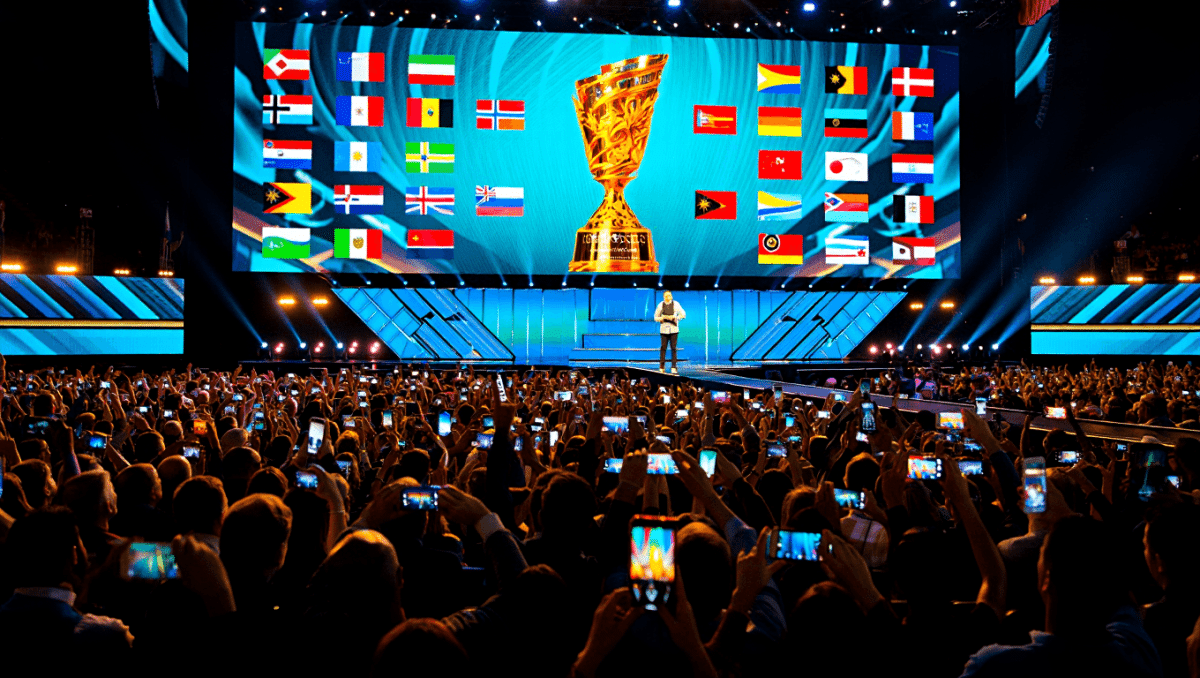
Vienna’s Greatest Stage Brings 25 Nations Together Tonight
The Wiener Stadthalle has been transformed into Eurovision magic for the 70th anniversary edition. Host nation Austria automatically qualifies, while the Big Four countries France, Germany, Italy, and United Kingdom bypass semi-finals. The remaining 20 slots come from winners of two semi-final competitions held earlier this week. Victoria Swarovski and Michael Ostrowski will guide viewers through four hours of music, spectacle, and rising drama. The opening features last year’s winner JJ performing a Mozart-inspired medley with 40+ dancers and acrobats creating a breathtaking visual display.
Guest performers include legendary Eurovision icons during the Celebration! interval act. Lordi, Verka Serduchka, Kristian Kostov, and Alexander Rybak are returning to perform classics from contest history. Parov Stelar’s electro-swing performance takes the stage next, followed by Eurovision legend César Sampson delivering an emotional interpretation of Billy Joel’s Vienna as voting closes. This theatrical structure has proven effective at keeping audiences engaged during the critical televoting announcement phase.
“Start voting now! Unlike in the Semi-finals, viewers can vote for their favourite songs from the very beginning of the performances.”
— Eurovision Official Instructions, ESC.Vote 2026
Strategic Voting Insights: What Separates Winners from Runners-Up
Jury voting concluded yesterday during the official dress rehearsal, making tonight purely about televote dynamics. The split between professional juries and public voting creates fascinating strategic elements. Juries historically favor vocal precision and musical complexity, while television audiences reward emotional connection and memorable hooks. Countries winning jury votes sometimes lose to surging televotes from coordinated diaspora communities. Australia’s passionate international fanbase could propel them higher than early polls suggest. Greece’s historical tradition of strong messaging gives them hidden televoting strength.
Each participating country casts two full point sets (jury plus televote), meaning 70 unique voting origins influence the final result. The Rest of the World voting bloc equals one entire nation’s power. This explains why international viewers become incredibly important in close races. A surge of 100,000 ESC.Vote participants can shift entire rankings. Previous contests show that early voting aggregates heavily toward leaders, but final-hour voting introduces chaos as emotional performances sway audiences in real time.
Will Finland Actually Win Eurovision 2026, or Will Tonight’s Performance Change Everything?
History warns front-runners heavily. Måneskin’s 2021 upset and Conchita Wurst’s 2014 dominance both featured polls showing significantly less commanding leads than Finland currently possesses. If they execute flawlessly tonight, their 37% backing could deliver a record-breaking margin. But one vocal misstep, staging mishap, or underperforming telecasting could unlock surprise late-surging entries. Belgium’s ESSYLA performing impressively on the night could capture sympathy votes. Italy’s Big Four automatic qualification means Sal Da Vinci gets final-slot positioning benefits historically worth 20-30 jury points.
The real question emerging tonight is whether Finland’s 36.9% polling lead represents genuine overwhleming preference or reflects early international media hype that doesn’t translate to evening voting behavior. Multiple sources suggest Australia, Greece, and Sweden could mount surprise top-five finishes if live performances galvanize Western audiences. The jury/televote split structure means the winner isn’t determined until the final official point announcement, creating genuine unpredictability in a way pure democracy voting would eliminate. That uncertainty is precisely what makes Eurovision 2026 appointment television.
Sources
- Eurovision.com Official – Vienna 2026 comprehensive Grand Final guide with voting instructions and running order
- Eurovisionworld.com – Poll data, participant information, and complete lineup analysis
- EBU Eurovision Song Contest – Official voting procedures and participating country details