Show summary Hide summary
Matt Damon just made a stunning confession on set: Cillian Murphy’s performance in Oppenheimer ranks among the greatest he’s ever witnessed. This isn’t casual praise from a co-star, this is a reckoning about one of cinema’s most electrifying recent transformations. The reveal shows how Murphy managed to captivate Hollywood’s elite while delivering a career-defining role.
🔥 Quick Facts
- The Praise: Matt Damon called Murphy’s Oppenheimer portrayal “one of cinema’s greatest performances” in April 2026
- The Role: Cillian Murphy embodied physicist J. Robert Oppenheimer in director Christopher Nolan’s 2023 epic film
- The Awards: Murphy won the Best Actor Oscar at the 2024 Academy Awards, earning the film 7 total Oscars
- The Dedication: Murphy lost significant weight and worked extensively on physicality to match Oppenheimer’s distinct silhouette
A Performance That Stopped Matt Damon in His Tracks
Matt Damon doesn’t distribute superlatives carelessly, but Cillian Murphy’s work in Oppenheimer moved him deeply. Damon, who played U.S. Army General Leslie Groves opposite Murphy, had a front-row seat to the intensity. Working on a Christopher Nolan set places actors in environments where precision and pressure converge, creating opportunities for transcendent performances. For Damon, watching Murphy navigate such demanding material proved extraordinary. The scale of Oppenheimer’s role meant Murphy appeared in seven scenes daily during production, requiring unwavering mental and emotional discipline throughout filming.
Damon reflected to The New York Times about what he witnessed. “It’s beautiful to watch someone give themselves to it fully,” he remarked, highlighting Murphy’s total commitment to the character. For Damon, this wasn’t just admiration between colleagues, it was recognition of something rare in modern filmmaking. The actor specifically called the role a “marathon” for Murphy, understanding the endurance required to sustain such intensity across months of production under Nolan’s meticulous direction.
Jake Shane chats with Kylie Jenner on latest Therapuss episode, discusses her path to motherhood
Daniel Dae Kim explores Korea’s global influence in new CNN series K-Everything
How Murphy Transformed Into the Father of the Atomic Bomb
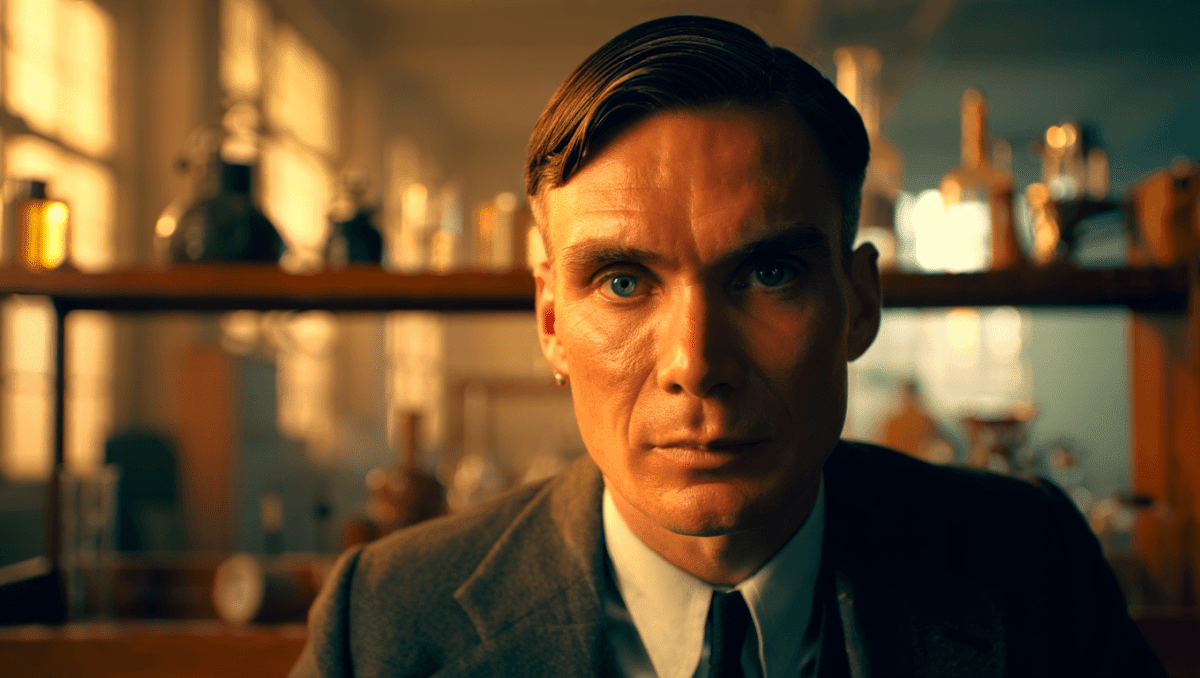
Cillian Murphy’s dedication to accuracy bordered on obsessive preparation. The Irish actor lost considerable weight to achieve Oppenheimer’s gaunt, emaciated silhouette. Murphy explained his approach in interviews: “He was very slim, almost emaciated, existed on martinis and cigarettes.” Beyond physical transformation, Murphy worked on specific expressions and mannerisms. He studied Oppenheimer’s bright, intense eyes, aiming for a wide-eyed intensity that matched historical accounts. The costume team tailored everything meticulously to match the physicist’s distinctive frame and bearing.
Murphy’s preparation extended beyond the obvious physical markers. Director Christopher Nolan provided calibrated direction that allowed Murphy to excavate the psychological complexity of Oppenheimer as a figure. The physicist was brilliant yet contradictory, capable of both moral clarity and profound uncertainty about his creation’s consequences. Murphy’s performance captured this duality with surgical precision, earning critical consensus that he’d achieved something historically significant in cinema.
The Film That Dominated 2024’s Awards Season
| Award Category | Oppenheimer Achievement |
| Release Date | July 21, 2023 |
| Academy Awards Won | 7 Oscars, including Best Picture and Best Director |
| Best Actor Winner | Cillian Murphy (2024 Academy Awards) |
| Director | Christopher Nolan |
Oppenheimer didn’t just succeed at the box office; it became a cultural phenomenon and awards juggernaut. The film dominated the 2024 Academy Awards, winning Best Picture, Best Director, and Best Actor, along with four technical Oscars. This recognition validated what Damon witnessed: that Murphy’s performance transcended typical character work and entered the realm of historical significance. Critics converged on the same conclusion audiences reached independently that Murphy had delivered something genuinely exceptional. The combination of Nolan’s direction, Murphy’s commitment, and the material’s weight created a perfect cinematic storm.
“When you are at the center of a movie at that scale, shooting seven scenes in a day, it takes a different focus and concern and commitment. It’s beautiful to watch someone give themselves to it fully.”
— Matt Damon, Actor and Co-Star
Murphy’s Relationship With Christopher Nolan and What Comes Next
Cillian Murphy has collaborated with Christopher Nolan repeatedly across the director’s filmography, including roles in the Dark Knight trilogy. Yet Oppenheimer represented something Murphy had long desired. “Deep down, secretly, I was desperate to play a lead for him,” Murphy confessed in interviews. This hunger to carry a Nolan film as its central character transformed the collaboration into something more meaningful. Damon’s praise underscores how that desperation translated into relentless preparation and performance excellence. Murphy understood the magnitude of playing a historical figure of Oppenheimer’s stature, recognizing both the responsibility and the creative opportunity.
The relationship between Murphy and Nolan proved symbiotic on Oppenheimer’s set. Nolan’s meticulous direction complemented Murphy’s commitment to accuracy and psychological depth. For actors on a Nolan set, this precision creates conditions where excellence becomes not just possible but expected. Matt Damon witnessed this alchemy firsthand, watching his co-star rise to extraordinary heights under the director’s exacting vision. This dynamic suggests future collaborations between the director and actor remain virtually certain.
Why This Performance Matters Beyond Film Criticism
When actors of Matt Damon’s caliber publicly acknowledge another performance as transcendent, it signals something broader about cinema’s possibilities. Cillian Murphy’s work transcended typical awards consideration and entered territory where craft becomes art becomes history. Damon’s confession about witnessing “one of cinema’s greatest performances” reflects how Oppenheimer altered expectations for what contemporary filmmaking could achieve. The role demanded Murphy surrender completely to the character, existing within Oppenheimer’s psychological landscape for months. This level of commitment, Damon suggests, produces performances that endure beyond their moment. Will future filmmakers and actors study Murphy’s Oppenheimer as a masterclass in transformative acting, much like previous generations studied similar watershed performances?