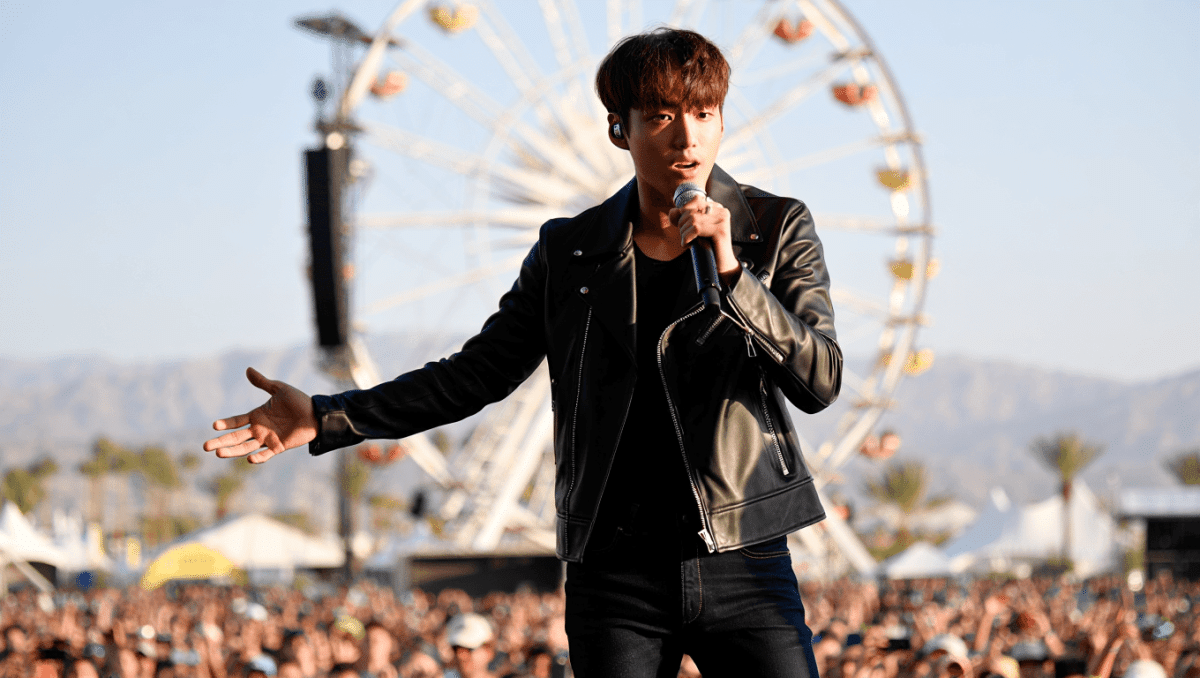
Taemin’s weekend at Coachella did more than mark a personal milestone — it underlined a changing moment for K-pop soloists on global stages. Fresh from a string of label moves and a pitched creative overhaul, the performer used the festival set to present new material and a tightly staged vision that industry watchers say could broaden how Western audiences see individual K-pop artists.
A deliberate career pivot before the spotlight
After 16 years with SM Entertainment, Taemin left the company in 2024 and briefly joined a smaller imprint before moving again this spring to Galaxy Corporation, the label that represents veteran artist G‑Dragon. That sequence of departures and signings makes his Coachella appearance notable: he prepared a major festival set while navigating significant management changes.
| Date | Event |
|---|---|
| 2008 | Debuted with SHINee |
| 2024 | Did not renew solo contract with long-time agency |
| 2024–2026 | Signed to BPM, then moved to Galaxy Corporation |
| April 2026 | Performed as the first Korean male K-pop soloist at Coachella; Grammy Museum exhibit opened |
What the Coachella set looked and felt like
Taemin’s 50‑minute program mixed fan favorites with unreleased tracks and cinematic staging. He opened from inside a sculptural prop that echoed themes of emergence and reinvention, an idea he traced back to a passage in Hermann Hesse’s Demian about breaking out of a familiar world to be reborn.
The show interwove intense choreography and quieter moments: he played piano during a mid‑set sequence intended to build emotional tension before the finale. Lighting and video content were central to the narrative he aimed for, though he later said some of those elements didn’t reach the audience as intended.
- Established hits performed: “MOVE,” “WANT,” “ADVICE,” “IDEA”
- New or unreleased tracks premiered: “Permission,” “Parasite,” “Frankenstein,” “Let Me Be the One,” “Sober,” “1004”
“Parasite,” projections and the limits of festival tech
The staging for “Parasite” used projected philosophical lines about freedom, capitalism and the quiet growth of wrongdoing — material Taemin chose to frame frustrations he’s felt in the industry and online. He said the visuals were designed to fall over the crowd and rise again as part of the song’s arc, a message compromised when the text wasn’t visible to much of the audience.
He was candid about the result: limited rehearsal time and technical snags left him unsatisfied. On a self‑assessment he gave the first weekend’s show a 5 out of 10 and said he intended to tighten execution for week two.
Reactions, influences and second‑generation K‑pop momentum
Watching the festival’s headliners — including a set by Justin Bieber — Taemin said he felt a personal resonance with artists who grew up in front of the camera. He described a reflective response to that performance and expressed admiration for peers who continue to make lasting work despite early fame.
BIGBANG’s presence on the bill, alongside Taemin’s own landmark appearance, drew attention to the ongoing influence of K‑pop’s second generation. For performers who started in the late 2000s, Coachella represented both a reunion with long‑standing peers and a symbolic crossing into mainstream U.S. festival culture.
Legacy, comparison and the Grammy Museum exhibit
Taemin’s Grammy Museum display — titled around the themes of performer, artist and icon — sits near an exhibit for Michael Jackson. Comparisons to Jackson have followed Taemin for years; he says the late pop star is a formative influence and that seeing his own stagewear displayed alongside such an idol is a meaningful moment.
He frames his ambitions in sensory terms: beyond chart success or choreography, he wants his work to evoke a distinct, memorable sensation across music, fashion and performance.
Why this matters now: Taemin’s Coachella set is a visible example of a solo K‑pop artist translating a highly produced, choreography‑driven practice into a Western festival format while bringing new songs and a personal artistic statement. For the industry, it signals that label moves and boutique management can coexist with large‑scale international opportunities — and that major festivals are increasingly receptive to individual K‑pop voices, not just groups.
He closed the conversation by saying his current focus is more direct expression: less abstract conceptualism, more tangible emotion. The Coachella slots, the Grammy Museum show and the mix of older and new material all point to a next phase in which he plans to clarify who he is as an artist and to keep refining how that identity appears on big stages.