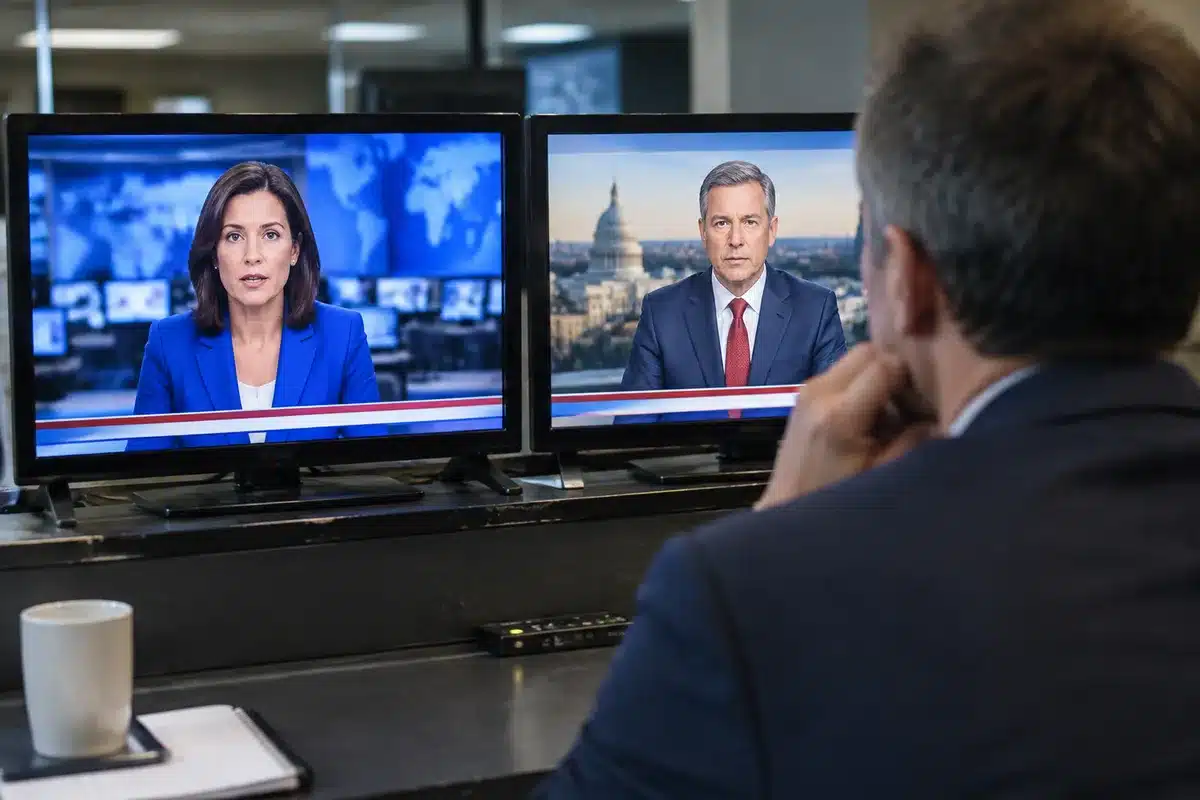
During a recent CNN broadcast, an on-air split-screen contrasted past and present remarks by Pete Hegseth, drawing attention to apparent inconsistencies in his public stance on U.S. policy toward Iran. The segment quickly circulated online, prompting discussion about how commentators’ earlier statements are used in live television scrutiny.
The clip placed Hegseth’s most recent hawkish commentary next to archival footage in which he had urged caution or criticized certain military options. The visual contrast was stark: two opposing tones from the same commentator shown simultaneously, leaving viewers to weigh which position better reflects his views now.
What the split‑screen highlighted
The broadcast did not simply juxtapose sound bites; it invited viewers to compare context and timing. Key elements shown during the segment included:

- Recent remarks supporting stronger measures in response to Iranian actions.
- Earlier statements in which Hegseth questioned escalation or emphasized diplomatic risks.
- On-screen timestamps and program sources, letting viewers see when and where each quote was made.
- Questions from the anchor aimed at clarifying whether the shift represents a change in judgment or different contexts for similar responses.
The format — a live, side-by-side replay — is increasingly common in political coverage because it forces rapid comparison. That makes it easier for viewers to spot shifts in tone or emphasis, but it can also compress nuance; brief clips don’t always capture the fuller reasoning behind a commentator’s evolution.
Why this matters now
At a moment of heightened U.S.–Iran tensions, media presentations of expert opinion carry practical consequences. Pundits and former officials shape public understanding and can influence lawmakers who rely on media framing to gauge public sentiment and policy options.

For audiences, the episode raises several concrete issues:
- How reliably do short clips represent a commentator’s long-term position?
- Do rapid on-air comparisons help accountability, or do they oversimplify complex policy arguments?
- What responsibility do networks have to provide fuller context when highlighting apparent contradictions?
Observers on social platforms interpreted the split-screen differently: some saw it as a necessary check on inconsistent messaging, others as selective editing designed to score a point. Both reactions underscore why transparency about sourcing and context matters in contentious foreign-policy debates.
Editorial perspective
Televised juxtapositions can be a useful tool for accountability when they include verifiable timestamps, full citations and, where possible, additional context from the person being questioned. Conversely, they risk mischaracterizing a shift that may reflect evolving facts rather than hypocrisy.
Broadly, the segment is a reminder that public commentary is not static. Viewers should expect and demand clarity: when pundits change their positions, networks should show the full record and invite explanation, not only highlight the contrast.
For readers tracking U.S.–Iran developments, the exchange matters because it shapes the media context in which policy debates unfold. In an environment where quick television bites can sway public perception, careful, contextual reporting remains essential.