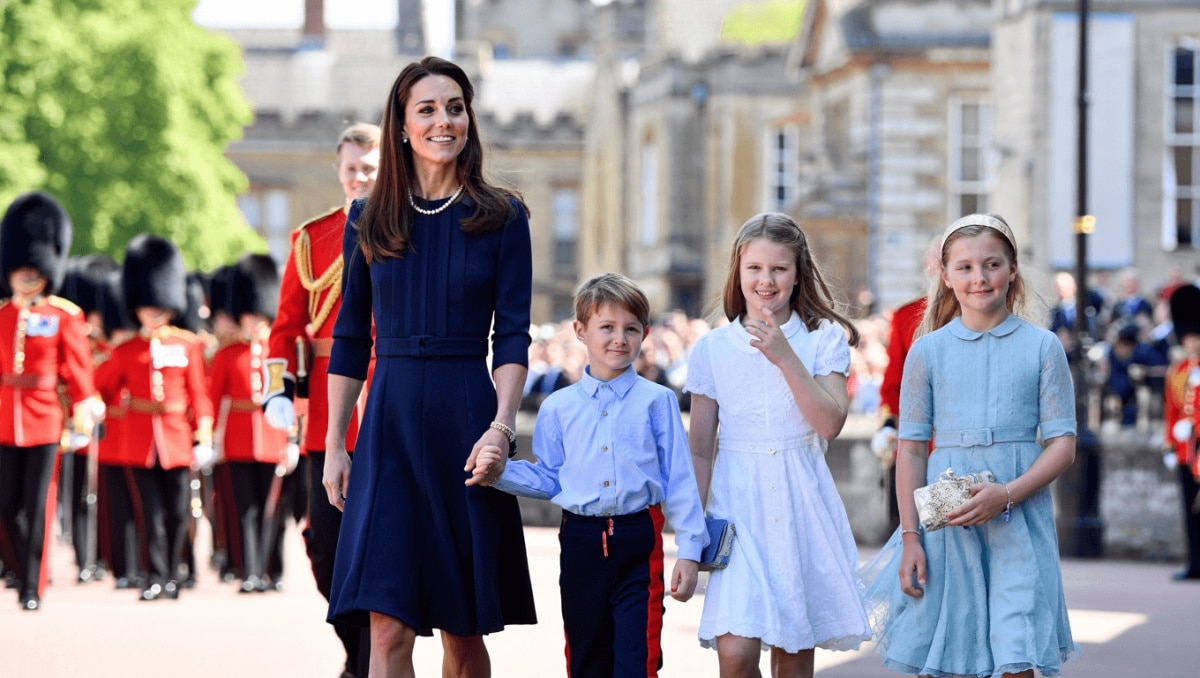
At Saturday’s Trooping the Colour, the Princess of Wales attended alongside her three children, offering one of the clearest moments of family visibility for the royal household this season. Their appearance combined the ritual pageantry of the parade with a reminder of the monarchy’s public-facing role at a time of close media attention.
What happened at the parade
The royal party arrived at Buckingham Palace for the annual Trooping the Colour ceremony, the traditional celebration of the sovereign’s official birthday. Crowds lined The Mall as the Household Division performed the drill and mounted displays; photographers captured the Princess and the children on the palace balcony shortly after the military spectacle.
Observers noted warm exchanges between the family members and members of the crowd, and commentators highlighted the children’s presence as reinforcing the family’s continuity in public duties. The atmosphere combined formal ceremony with moments of informal interaction that drew broad media coverage.
Key moments to know
- Trooping the Colour: The parade retained its role as the monarchy’s major June event, featuring mounted regiments, a flypast, and the balcony appearance.
- The Princess of Wales: Seen participating in the traditional balcony greeting and engaging with the crowd, underscoring her ongoing role in public royal duties.
- The children: Their participation attracted attention for its symbolic importance—presenting a family image to the public and media.
- Public reaction: Large numbers of spectators and sustained international media interest, consistent with previous years’ coverage.
Photographs from the day emphasize both ritual and relatability: ceremonial uniforms and carriage processions contrasted with candid family moments on the balcony. For many viewers, those juxtaposed images define the public core of Trooping the Colour.
Why this matters now
The event matters beyond the pageantry. Trooping the Colour is one of the monarchy’s few mass-visibility moments each year, and appearances by younger family members help shape perceptions of continuity and stability. At the same time, such public engagements feed into debates around the role and relevance of the royal family in contemporary life.
For readers interested in the royal calendar, the day also signals upcoming public duties and sets expectations for when and how senior royals will appear at future national events.
What to watch next
Expect continued coverage of the royal family’s schedule as the summer unfolds, including engagements where family members support charitable work and official visits. Media attention will likely follow any further balcony appearances, anniversary commemorations, or ceremonial duties that feature multiple generations.
Below are a few practical takeaways from Saturday’s appearance:
- Trooping remains a major visibility moment for the royal household and draws international attention.
- Family appearances at national ceremonies can influence public sentiment and media narratives about continuity.
- Watch for follow-up engagements that build on this public display, particularly those tied to community outreach or official duties.
Coverage from the day will continue to inform how the family is framed in both domestic and global outlets; for now, Saturday’s Trooping the Colour reaffirmed the enduring mix of tradition and public engagement that defines the event.