Did you know that Arwen, played by Liv Tyler, actually appears in the Battle of Helm’s Deep in The Two Towers, despite Peter Jackson’s best efforts to erase her from the final cut? It’s one of the best-kept secrets of the Lord of the Rings trilogy, and eagle-eyed viewers have spotted the telltale traces of the elf warrior hidden in plain sight.
The Original Plan: A Warrior Princess at the Fortress
Arwen’s presence at Helm’s Deep represents one of the most intriguing production anecdotes from the Lord of the Rings films. Initially, director Peter Jackson had a much grander vision for the character. He wanted to give Arwen more prominence in the action sequences of the second installment, so he planned to have her lead the reinforcements from Lothlórien alongside Haldir.
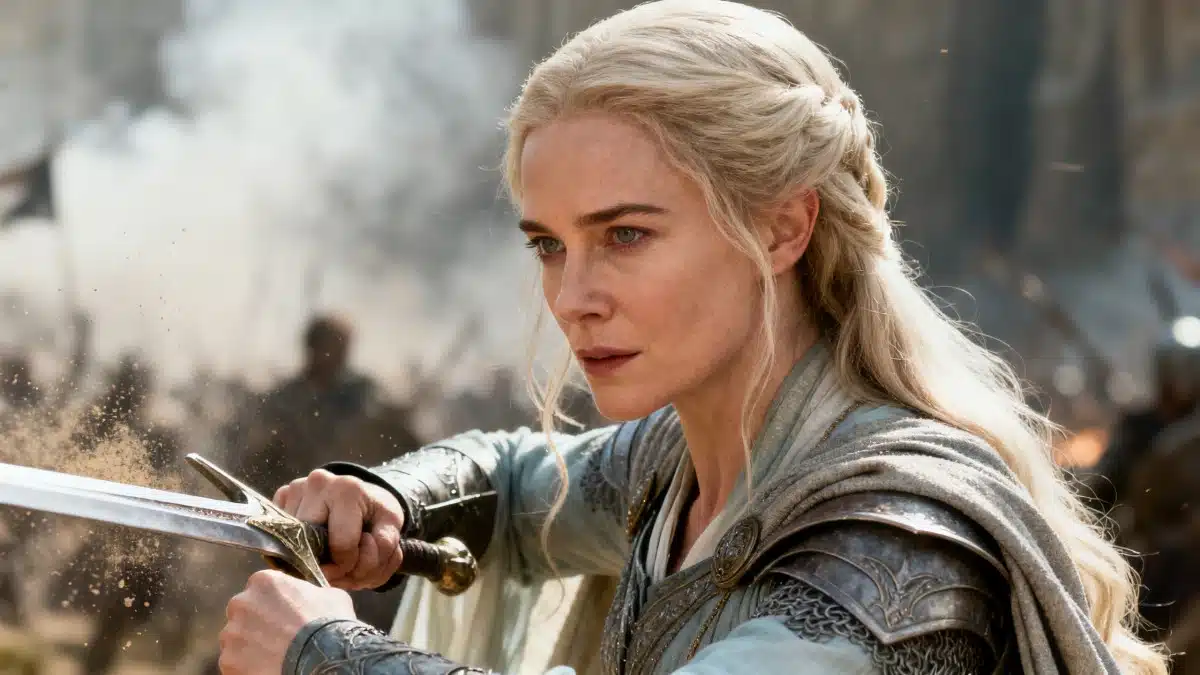
To prepare for this expanded role, Liv Tyler underwent intensive combat training. She learned sword fighting techniques and battle choreography to portray a more warlike version of the elven princess. In this alternate version of the story, Arwen was no longer content to wait at Rivendell. Instead, she would command the elven troops and reunite with Aragorn at Helm’s Deep after rescuing him from a Warg attack. It was a bold narrative choice that would have fundamentally reshaped the character’s arc.
Why the Change? Fan Backlash and Storytelling Concerns
However, as the production moved into the editing phase, Jackson and his team made a significant decision. They abandoned the plan, citing several key concerns. First, there was worry about a hostile reaction from Tolkien purists who might object to such a major deviation from the source material. Second, including Arwen in the battle threatened to complicate the romantic triangle involving Éowyn, potentially muddying the emotional stakes of that subplot.
Jackson also justified the cut on practical grounds, explaining that he needed to respect certain runtime constraints. He concluded that Arwen’s presence was no longer necessary for the overall coherence of the battle sequence. Additionally, the decision aligned with preserving J.R.R. Tolkien’s original vision and the film’s narrative structure.
Yet despite removing most of her combat scenes or replacing them entirely, the sheer scale of the original filming made a complete digital erasure technically complex. This meant that traces of Arwen remained, lurking in the final cut for those attentive enough to notice.
The Smoking Guns: Visual Evidence Still Visible
The technical team attempted meticulous digital removal, but several telltale signs slipped through. One of the most glaring occurs during the desperate retreat of the fortress defenders toward the keep. As Aragorn, Legolas, and Gimli cross a small bridge, a fourth shadow appears for a brief moment. That shadow belongs to Arwen.
You can also spot her dressed in her distinctive red cloak, weaving through the disorganized crowd of soldiers pulling back behind the massive gates of the stronghold. These moments are fleeting but unmistakable once you know what to look for.
Perhaps most surprisingly, Arwen appears to have been digitally recolored into a second Legolas during the final heroic charge. If you watch carefully as the riders surge up the ramp, you can identify a rider whose movements and sword technique differ noticeably from the woodland elf’s style, betraying Liv Tyler’s presence. There’s even a roughly two-second shot where she’s clearly visible on horseback, delivering a devastating sword strike to an Orc. Despite the studio’s considerable efforts, the Evening Star truly did walk the Helm’s Deep battlefield.
A Hidden Layer of Lord of the Rings Trivia
This hidden chapter in the Lord of the Rings production history reveals how filmmaking involves countless decisions, reversals, and compromises. Jackson’s choice to remove Arwen from the battle shows how even major creative investments can end up on the cutting room floor when narrative priorities shift. Yet the digital footprints remain, offering attentive viewers a glimpse into a version of Middle-earth that almost was.