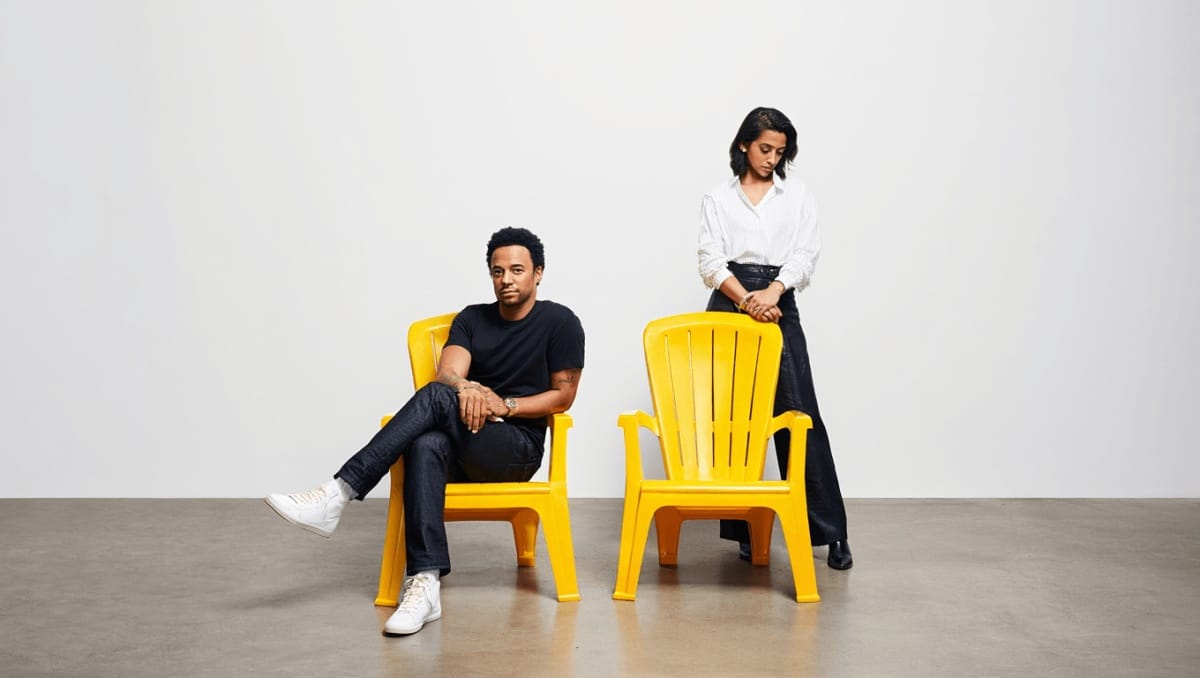
When Bad Bunny’s 2025 album featured two plastic lawn chairs on its cover, Chicago-based artist Edra Soto saw more than a pop-culture nod — she saw an invitation. Soto turned that image into a small series of upholstered chairs that trace personal memory, Puerto Rican everyday life and reggaetón’s move into institutional art spaces.
Soto, who grew up in Puerto Rico and frequently transforms household objects into artworks, says the island’s ubiquitous plastic chairs carry deep cultural meaning. The artist had sketched the concept a year before the album’s release but hesitated; after the record — which later won album of the year at the 2026 Grammys — brought the motif into the spotlight, she decided to realize the idea.
From backyard staple to gallery piece
The finished works, dubbed the BB chairs, are ordinary plastic lawn seats reupholstered in inexpensive fabric printed with portraits of Bad Bunny across different phases of his career — from early sunglasses-and-buzz-cut looks to more recent imagery. Soto intentionally used the low-cost textile for its specific look and texture; she later discovered the exact material is no longer available online, making the pieces effectively a limited edition.
The chairs are included in the Museum of Contemporary Art Chicago’s exhibition Dancing the Revolution: From Dancehall to Reggaetón, which runs through Sept. 20, 2026. The show positions both genres as forces that have reshaped global culture, and features multiple references to Bad Bunny, according to reporting from CNN and the museum’s own materials.
After the installation opened in April, Soto posted on social media that she felt proud to see the work situated within a broader historical narrative — a reaction that underscores how contemporary museums are increasingly engaging with popular music and community-rooted practices.
- Artist: Edra Soto, Puerto Rico–born, Chicago-based
- Work: “BB chairs” — plastic lawn chairs reupholstered with printed fabric
- Inspiration: Bad Bunny’s 2025 album cover and the musician’s public advocacy for Puerto Rico
- Exhibition: Dancing the Revolution: From Dancehall to Reggaetón, Museum of Contemporary Art Chicago — through Sept. 20, 2026
- Note: Original fabric no longer available, limiting future reproductions
Why this matters now: the project links a globally visible pop figure to everyday objects from Puerto Rican life and places them in a museum context, signaling how reggaetón and dancehall are being read as subjects worthy of critical and curatorial attention. For visitors, Soto’s chairs offer a compact, tactile way to consider how music, memory and material culture intersect.
Beyond the gallery, the work prompts a quieter conversation about authenticity and reproducibility in art: Soto’s reliance on a found, low-cost fabric — and her inability to source it again — highlights how choices of material can shape an artwork’s meaning and scarcity. Whether encountered by longtime fans of the music or by museum-goers newly introduced to the genres, the BB chairs sit at the meeting point of community memory and institutional recognition.