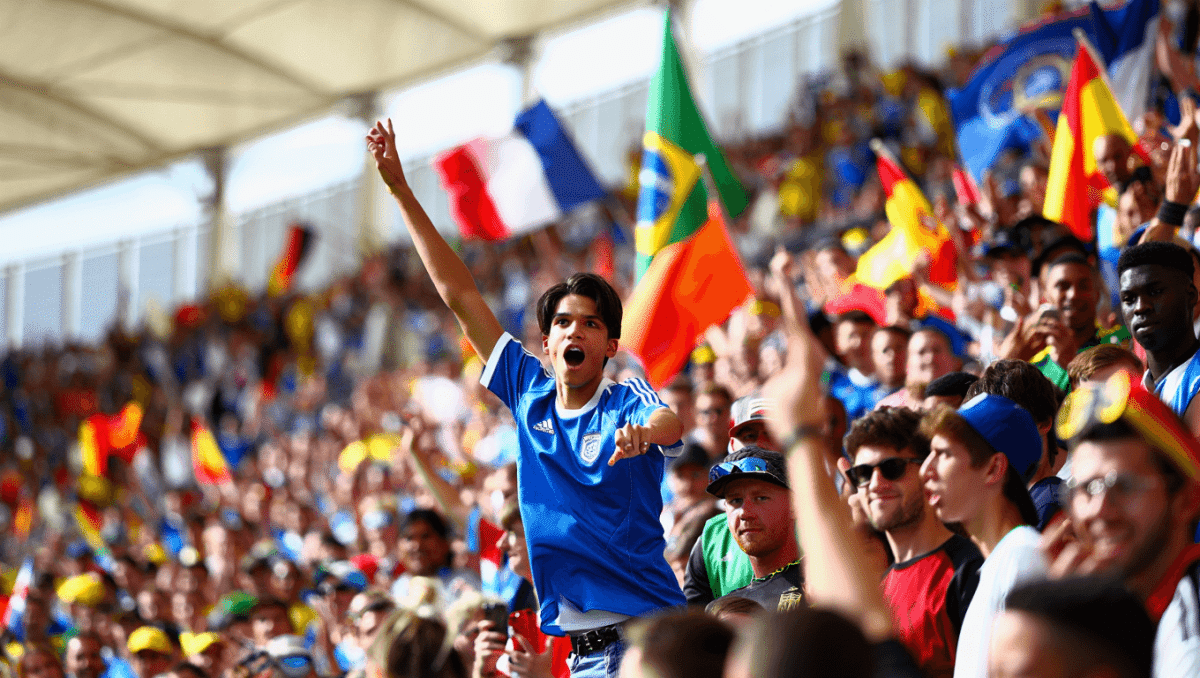
The FIFA World Cup just got bigger, bolder, and badder than ever before. Starting June 11, the tournament expands to 48 teams for the first time in history. Three countries, one legendary tournament, and more drama than you can handle. Here’s what you need to know as the soccer world erupts across North America.
🔥 Quick Facts
- Tournament Dates: June 11, 2026 to July 19, 2026, spanning over five weeks of non-stop action
- Total Matches: 104 matches across 16 stadiums in three countries, largest World Cup ever
- Host Nations: United States, Canada, and Mexico co-host for the first time in FIFA history
- Opening Match: Mexico vs South Africa at Estadio Azteca in Mexico City on Thursday, June 11
Format Revolution: 48 Teams Transform the Game
The FIFA World Cup 2026 marks a historic turning point. For the first time, 48 nations will compete instead of 32. That’s 16 additional teams creating unprecedented global opportunity. The format splits teams into 12 groups of four, meaning every team plays three matches. The top two from each group advance to the Round of 32. This expansion fundamentally changes strategy, intensity, and stakes.
The expanded format means 20 additional matches compared to previous World Cups. Teams must adapt tactics for group survival. The new structure creates unpredictability, eliminates predictable balancing, and elevates smaller nations. Fans worldwide celebrate this democratization of soccer’s greatest stage.
Triple-Host Magic: USA, Canada, Mexico Unite
Three nations hosting together breaks all precedent. 11 stadiums in the United States, 3 stadiums in Mexico, and 2 stadiums in Canada create a continental celebration. Los Angeles, New York, Dallas, Kansas City, Atlanta, Miami, Seattle, Denver, San Francisco, Phoenix, Nashville, Toronto, Vancouver, Mexico City, Monterrey, and Guadalajara will host matches.
The opening match belongs to Mexico, honoring the nation’s soccer tradition. Estadio Azteca becomes the first venue to host three World Cup opening matches. This moment represents continental unity, shared passion, and soccer’s global reach. The spectacle begins Thursday evening as Mexico faces South Africa in Group A, setting the tournament’s tone.
Key Tournament Details and Schedule
| Tournament Phase | Dates |
| Group Stage | June 11 – June 27, 2026 |
| Round of 32 | June 28 – July 3, 2026 |
| Quarterfinals | July 4 – July 7, 2026 |
| Semifinals | July 8 – July 11, 2026 |
| Final Match | Sunday, July 19, 2026 |
The draw concluded in December 2025, separating nations into balanced, competitive groups. Group A features Mexico, South Africa, South Korea, and a European playoff qualifier. Every group showcases elite talent alongside hungry underdogs. The Round of 32 eliminates 16 teams, escalating pressure immediately. Knockout matches determine champions from six Continental regions.
“From the tournament’s first whistle on June 11 to the last kick of the FIFA World Cup 2026 final on July 19, everything you need is right here.”
— FIFA Official, Tournament spokesperson
Host Nation Storylines: USA, Mexico, Canada Ready to Deliver
The United States plays multiple matches, starting June 12 against Paraguay at SoFi Stadium in Los Angeles. The USMNT faces immediate pressure as hosts. Canada and Mexico, as automatic qualifiers, enjoy group stage advantages. Each nation brings World Cup legacy, passionate fanbases, and modern infrastructure. Ticket prices start at $60 for supporter entry tiers, making matches accessible.
The triple-host format creates travel convenience for fans. Sixteen cities scattered across three countries ensure diverse audiences. Regional clubs provide world-class venues. Time zones remain manageable across North America. Logistics, security, and organization reflect FIFA’s confidence in all three nations. The stage is set for soccer history.
Will This Historic Expansion Deliver the Greatest World Cup Ever?
48 teams means 104 matches of pure competition instead of 64. More teams create more storylines, upsets, and unforgettable moments. But will quality dilute or diversity strengthen the tournament? Critics worry expanded formats reduce elite matchups. Supporters celebrate opportunities for nations like Cape Verde, Curaçao, Jordan, and Uzbekistan making their World Cup debuts. The answer comes June 11 when Mexico kicks off at Estadio Azteca.
Every team arriving in North America dreams of glory. Argentina defends their 2022 championship. France seeks back-to-back titles. Brazil hunts their sixth trophy. Dark horses emerge from expanded pools. The format favors adaptability, consistency, and depth. Previous champions face survival pressure from day one. Smaller nations get genuine chances at knockout football. This expansion could revolutionize how we view World Cup competitions forever.
Watch the Official Trailer
Sources
- FIFA Official – Tournament schedule, teams, groups, venue information, and official dates
- ESPN Soccer – Format explanation, draw results, group assignments, and match details
- US Soccer Federation – Host city announcements, USMNT schedule, and tournament details