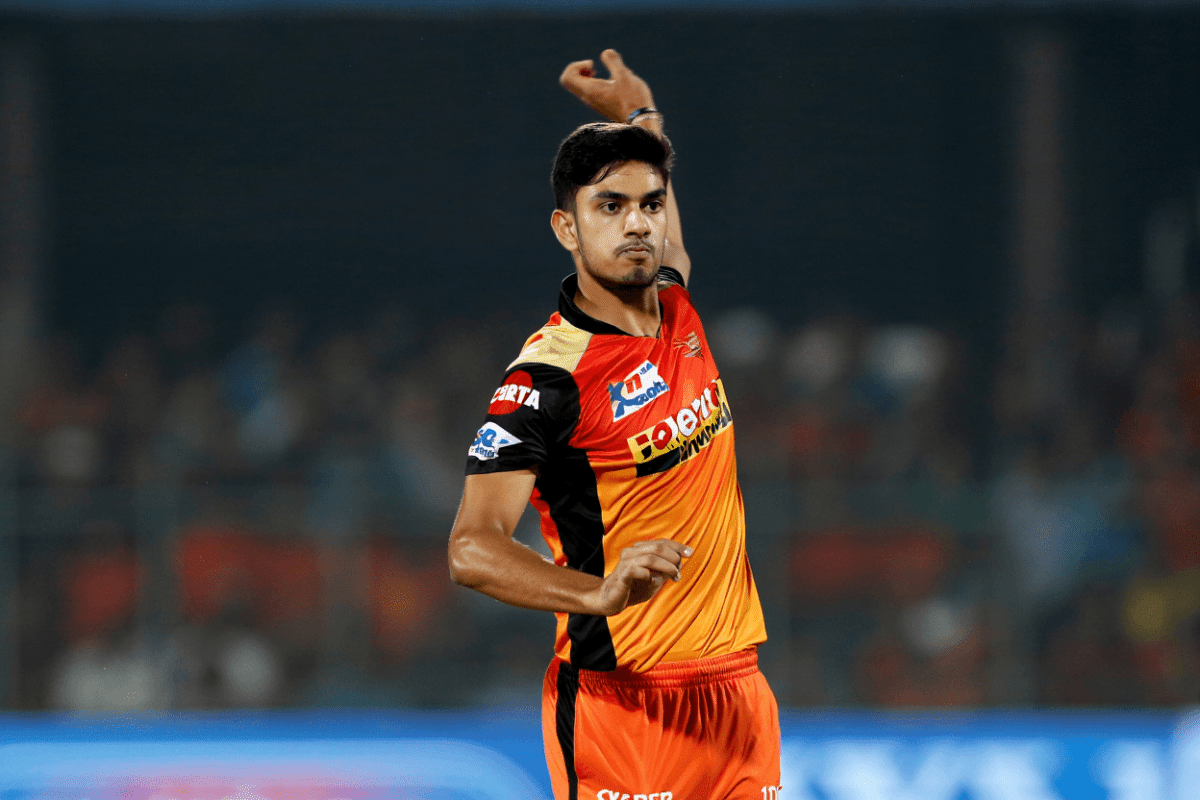
Sakib Hussain has established himself as an emerging force in IPL 2026, taking 6 wickets across 3 matches while maintaining an impressive economy rate of 7.08 after bowling 12 overs for Sunrisers Hyderabad. The 21-year-old right-arm pacer from Bihar has captured attention not just for his wicket-taking ability but for a remarkable defensive statistic: he has not conceded a single six through 72 deliveries, an exceptional feat in modern T20 cricket.
🔥 Quick Facts
- 6 wickets in 3 IPL matches at an average of 14.16 runs per wicket
- Economy rate of 7.08 after 12 overs — significantly tighter than the IPL death bowling average
- Zero sixes conceded across 72 deliveries — a defensive control marker rarely seen in IPL fast bowling
- Debut performance of 4/24 against Rajasthan Royals, joint-best figures by an Indian bowler making his IPL debut
- Acquired by SRH for ₹30 lakh at the 2026 auction, representing exceptional value from an uncapped talent
From Bihar Struggle to IPL Recognition
Sakib Hussain represents a new generation of Indian pace talent emerging from state-level cricket. Born on December 14, 2004, the 21-year-old plays domestic cricket for Bihar, a state that has historically produced fewer IPL players compared to cricket hotbeds like Maharashtra or Karnataka. His journey to the IPL underscores the league’s role in identifying talent outside traditional powerhouse regions.
Hussain caught Sunrisers Hyderabad’s attention during the 2026 auction, where he was signed for just ₹30 lakh — a price representing significant gamble and reward for an uncapped bowler. This investment has already paid dividends through his explosive early-season performance, establishing him as a legitimate death-overs specialist for the franchise.
Defensive Excellence in T20’s Aggressive Era
Hussain’s defining achievement through six wickets is not just wicket accumulation but exceptional line discipline. Across 72 deliveries, he has conceded 85 runs while taking 6 wickets, producing an economy rate of 7.08 runs per over. In an era where the IPL average economy rate for death bowlers frequently exceeds 10 runs per over, this represents elite-level control.
More striking: Hussain has not conceded a single six through his 12 overs. In T20 cricket where the six-ball is currency, preventing boundaries of this magnitude reflects superior death-bowling technique. This suggests precision with yorkers and slower deliveries, elements that separate generational talent from journeymen bowlers.
Comparative Bowling Statistics: Early Season Context
To understand Hussain’s impact within the broader IPL 2026 landscape, consider how his metrics align against peer bowlers at this stage of the season:
| Metric | Sakib Hussain (SRH) | IPL 2026 Context |
| Wickets (3 matches) | 6 | Top 5 performers: 6-8 wickets |
| Economy Rate | 7.08 | Best rates: 6.4-6.8 (Sunil Narine) |
| Bowling Average | 14.16 | Strong average; top performers: 10-13 |
| Sixes Conceded | 0 in 72 balls | Exceptional; most bowlers: 1-2 per overs |
| Matches Played | 3 | Sample still limited; verification pending at 10+ games |
This comparison reveals Hussain operating at the intersection of wicket-taking prowess and defensive control. While Sunil Narine leads with a 6.4 economy rate, Hussain’s 7.08 remains elite-tier, especially given he is bowling death overs — typically the most expensive phase in T20 cricket.
The “No Six” Defensive Marker and Its Implications
Hussain‘s inability to concede a six across 12 overs carries tactical weight. In modern IPL cricket, where contemporary entertainment trends reflect aggressive entertainment, the focus on boundaries defines outcomes. Zero sixes allowed against some of the league’s most explosive hitters — including batsmen from Rajasthan Royals, Sunrisers Hyderabad opposition — demonstrates both technical execution and psychological composure under pressure.
This statistic is not merely statistical padding; it reflects Hussain’s mastery of slower balls, variations in pace, and line discipline — skills that take years to develop. The fact he has achieved it in his debut season, as an uncapped bowler against IPL’s most experienced batsmen, elevates his status beyond early-season promise.
Debut Flashpoint: 4/24 Against Rajasthan Royals
Hussain announced himself during his IPL debut against Rajasthan Royals, returning figures of 4/24 — joint-best bowling figures by an Indian bowler making his IPL debut. This performance occurred in only 12 deliveries initially bowled, demonstrating his rapid acclimatization to IPL pressure.
The 4-wicket haul included dismissals of notable RR batsmen, signaling that Hussain possesses both skill and nerve. In a competition where debuts are notoriously difficult — batsmen have access to extensive video analysis and strategic preparation — taking four wickets represents departure from the expectation curve for new talent.
What This Performance Reveals About SRH’s Bowling Strategy
Sunrisers Hyderabad invested modestly in Hussain (₹30 lakh is approximately $3,600 USD at auction exchange rates), but the returns have been disproportionate. For context, SRH purchased additional death-bowling resources at auction, yet Hussain has rapidly claimed a role in the death overs — traditionally reserved for the most experienced specialists.
This suggests SRH’s coaching staff identified specific technical advantages: his height, release point, and variation accuracy offer dimension the franchise prioritized. The no-six record validates this evaluation, positioning Hussain as a long-term asset beyond IPL 2026.
Why This Matters for US Viewers and Global Cricket Evolution
Hussain’s emergence represents a trend reshaping global T20 cricket: the identification and development of young talent at the domestic state-level before channeling them through world’s premier franchise league. American sports audiences recognize this pattern — comparable to how MLB develops young pitchers through minor league systems, IPL progressively elevates talent from domestic cricket.
Sakib Hussain exemplifies this pipeline’s effectiveness. Within 3 matches, he has demonstrated world-class metrics in both offense (6 wickets) and defense (7.08 economy rate, zero sixes). This consistency across limited-overs format indicates technical soundness exceeding many established death bowlers.
Open Questions: Can Early-Season Excellence Sustain?
The central question surrounding Hussain enters later seasons: will batsmen adjust through repeated exposure? IPL history demonstrates that new bowlers often experience performance decline once batsmen accumulate systematic data about their variations and release points. The no-six statistic, while impressive, comes against a relatively limited sample of 3 matches.
For Hussain to confirm elite status, he must sustain his 7.08 economy rate through a full season of 12+ matches while facing the league’s most aggressive franchises. Chennai Super Kings, Mumbai Indians, and Rajasthan Royals — teams with extensive experience against young talents — will provide the true verification test for whether Hussain represents lasting innovation or a promising early-season performer.
Sources
- IPL Official Website (IPLT20.com) — Player profile, match statistics, and auction data for Sakib Hussain
- ESPN Cricinfo — Bowling economy rates, wicket records, and comparative IPL 2026 statistics
- Open Magazine Sports — April 25, 2026 analysis of Sakib Hussain’s no-six streak and SRH’s strategic positioning
- Indian Express — May 2026 IPL economy rate leaderboard tracking elite bowling performances