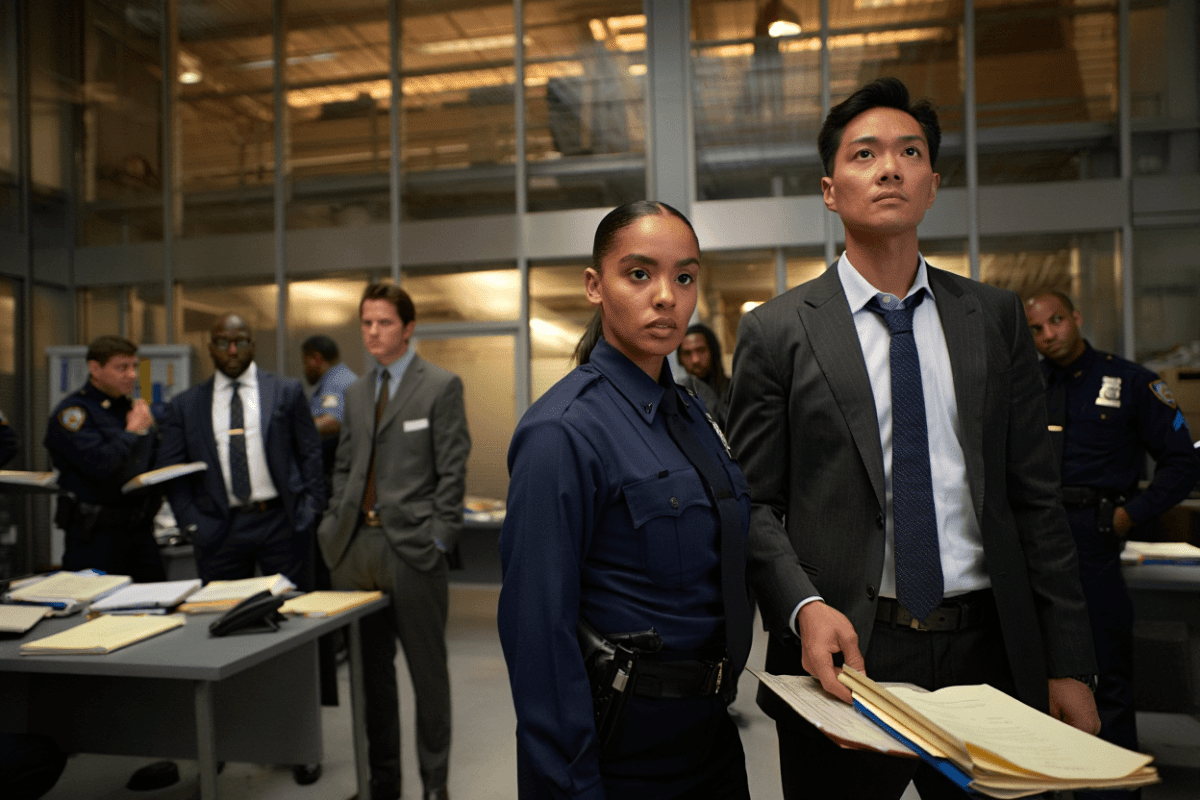
Law & Order has been officially renewed for Season 26 at NBC, marking the show’s continuation after its milestone 25th season. The network confirmed the renewal in May 2026, solidifying the iconic police procedural’s place in primetime for the 2026-2027 broadcast season. However, the renewal comes with a significant schedule change: the series is moving from its traditional 8 p.m. Thursday slot to 10 p.m. Thursday, positioning it as the anchor of NBC’s newly restructured Law & Order Thursday block featuring both the original series and its SVU spinoff.
🔥 Quick Facts
- Law & Order renewed for Season 26 — confirmed in early May 2026 by NBC
- Time slot change: 8 p.m. to 10 p.m. Thursday — starting fall 2026
- New Thursday lineup — The Traitors (8 p.m.), SVU (9 p.m.), Law & Order (10 p.m.)
- Season 25 delivered 21 episodes — concluded May 14, 2026 on NBC
- Peacock streaming success — 56% year-over-year increase during 2025-26 season
A Late-Arriving but Decisive Renewal
Law & Order’s Season 26 renewal came down to the wire, arriving much later than most broadcast renewals. According to industry reports, the order came extraordinarily close to cancellation, with negotiations extending well beyond the typical renewal window. The delay stemmed from budget discussions and strategic considerations about the show’s role within Dick Wolf’s sprawling Wolf Entertainment empire at NBC. Despite the uncertainty, the network ultimately committed to continuing the original Law & Order franchise alongside its more successful spinoff, Law & Order: SVU, which was renewed for Season 28.
The renewal decision reflects the show’s proven staying power even as primetime television landscapes continue shifting toward streaming and younger demographics. Law & Order has remained a consistent performer in the 55+ demographic while gaining traction on Peacock with younger viewers seeking classic procedural content.
The Strategic Move to 10 p.m.
The network’s decision to move Law & Order to the 10 p.m. slot represents both recognition of the show’s status as a flagship series and a restructuring of how NBC positions its Thursday night programming. Under the previous model, Law & Order anchored the evening at 8 p.m., followed by SVU at 9 p.m. The reversal—positioning SVU at 9 p.m. and Law & Order at 10 p.m.—signals a strategic shift, potentially designed to maximize lead-in audiences from 9 p.m. programming into the 10 p.m. slot.
The Traitors, a new addition to NBC‘s primetime slate, will open the block at 8 p.m., introducing viewers to the competitive reality format before transitioning to two hours of procedural drama. This structure allows NBC to maintain its long-standing dominance in detective and legal programming while diversifying the Thursday evening experience. The late-night positioning also means Law & Order will compete directly with cable programming and late-night talk shows, making the move a calculated gamble on viewer loyalty and the franchise’s proven brand strength.
Cast and Creative Continuity for Season 26
| Role | Actor | Character |
| NYPD Squad Leader | Maura Tierney | Lt. Jessica Brady |
| NYPD Lead Detective | Reid Scott | Det. Vincent Riley |
| Detective (Season 25+) | David Ajala | Det. Theo Walker |
| ADA — Legal Lead | Hugh Dancy | ADA Nolan Price |
| ADA | Odelya Halevi | ADA Samantha Maroun |
| Police Commissioner | Tony Goldwyn | Captain Halloway |
The cast of Law & Order will remain largely unchanged for Season 26, with the ensemble now established following the Season 25 additions. David Ajala, who joined as Det. Theo Walker in Season 25 following Mehcad Brooks’ departure, will continue in his role alongside returning cast members Reid Scott, Hugh Dancy, Odelya Halevi, Maura Tierney, and Tony Goldwyn. This stability in the ensemble allows showrunners to develop character arcs and procedural depth without the disruption of significant casting changes.
“It came too close to the wire for comfort, but Law & Order will live on, finalizing a Season 26 renewal for 2026-27.”
— Deadline, industry sources on the renewal negotiations
Streaming Success Driving Continued Confidence
One critical factor in the renewal decision appears to be Law & Order’s unexpected performance on Peacock. During the 2025-2026 broadcast season, the original series experienced a 56% year-over-year increase in streaming viewership on the platform, outpacing typical cable-to-streaming migration patterns. This performance demonstrates that the franchise retains appeal across demographics and delivery platforms, justifying continued investment despite the procedural genre’s competitive landscape.
SVU’s similar 46% year-over-year increase on Peacock reinforced the broader strategy of maintaining both shows in NBC’s primetime schedule while leveraging back-catalog content for NBCU’s direct-to-consumer streaming ambitions. The renewal ecosystem has shifted—traditional ratings matter, but streaming metrics now play an equally important role in renewal decisions, particularly for established franchises with loyal audiences.
What Season 26 Means for the Law & Order Franchise’s Future
Law & Order‘s renewal stands against a backdrop of significant franchise consolidation. Law & Order: Organized Crime was not renewed, signaling NBC’s focus on the core original series and SVU rather than expanding into new spinoffs. The decision concentrates creative and marketing resources on the Law & Order Thursday block, positioning both shows as tentpole programming rather than competing franchise entries.
Season 26 enters a competitive environment where procedural dramas continue facing pressure from serialized content and streaming originals. The move to 10 p.m. means Law & Order must sustain audience interest through two hours of evening procedural programming—first navigating competition from cable dramas, then claiming late-night viewers who might traditionally switch to talk shows or alternative platforms. The franchise’s renewal suggests NBC remains confident in the formula and the audience’s enduring appetite for the criminal justice procedural format.
Will the 10 p.m. Slot Help or Hinder the Show’s Momentum?
The timing of Thursday night television has historically favored earlier slots, where audiences settle in for the evening. Cable’s dominance in the 10 p.m. hour poses a structural challenge: Dateline and competing networks’ true-crime content already dominate this time period. NBC’s bet is that Law & Order‘ brand strength—36 years since debut, 1,000+ episodes, recognizable format—transcends ratings mechanics and delivers consistent audience carriage into the late-night hour.
However, streaming options also intensify competition. Viewers accustomed to consuming Law & Order via Peacock on-demand may avoid the traditional broadcast in favor of streaming flexibility. NBC hopes the 10 p.m. premiere window drives tuned-in audiences while the availability on Peacock the next day captures episodic viewers in the streaming ecosystem. This dual-platform strategy reflects modern television’s reality: success requires performing in both traditional and digital contexts.
Sources
- Deadline — Official renewal reporting, negotiation timeline, franchise strategy
- NBC Official — Fall 2026 schedule announcement, timeslot details, programming strategy
- Variety — Industry analysis of renewal decision and creative direction
- The Hollywood Reporter — Behind-the-scenes reporting on renewal negotiations and considerations
- NBC Insider — Cast information, Season 25 finale details, schedule confirmation