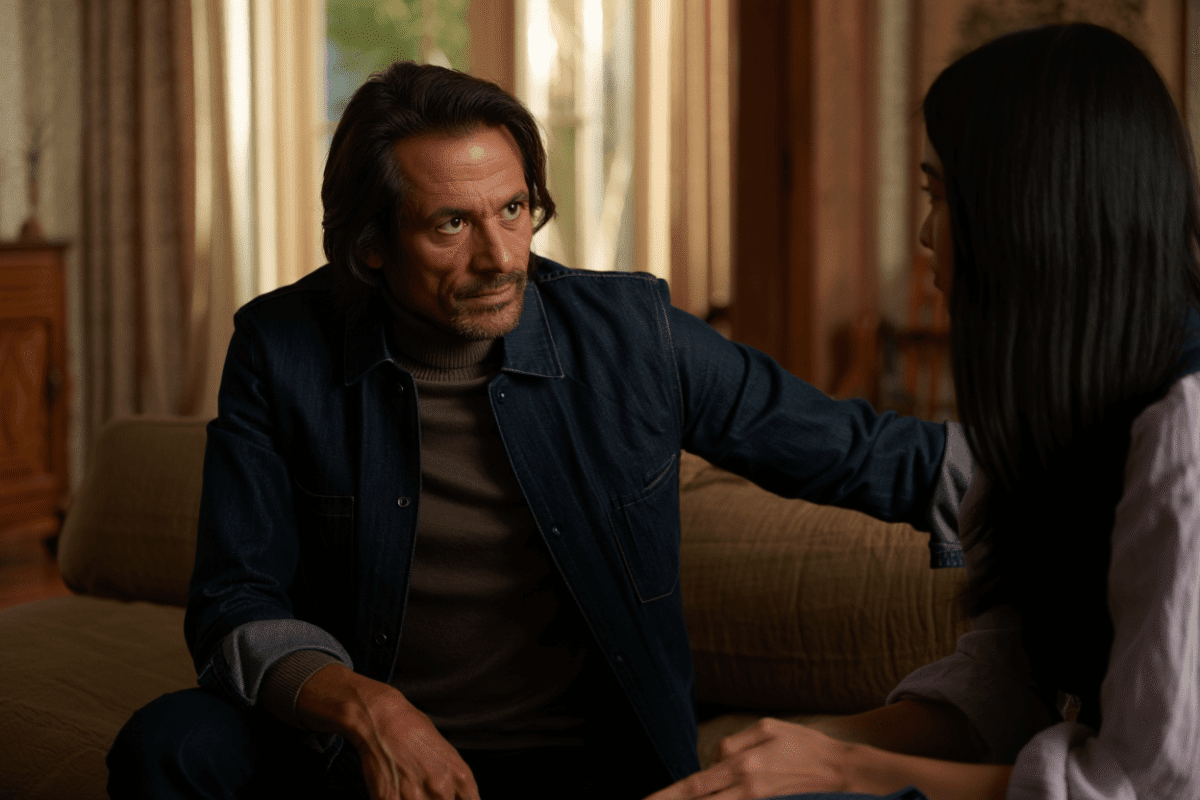
Steven Soderbergh’s John Lennon: The Last Interview premiered in the Special Screenings section at the 79th Festival de Cannes on May 15-16, 2026. The documentary captures the final in-depth conversation John Lennon and Yoko Ono gave to radio journalists on December 8, 1980—just hours before his death in New York. At 97 minutes, the film reconstructs one of music history’s most poignant and inadvertently prophetic interviews, combining archival audio with newly created visual elements.
🔥 Quick Facts
- Film premiered May 15-16, 2026 at Cannes Film Festival Special Screenings
- Records John Lennon’s final interview on December 8, 1980 at The Dakota apartment
- 97-minute runtime directed by acclaimed filmmaker Steven Soderbergh
- Features Yoko Ono discussing music, politics, and fatherhood with radio journalists
- Uses AI-generated imagery by Meta software—a controversial production choice
The Historical Context: Lennon’s Last Public Words
On December 8, 1980, as John Lennon and Yoko Ono prepared to release their album “Double Fantasy” after a five-year hiatus from recording, the music icon sat down with radio journalists from RKO Radio in San Francisco. The crew—including Dave Sholin, Ron Hummel, and Laurie Kaye—conducted what became his final interview of substance. Lennon reflected on his creative journey, his partnership with Yoko, his role as a father, and his artistic philosophy as he entered his 40th year.
This interview stands as a rare window into Lennon’s thinking during the final hours of his life. Unlike many late-career interviews, this conversation captures him engaged, thoughtful, and optimistic about his musical future. The audio recording has long been referenced by historians and biographers, but Soderbergh’s film is the first to present the nearly complete interview in cinematic form, making it a significant archival achievement for music and cultural history.
Soderbergh’s Approach: Reconstruction and Archival Innovation
Steven Soderbergh, known for films including “Sex, Lies, and Videotape” and “Ocean’s Eleven,” takes a documentary hybrid approach for this project. The director selected Special Screenings—a prestige category at Cannes reserved for eclectic and experimental films—rather than the main Competition track. This positioning signals Soderbergh’s intent to present an artistic interpretation rather than a straightforward archival document.
The film builds its narrative around the audio recording, which forms the “spine” of the documentary. Soderbergh integrates reflections from those who were present during the interview, providing historical context and personal insights. He also incorporates archival footage when available, creating a multimedia experience that honors the audio’s primacy while offering visual dimension to the viewer’s experience.
In a connection to contemporary music documentaries, similar approaches have emerged with recent releases. Paul McCartney’s recent album releases have also sparked documentary interest in archival reconstruction of iconic figures.
The Controversial Element: AI-Generated Imagery
A significant point of critical discussion surrounds Soderbergh’s use of Meta’s artificial intelligence software to generate supplementary visual content. Instead of relying solely on historical footage, the director employed AI to create additional imagery where live recordings were unavailable. This choice has generated debate within film criticism circles about the ethics of using algorithmic generation to represent historical moments.
Critics have offered mixed assessments: some argue the AI imagery disrupts the authenticity of the historical record, while others view it as a transparent artistic tool that acknowledges its own artificiality. The Guardian‘s review noted the documentary was ultimately “a disappointment,” citing how the AI sequences “undercut the documentary’s emotional and historical power.” Variety, by contrast, praised the content as “tuned in and full of life.” The Toronto Star reported the film “wowed” its critic at the festival.
This technical debate reflects broader conversations in documentary filmmaking about how to authentically represent history when complete visual records don’t exist. Soderbergh’s choice to disclose the AI usage—rather than concealing it—positions the film within contemporary conversations about transparency in media production.
Documentary Data: Cannes 2026 and the Festival Context
| Aspect | Details |
| Festival Edition | 79th Festival de Cannes |
| Dates | May 14-25, 2026 |
| Premiere Date | May 15-16, 2026 (Special Screenings) |
| Documentary Runtime | 97 minutes (1 hour 37 minutes) |
| Director | Steven Soderbergh |
| Production Company | Mishpookah Entertainment Group |
| Distribution Status | Seeking U.S. distributor (as of May 2026) |
| Original Interview Date | December 8, 1980 |
| Interview Location | The Dakota apartment, New York City |
The inclusion of the film in Special Screenings reflects Cannes’s recognition of its cultural significance. Cannes 2026 featured approximately 21 feature-length documentaries across various sections, though few received as much premiera attention as Soderbergh’s Lennon project. The festival’s historic prestige—considered the most prestigious film festival internationally—elevated the film’s profile considerably.
The documentary premiered alongside other notable films, representing Soderbergh’s return to the festival after previous successes. In terms of music documentaries at major film festivals, this release aligns with a broader trend of revisiting iconic artists’ archival material.
“John Lennon: The Last Interview captures an extraordinary and intimate moment in music history—the final in-depth conversation John Lennon ever gave.”
— Official Cannes Film Festival description
What the Documentary Reveals: Themes and Substance
According to reports from critics and festival attendees, the interview covers substantial ground. Lennon and Ono discussed music, politics, and fatherhood—topics that would define the era’s cultural conversations. The documentary captures Lennon in a reflective state, speaking about his recent creative output and his aspirations for the future. Some observers noted his comments appeared “eerily prophetic” in retrospect, given the tragic events that followed hours later.
The audio’s authenticity provides the documentary’s strongest asset. Hearing Lennon’s actual voice, his inflections, and his animated exchanges with Yoko offers an intimacy rarely captured in filmed interviews. This raw audio foundation distinguishes the project from conventional narrative documentaries, grounding it in primary historical documentation.
For rock historians, the film represents a rare chance to access material previously known only through transcripts or secondary references. The nearly complete interview—presented in full for the first time—yields previously underemphasized details about Lennon’s mindset as he stood at a creative crossroads in late 1980. This positions the documentary as significant archival work for understanding The Beatles legacy and Lennon’s solo evolution.
Related to contemporary Beatles interest, Paul Mescal’s casting in Beatles biopics demonstrates ongoing fascination with The Beatles era.
Critical Reception and Distribution Trajectory
The film’s critical reception has diverged along predictable lines: esteem for the historical material conflicted with reservations about methodology. IndieWire gave it a C grade, noting its significant flaws despite cultural importance. The Hollywood Reporter was more generous, describing it as “tuned in and full of life,” while emphasizing Soderbergh’s particular sensibility as director.
As of late May 2026, the documentary remains in distribution limbo within the United States. International festivals have screened it, but no major streaming service or theatrical distributor has yet acquired rights. This uncertain status reflects broader industry dynamics: the film’s archival value and cultural resonance are undeniable, yet its controversial technical choices and mixed critical reception may complicate acquisition discussions.
For U.S. audiences, the path to viewership likely depends on whether a bold distributor—perhaps a prestige streaming platform or arthouse circuit—sees the film’s historical importance as outweighing its technical controversies. Given the evergreen appeal of John Lennon content and the rarity of newly surfaced Lennon material, distribution remains plausible despite current uncertainty.
What Does This Documentary Tell Us About How We Remember Music History?
Beyond the specific merits or flaws of Soderbergh’s execution, “John Lennon: The Last Interview” raises fundamental questions about documentary authenticity in the digital age. When complete historical records don’t exist, how should filmmakers bridge gaps? Is algorithmic imagery a legitimate tool, or does it compromise historical truth? Should audiences be alerted to AI reconstruction, or does transparency risk alienating viewers?
The film’s existence—regardless of distribution outcome—signals that archival reconstruction has become central to how cultural institutions approach music history. Rather than accepting incomplete records, filmmakers, curators, and historians are increasingly deploying technology to complete historical narratives. Whether this represents progress or problematic revisionism will likely occupy critics for years to come.
What remains incontestable is that the audio interview itself—captured in real time on December 8, 1980—preserves John Lennon’s voice, thoughts, and presence at a pivotal cultural moment. That material’s historical value transcends any directorial choice or technical implementation, ensuring its significance will endure regardless of the documentary’s commercial fate.
Sources
- Festival de Cannes Official Website – Film selection and Special Screenings information
- The Guardian – Critical review by film critic, May 2026
- Variety – Review and production details
- The Hollywood Reporter – Festival coverage and critical assessment
- AP News – Interview with Steven Soderbergh on AI usage and film production
- Rolling Stone UK – Film review and music industry perspective
- NME – Musical and cultural analysis of the documentary
- Toronto Star – Festival attendance and critical report
- IndieWire – Distribution and industry analysis
- Time Magazine – Critical review and thematic analysis