George Lucas will unveil his $1 billion Lucas Museum of Narrative Art in Los Angeles on September 22, 2026, featuring an inaugural exhibition titled “Star Wars in Motion.” The museum’s first cinema exhibition showcases original vehicles, costumes, props, and illustrations from the first six films of the galaxy-spanning saga, representing decades of filmmaking innovation and design craftsmanship from one of Hollywood’s most influential storytellers.
🔥 Quick Facts
- Opening Date: September 22, 2026 at Exposition Park, Los Angeles
- Exhibition Focus: “Star Wars in Motion” spans Episodes I-VI with original props, vehicles, costumes, and concept art
- Lead Vehicle: Luke’s iconic Landspeeder from “A New Hope” and General Grievous’s Wheel Bike physical build from “Revenge of the Sith”
- Museum Investment: $1 billion co-founded by George Lucas and Mellody Hobson featuring 30+ inaugural exhibitions
- Architecture: 300,000-square-foot building designed by renowned Chinese architect Ma Yansong of MAD Architects
The Vision of “Star Wars in Motion”
George Lucas curated this exhibition as the centerpiece of the museum’s cinema opening to transport visitors through the visual language of propulsive motion across alien worlds. The exhibition spotlights high-speed racers, hulking transport vehicles, and flying vessels drawn from the archival collections Lucas accumulated over five decades of filmmaking. Unlike traditional museum exhibits focused on static artifacts, this presentation celebrates the kinetic artistry embedded in design—how vehicles reveal character, establish world-building, and convey narrative movement across the saga.
The exhibition draws from materials preserved in Lucasfilm’s extensive archives, many rarely displayed publicly. These pieces represent the collaborative vision of industrial designers, concept artists, and craftspeople who transformed Lucas’s creative vision into tangible form on screen. The timing of the May Fourth announcement—the unofficial Star Wars holiday marking the franchise’s cultural dominance—underscores the collection’s significance to global popular culture.
Curatorial Approach and Original Artifacts
The “Star Wars in Motion” exhibition employs a thematic design principle focusing on vehicles as central to the saga’s storytelling architecture. Featured pieces include Luke’s Landspeeder from Episode IV, which established the visual language of desert-planet technology, and General Grievous’s Wheel Bike—the first physical build of this design concept. Additional installations span the original trilogy and prequel trilogy, representing three decades of design evolution across George Lucas’s directorial work and collaborations with production designers.
Beyond physical vehicles, the exhibition encompasses costume elements, concept illustrations, and design sketches that reveal the creative process behind cinematic worlds. This multi-layered presentation strategy—combining finished props with developmental artwork—offers visitors insight into how visual storytelling translates from imagination to screen. The inclusion of more than 30 thematic galleries opening simultaneously with the museum suggests this inaugural “Star Wars in Motion” exhibition serves as an anchor piece within a broader institutional mission.
Museum Location and Architectural Context
| Museum Detail | Specification |
| Location | Exposition Park, Los Angeles (West Edge Campus) |
| Site Size | 11-acre campus on former parking lot |
| Building Size | 300,000 square feet |
| Primary Architect | Ma Yansong, MAD Architects (with Stantec) |
| Landscape Design | Mia Lehrer, Studio-MLA |
| Cost | $1 billion |
| Co-Founders | George Lucas and Mellody Hobson |
The museum occupies an 11-acre site within Exposition Park, a historic 116-acre cultural hub that already houses the California Science Center, Natural History Museum, and other major institutions. This geographical positioning places the Lucas Museum within California’s most concentrated cultural district, leveraging existing visitor traffic while expanding the park’s institutional portfolio. The architectural commission went to Ma Yansong, founder of MAD Architects, whose international portfolio emphasizes organic, flowing forms that blur boundaries between structure and landscape.
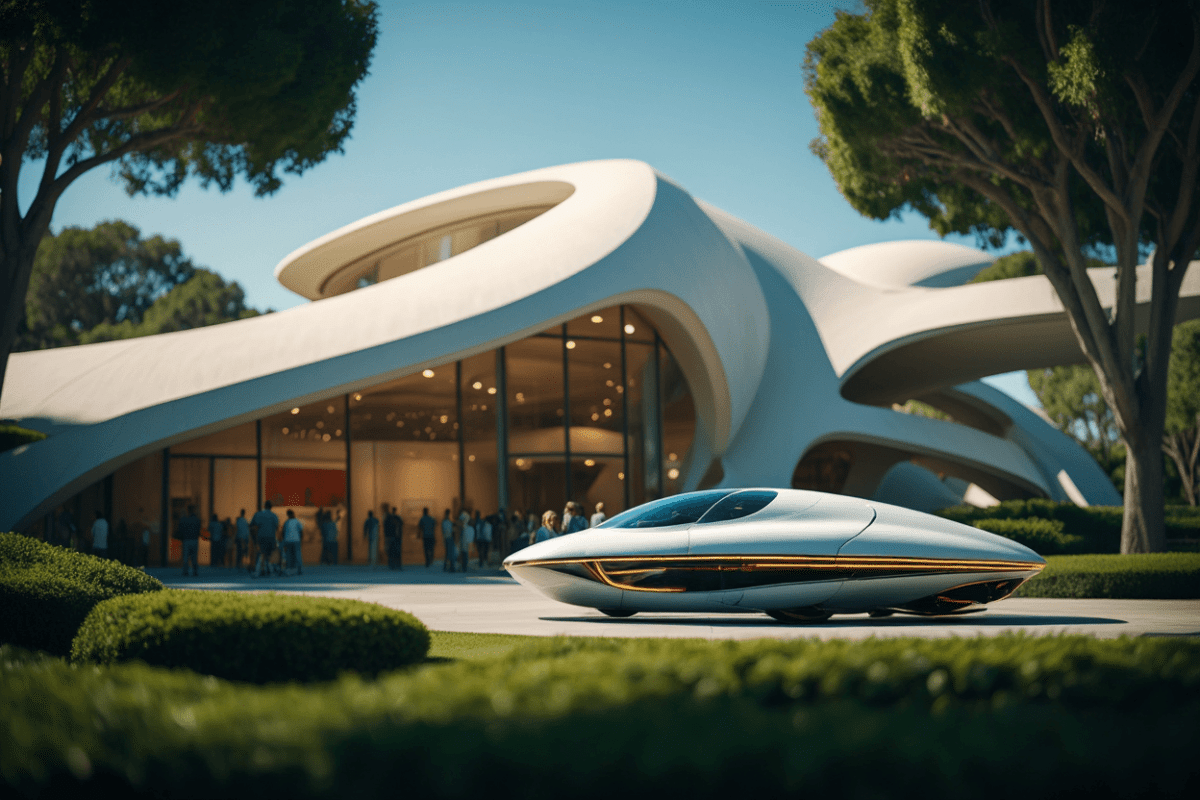
Yansong’s design concept treats the museum as a “sculptural, organic form shaped by light, clouds, and the surrounding tree canopy.” This approach contrasts with traditional museum architecture, positioning the building itself as an artwork. The 300,000-square-foot structure will feature graduated galleries, with the “Star Wars in Motion” cinema exhibition serving as one of the inaugural thematic presentations within this broader curatorial framework.
Curatorial Scope and Institutional Vision
The museum’s founding principles establish it as “a museum of the people’s art” dedicated to narrative storytelling across cultures and mediums. The opening will feature more than 1,200 objects representing visual storytelling from ancient sculptures to Renaissance paintings to modern cinema. The “Star Wars in Motion” exhibition occupies a distinctive position—it anchors the cinema pillar while simultaneously introducing broader publics to the museum’s collection thesis.
George Lucas personally curated the inaugural exhibitions, making this opening historically significant within his career trajectory. The shift from filmmaking to cultural institution-building reflects a decades-long commitment to archival preservation and public education about visual storytelling. The timing of September 2026 marks nearly 50 years since the original “Star Wars” (Episode IV) premiered on May 25, 1977—creating a ceremonial arc within film history and cultural memory.
What Will Visitors Experience in September?
The “Star Wars in Motion” exhibition will transport Los Angeles visitors into an immersive exploration of cinematic vehicle design as both artistic and narrative expression. Visitors will encounter original props, engineering specifications, costume elements, and concept artwork arranged thematically around propulsion, transport, and motion across the saga. The exhibition positions vehicles not merely as technical props but as characters and world-builders essential to George Lucas’s expansive universe creation.
Access will require admission tickets, with advance booking recommended given the anticipated attendance surge. The museum’s opening week in late September 2026 will mark a significant cultural moment for Los Angeles entertainment infrastructure, complementing the region’s existing museum network while offering unprecedented public access to materials previously held in private archives. For Star Wars enthusiasts, collectors, and cinema historians, the “Star Wars in Motion” exhibition represents the first institutional presentation of George Lucas’s original design documentation at this scale and scope.
“The exhibition ‘Star Wars in Motion’ will transport Museum visitors to a galaxy far, far away through a selection of visionary vehicle designs, props, costumes, and illustrations from across the first six films of George Lucas’s saga, featuring a wide range of high-speed racers, hulking transport vehicles, and flying vessels.”
— Lucas Museum of Narrative Art, Official Announcement, May 4, 2026
The Broader Cultural Significance: What This Means for Entertainment Archives
The opening of the Lucas Museum marks a watershed moment in how Hollywood institutions approach archival preservation and public exhibition. For decades, film industry materials remained scattered across private collections, auction houses, and specialized repositories. This museum consolidates George Lucas’s acquisitions into a dedicated public space, establishing a new institutional model for entertainment history. The “Star Wars in Motion” exhibition becomes the flagship example of this preservation philosophy.
The exhibition also signals shifting cultural attitudes toward science fiction and popular narratives as worthy of museum-level curatorial attention. Historically, such exhibitions occupied specialty venues or temporary installations. The Lucas Museum’s permanent institutional status and $1 billion investment validate visual storytelling—films, illustrations, design artifacts—as serious cultural artifacts deserving the same scholarly and preservation attention as traditional fine arts. This curatorial shift carries implications for how future entertainment collections will be valued, preserved, and presented.
Sources
- Lucas Museum of Narrative Art – Official announcements and campus information, May 2026
- Hollywood Reporter – Coverage of museum opening date and exhibition details
- Animation Magazine – Exhibition curation and artifact specifications analysis
- MAD Architects – Architectural design and campus vision documentation
- Los Angeles Times – Local coverage of inaugural exhibitions and cultural impact