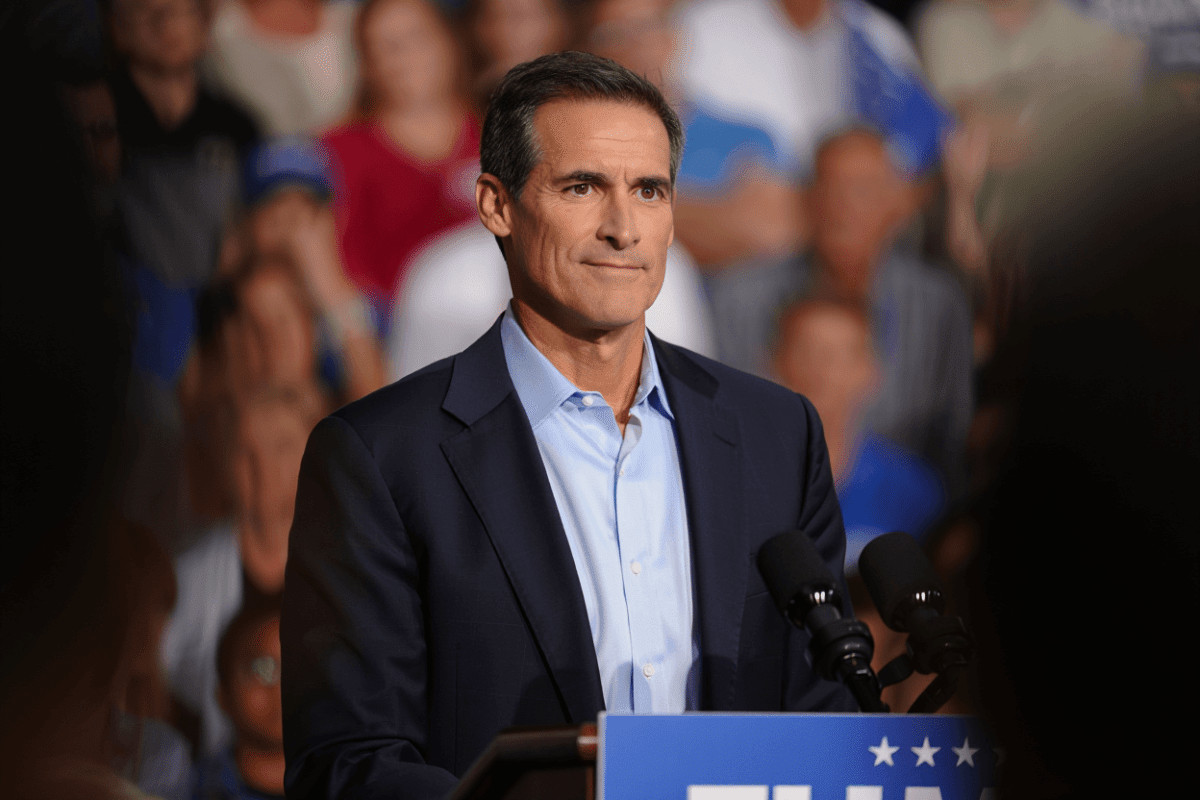
Victor Marx emerges as the dominant force in Colorado’s 2026 Republican gubernatorial primary, capturing 42% support in the first independent statewide poll released this month. The Cygnal Research & Polling survey, conducted May 7-8 among 606 Republican and unaffiliated primary voters, positions the political outsider and ministry founder significantly ahead of his nearest rivals, with his support nearly tripling the second-place candidate.
🔥 Quick Facts
- 42% initial ballot support for Victor Marx in May 2026 poll
- 59% support increases to after voters learn candidate positions
- +32 net favorability rating (45% favorable vs. 13% unfavorable)
- June 30, 2026 Republican primary election date in Colorado
- $2.5 million+ raised from all 64 Colorado counties
Historic Polling Advantage Reflects Outsider Momentum
Marx’s commanding lead represents the most decisive advantage in Colorado’s 2026 primary race. The poll data reveals stark contrasts: his nearest competitor, Barb Kirkmeyer, achieves only 13% support, while State Rep. Scott Bottoms registers in single digits despite his top ballot line from the April state assembly. The margin reflects a fundamental shift in primary dynamics—76% of likely Republican voters say Colorado is headed in the wrong direction, and 75% want major change in state leadership, according to the same survey.
Marx’s dominance extends beyond raw numbers. Among core Republicans specifically, Marx leads Kirkmeyer 53% to 9%, a gap that only widens when voters absorb more information about candidates. The post-message ballot shows 59% support for Marx after voters hear issue positions, cutting the undecided pool in half and leaving all other candidates combined unable to match his reinforced coalition.
Name Recognition and Favorability as Comparative Advantages
The +32 net favorability rating separates Marx significantly from rivals operating with minimal public awareness. Kirkmeyer carries a net +8 rating despite months of traditional campaign activity, while nearly half of Republican primary voters report never hearing her name. Bottoms faces even steeper recognition challenges, with 53% saying they don’t know who he is—a critical disadvantage in a compressed primary timeline.
This dynamic inverts typical primary patterns. Usually, frontrunners face negative exposure as opponents attack. Marx’s high favorability while leading represents a rare combination: awareness without fatigue, strength without excessive opposition research. Campaign manager Buddy Jericho attributed the results to internal consistency: “Our internal numbers have shown Victor at the top of this race from the start, and Cygnal’s independent poll lines-up almost exactly.”
Voter Priorities Align with Marx Campaign Platform
| Top Voter Concern | Percentage of Voters | Marx Platform Focus |
| Taxes and spending | Tax reduction, budget accountability | |
| Cost of living | Housing reform, affordability | |
| Illegal immigration | Border security, law enforcement | |
| Government trust | Historic lows | Transparency, anti-corruption |
The alignment between voter concerns and Marx’s messaging reflects strategic campaign positioning. 86% of Coloradans know the state is broken, Marx stated, framing the race as a choice between career politicians and an outsider committed to tangible change. His platform directly addresses the three issues ranking highest in voter consciousness—a rare coherence between campaign messaging and electorate priorities.
“Eighty-six percent of Coloradans know this state is broken and they’re right. I’m not a career politician. I’m someone who’s fed up, just like you. I got into this race to fight runaway spending, protect our borders, defend our water, and make Colorado affordable again.”
— Victor Marx, Republican Gubernatorial Candidate
Grassroots Infrastructure and Financial Resources Define Ground Game
Beyond polling numbers, Marx’s campaign infrastructure signals organizational depth matching his ballot strength. The candidate has raised over $2.5 million with contributions flowing from all 64 Colorado counties—a geographic reach uncommon for primary challengers lacking traditional party establishment backing. This distributed fundraising base indicates strong grassroots engagement rather than concentrated donor dependence.
Thousands of volunteers are actively mobilizing across the state, according to campaign materials, providing the field operation required to convert poll support into primary votes. The combination of record fundraising, statewide volunteer network, and growing grassroots momentum creates compounding advantages as the June 30 primary approaches. Unaffiliated voters comprise 35% of the primary electorate, and Marx’s lead among this swing-sensitive group provides another structural advantage toward November’s general election.
What This Poll Means for the Colorado Republican Race
The May 7-8 Cygnal survey (±3.98% margin of error) captures a specific moment in a primary race still five weeks from voting. However, the consistency between Marx’s internal polling and independent results reinforces the survey’s authenticity. Unlike many primary polls showing fluid dynamics, this snapshot reveals remarkable solidity—Marx maintains his lead across subgroups and ballot orderings.
For competing candidates, the data presents difficult realities. Kirkmeyer’s main-line ballot status, secured through the April state assembly, appears insufficient to overcome name recognition deficits. Bottoms’s top placement similarly hasn’t translated to polling momentum, suggesting that traditional primary advantages hold diminished power in a race where 75% of voters seek transformational change. Both face the mathematical challenge of gaining ground against an opponent who dominates on both awareness and favorability simultaneously.
Can Early Polling Predict Colorado Primary Outcomes?
Historical primary data offers mixed signals. Early frontrunners frequently maintain leads through voting day—but not always. The weighted sample (606 likely voters with defined primary participation) provides statistical reliability for current sentiment, yet five weeks of campaigning, debate exposure, and opposition messaging remains. Marx’s refusal of a May 14 debate invitation, while his campaign projects confidence, also removes an opportunity for opponents to directly challenge his dominance in front of viewers.
Still, the polling reflects authentic voter sentiment: Colorado Republicans appear ready to nominate an outsider physician and ministry leader over establishment-favored candidates. This aligns with national Republican trends favoring anti-establishment narratives. Whether Marx’s current lead survives primary voting—or if competing campaigns successfully tighten the race through earned media and debate performance—will determine whether this May data represents a preview or proof of broader dynamics.
Sources
- Cygnal Research & Polling – May 7-8, 2026 Colorado statewide Republican primary poll (N=606, ±3.98% MOE)
- Victor Marx for Governor Campaign – Official poll release and candidate position statements
- Colorado Secretary of State Elections Division – Primary election date and candidate registration data
- Ballotpedia – 2026 Colorado gubernatorial election candidate profiles and results
- Colorado Politics – April 2026 GOP state assembly coverage and April 11 ballot certification