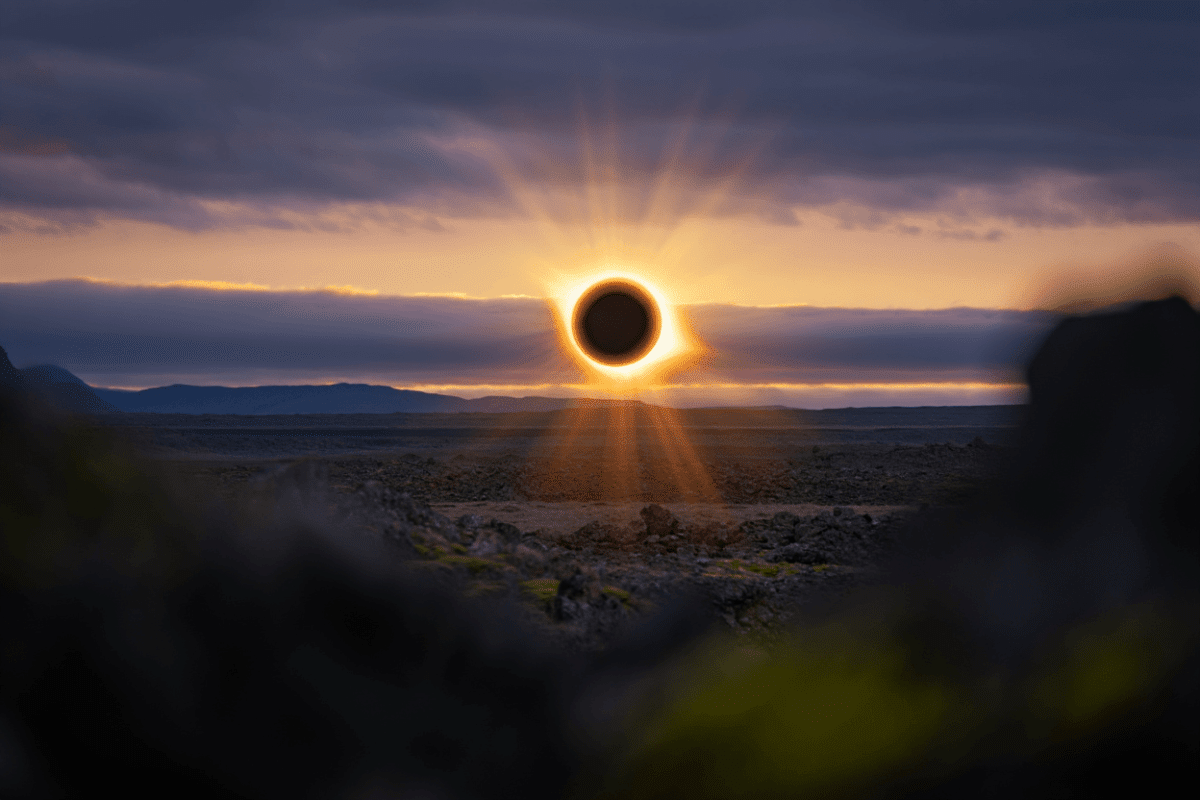
Destiny awaits on August 12, 2026. The first total solar eclipse visible from mainland Europe since 1999 will reach totality across Greenland, Iceland, and Spain. Have you started planning your viewing location yet?
🔥 Quick Facts
- Date: August 12, 2026, at approximately 17:46 UTC
- Duration: Maximum of 2 minutes 18 seconds near the point of greatest eclipse
- Path of Totality: Crosses Arctic, Greenland, Iceland, Atlantic Ocean, and northern Spain
- Best Locations: Scoresby Sound Greenland, Icelandic highlands, Oviedo Spain
The Path Crosses Three Continents
Europe’s rare eclipse will begin over Russia’s Taymyr Peninsula at sunrise. The moon’s shadow will then race across the Arctic Ocean, striking Greenland’s dramatic eastern coast with maximum totality. From there, it travels westward through Iceland’s volcanic landscapes. Finally, the path touches down in northern Spain, making final landfall in Portugal before sunset. The entire eclipse traverses 5,157 miles across Earth’s surface.
The eclipse won’t be visible from the United States or most of North America. But for European eclipse chasers and Arctic adventurers, this is a once-in-a-lifetime opportunity. Weather becomes the critical variable—cloud cover in Greenland and northern Spain is historically common in August.
Why Iceland and Greenland Offer the Longest Views
The point of greatest eclipse occurs just 45 kilometers off the western coast of Iceland, near coordinates 65°10.3′ N and 25°12.3′ W. This location provides the absolute maximum duration of 2 minutes and 20 seconds of totality. In Greenland’s Scoresby Sound fjord, the longest totality stretches to approximately 2 minutes and 18 seconds as well. Both locations sit directly on the eclipse’s centerline.
In contrast, viewers in northern Spain experience shorter windows. Oviedo, one of the shadow’s southern limits, will witness approximately 1 minute 50 seconds of totality. Gijón, slightly further south, gets about 1 minute 45 seconds. Still, these durations represent extraordinary celestial events for Spanish observers.
Planning Your Viewing Expedition
| Location | Duration | Max Eclipse Time | Altitude |
| Scoresby Sound, Greenland | 2m 18s | TBA | High |
| Off-coast Iceland | 2m 20s | 17:46 UTC | Highest |
| Oviedo, Spain | 1m 50s | 20:28 local | 25° |
| Gijón, Spain | 1m 45s | ~20:27 local | ~25° |
Expedition cruises are already booking up. Tour operators offer Arctic voyages to Greenland priced from $13,000 to $20,000 per person. Land-based tours in Iceland and Spain offer more affordable alternatives. The Spanish cities of Oviedo and Gijón in the Asturias region will become eclipse tourism hotspots.
“The first total solar eclipse for mainland Europe since 1999 is visible from parts of Russia, Greenland, Iceland, and Spain.”
— Time and Date, Eclipse Information Service
What Makes This Eclipse Historic
The last total solar eclipse seen from mainland Europe occurred in August 1999 across Turkey, Romania, and France. That was 27 years ago. The 2026 eclipse represents a historic return for European skywatchers who missed that opportunity. After this August 2026 event, the next total eclipse visible from Europe won’t occur until August 2, 2027. Just one year later, an even longer eclipse will cross North Africa and the Middle East.
This timing makes 2026 special. Eclipse chasers worldwide compete for optimal viewing spots. Hotel and transportation infrastructure in Greenland remains limited. Icelandic tourism will peak. Spanish cities are scrambling to prepare hotels and restaurants. The global eclipse-chasing community estimates hundreds of thousands of observers will converge on the path of totality.
Should You Book Your Eclipse Adventure Now?
With only three months remaining until the eclipse arrives, decisions must be made immediately. Greenland expeditions require advance bookings due to extreme logistical challenges. Iceland offers more flexible options but crowds will accumulate quickly. Spain provides the most accessible and affordable viewing experience for North American observers willing to travel internationally.
The real question isn’t just where to go, but whether you’re ready to witness a celestial spectacle that transforms the daytime into darkness for roughly two minutes. Will you be under the moon’s shadow on August 12?
Watch Planning Guides:

How to Plan the Total Solar Eclipse of August 12, 2026, with PhotoPills
Sources
- National Solar Observatory (NSO) – Official eclipse mapping and path data for August 12, 2026
- Space.com – Expert-verified viewing locations and eclipse predictions across three continents
- Time and Date – Precise timing, duration, and maximum eclipse calculations by location