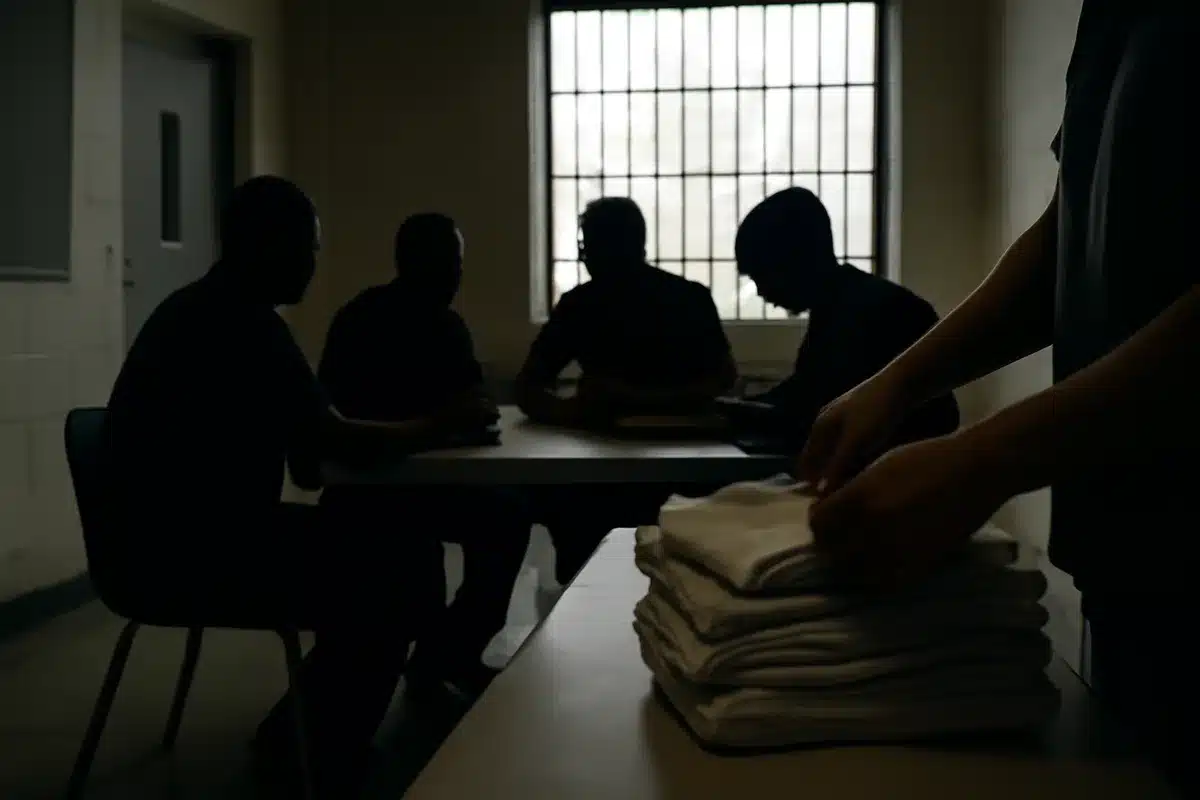
Turkey just deported one of India’s most wanted criminal masterminds. Salim Dola, a 59-year-old drug trafficking kingpin linked to Dawood Ibrahim‘s notorious D-Company syndicate, landed in Indian custody on April 28. This deportation signals a quiet but powerful diplomatic reset between Ankara and New Delhi on counterterrorism. What does this mean for organized crime in South Asia?
🔥 Quick Facts
- Deported: Salim Dola brought from Istanbul to Delhi on April 28, 2026
- Crime History: Linked to Rs 1,000 crore fentanyl seizure in 2018 with international drug routes to Mexico
- Fake Identity: Lived in Turkey as ‘Hamza’ using a Bulgarian passport for years of hiding
- Custody: Remanded to Narcotics Control Bureau (NCB) till May 8 for interrogation
Who Is Dawood Ibrahim’s Right-Hand Man Salim Dola?
Salim Ismailbhai Dola is a Mumbai-born narcotics trafficker who climbed the ranks of organized crime through decades of audacious smuggling operations. First arrested by the NCB in 2012 with 80 kilograms of marijuana, Dola spent years building an international drug empire spanning Middle East, Africa, and Europe. His criminal resume includes trafficking heroin, charas, mephedrone, mandrax, and methamphetamine.
In 2018, 100 kilograms of fentanyl were recovered during his second arrest. After some samples tested negative, Dola secured bail and vanished. He fled to the UAE, then to Turkey, armed with a fake passport. For years, no one knew where he was hiding. Turkey knew. India knew. And neither said a word.
The Double Life in Istanbul, Turkey
Salim Dola lived under the identity ‘Hamza‘ in Istanbul, documented by a Bulgarian passport that cleared customs and raised no alarms. He was tracked through Turkish Intelligence Agency operations and detained by Beylikduzu police after critical intelligence failures exposed his location. Dawood’s lieutenant thought he was invisible, but counterterrorism networks had been closing in since March 2024. An Interpol Red Notice, issued on India’s formal request, finally caught up with him.
His arrest timeline reveals how law enforcement moved methodically. Turkish authorities blocked his citizenship application, denying him the protection he sought. They then coordinated with Indian agencies through diplomatic channels. By late April, Dola was airborne, heading to his reckoning in New Delhi.
What Does This Reveal About India-Turkey Relations?
| Factor | India-Turkey Dynamic |
| Security Cooperation | Sustained pragmatic alignment on counterterrorism despite political friction |
| Historical Pattern | 2019: Mishaal Kunhimon deported; 2015: ISIS recruits from Tamil Nadu intercepted |
| Institutional Framework | India-Turkey Joint Working Group on Counter-Terrorism meeting (July 2019) |
| Broader Context | Turkey maintains political proximity with Pakistan; still shares security intelligence with India |
Dola’s deportation is more than a police victory. It represents functional security cooperation between nations that maintain geopolitical tensions. Turkey’s position on Kashmir and its alignment with Pakistan have periodically strained ties with New Delhi. Yet on the operational front, counterterrorism and organized crime enforcement remain insulated from politics. According to an Indian security official quoted in media reports, both nations sustain a pragmatic working relationship governed by shared security threats.
The deportation follows a pattern: January 2019 saw Mishaal Kunhimon deported for alleged ties to Indian Mujahideen and ISIS networks. In 2015, at least two Tamil Nadu men planning to join ISIS were intercepted in Turkey and sent home. This shows Ankara’s long-standing willingness to act against transnational terror movements involving Indian nationals.
The Global War on Narcotics Trafficking
Salim Dola’s arrest exposes a brutal truth: Global narcotics syndicates no longer operate in regional silos. D-Company lieutenants like Dola coordinate with Mexican cartels, Middle Eastern smugglers, and European distributors. The Rs 1,000 crore fentanyl seizure in 2018 revealed links stretching to Mexico, suggesting that Indian underworld kingpins have embedded themselves in the Western Hemisphere’s drug trade.
Dola’s two-decade criminal footprint included orchestrating high-value seizures across Maharashtra and Gujarat. He became known as a key supplier of mephedrone, a synthetic drug with explosive demand in clubs and raves across multiple continents. His network proved so sophisticated that Indian agencies had to coordinate across borders to bring him down. Interpol, Turkish intelligence, and the NCB worked in tandem to close the loop.
Will This Deportation Weaken Dawood Ibrahim’s Empire?
Salim Dola’s arrest raises urgent questions about D-Company’s future. Dawood Ibrahim, the elusive crime boss who founded D-Company in the 1970s, has operated from Pakistan for decades, allegedly with state protection. As lieutenants like Dola fall, does the organization fragment or adapt? Intelligence analysts note that modern underworld syndicates are cellular. Losing one node may disrupt operations but rarely dismantle them entirely. Yet every high-profile arrest sends ripples through networks, forcing reorganization and exposing vulnerabilities. What other operations will unravel as NCB interrogates Dola about his smuggling routes, financial flows, and co-conspirators?
“Dola’s deportation is more than a law enforcement success; it reflects a pattern of functional cooperation between Turkey and India.”
— India Today, Security Analysis
Watch: The Global Hunt for Dawood’s Criminal Network

Sources
- Hindustan Times – Detailed reporting on Salim Dola’s fake identity and Turkish detention
- India Today – Analysis of India-Turkey counterterrorism cooperation and diplomatic significance
- NDTV – Breaking coverage of Dola’s deportation and D-Company links