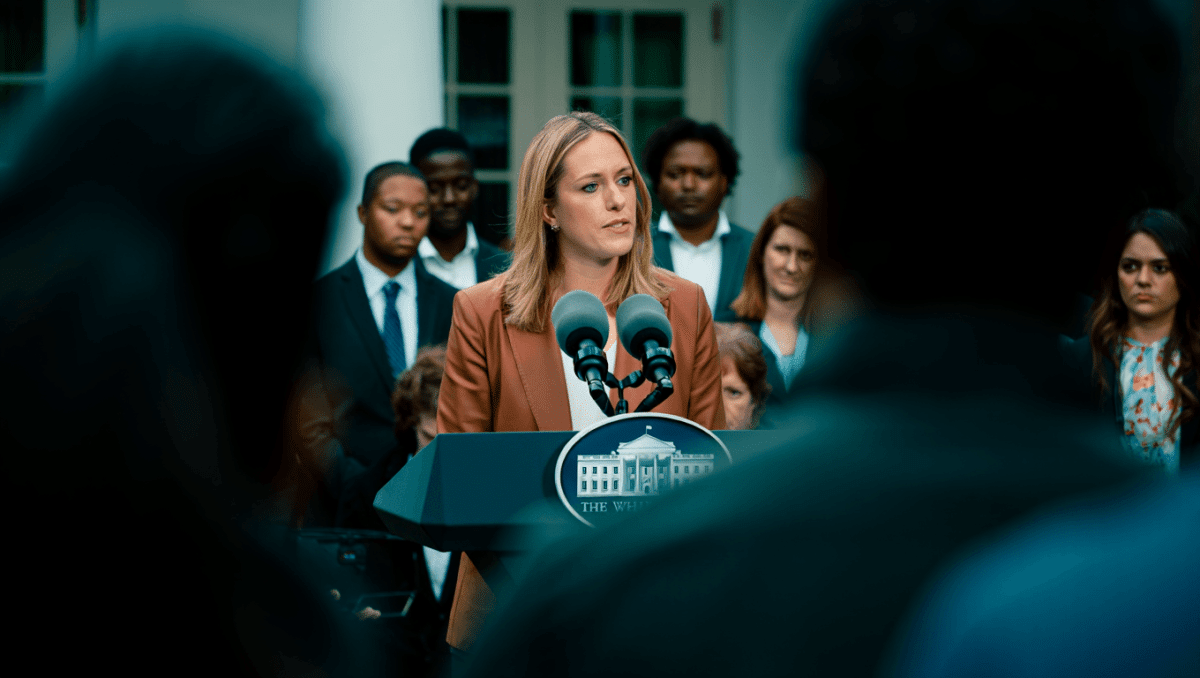
Press Secretary Karoline Leavitt commands the briefing room with electrifying announcements, declaring Operation Epic Fury a historic victory. In just 38 days, America’s military achieved what few thought possible. Iran’s military threat has been decimated, and now intensive two-week peace negotiations begin to reshape Middle East stability.
🔥 Quick Facts
- Military Timeline: Achieved 38 days military objectives in record time, crushing Iran’s defense industrial base
- Scale of Operations: More than 13,000 targets struck across Iran, 150 naval vessels destroyed, 97% of naval mines targeted
- Negotiation Team: Vice President JD Vance leads talks in Islamabad starting Saturday with diplomatic specialists
- Central Condition: Strait of Hormuz must remain open and free for ceasefire to hold during two-week period
Press Secretary Delivers Victory Narrative
Karoline Leavitt, commanding the podium with precision, framed the ceasefire as vindication of Trump’s maximum pressure strategy. She emphasized that Iran capitulated after enduring relentless military strikes, not the other way around. The briefing showcased detailed destruction metrics, from 13,000 targeted strikes to zero submarine vessels remaining in Tehran’s fleet. Leavitt defended the administration’s tough rhetoric, arguing results matter more than tone.
Her performance balanced celebration with caution, warning reporters against speculating about sensitive ongoing negotiations. Iran’s duplicity was highlighted repeatedly, drawing distinction between public Iranian statements and private communications with American negotiators.
The Military Accomplishment
Operation Epic Fury achieved unprecedented destruction in compressed timeframe. The US military destroyed Iran’s ability to manufacture weapons, decimated its ballistic missile arsenal, and eliminated its drone launching capabilities. Iran’s air force, once flying 30 to 100 flights daily, now flies zero. The Iranian Navy, historically the region’s largest undersea force, now possesses zero submarines. Leavitt underscored that 13 American service members made the ultimate sacrifice in this effort.
Diplomatic leverage created by military success enabled Trump’s negotiating team to demand Iran accept a revised, more reasonable modified proposal after rejecting Tehran’s initial 10-point plan as fundamentally unserious.
Negotiation Framework and Key Details
| Negotiation Element | Status |
| Duration | Two weeks from April 8, 2026 announcement |
| Chief Negotiator | Vice President JD Vance leading team |
| First Round Location | Islamabad, Pakistan, Saturday morning |
| Non-negotiable Condition | Free, safe, immediate Strait opening |
Leavitt announced Vice President Vance’s dispatch to Islamabad with Special Envoy Witkoff and Jared Kushner, signaling serious diplomatic intent. China’s involvement was confirmed, with the President maintaining respect for President Xi and planning a visit within weeks. Iran’s nuclear ambitions remain Trump’s ultimate red line, non-negotiable in final agreements.
“Iran could no longer tolerate being bombed or taking the gamble of what was to come…They have agreed to open the Strait of Hormuz.”
— Karoline Leavitt, White House Press Secretary
Rhetorical Defense and NATO Tensions
When challenged on Trump’s rhetoric about civilizations being destroyed, Leavitt argued tough language produced results. She contended the President has moral high ground given Iran’s 47 years of death-to-America chants and decades of killing American soldiers. She also delivered sharp criticism of NATO, quoting Trump directly: ‘They were tested, and they failed.’ Leavitt accused European allies of turning backs on America while funding her defense, setting tense stage for Trump’s afternoon NATO meeting with Secretary General Rutte.
Reporters pressed on contradictions regarding Strait of Hormuz tolls, Iranian uranium enrichment, and Lebanon’s exclusion from ceasefire. Leavitt maintained firm positions while leaving room for negotiated solutions during upcoming two-week window.
What This Briefing Means for Middle East Diplomacy
This April 8 briefing marked a theatrical pivot from military dominance to diplomatic engagement. By controlling narrative through detailed metrics and historical references, Leavitt framed ceasefire as American triumph rather than negotiated compromise. Two-week timeframe adds urgency to talks while maintaining military readiness. The briefing revealed administration confidence in military achievements but caution about diplomatic outcome. Chinese intermediary role, Vance’s prominent position, and uranium enrichment focus suggest comprehensive approach to permanent resolution. Will negotiations succeed or collapse when 14 days expire?

Sources
- C-SPAN – White House Daily Briefing video coverage and complete transcript from April 8, 2026
- Rev.com – Full press briefing transcript with Karoline Leavitt’s detailed remarks on ceasefire negotiations
- Reuters – Iran ceasefire and Strait of Hormuz reporting following briefing announcements