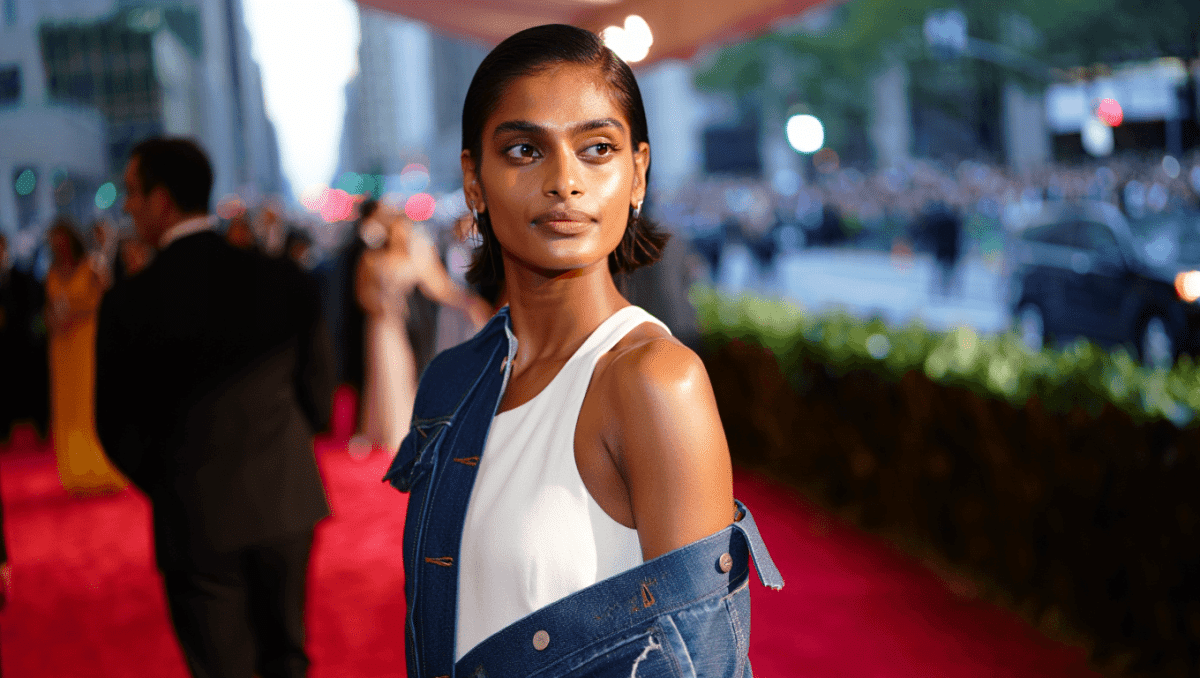
Bhavitha Mandava made her Met Gala debut earlier this week in understated Chanel, sparking a cultural firestorm about representation and expectation. The Indian model’s minimalist look masked a profound statement that divided the fashion world in unexpected ways.
🔥 Quick Facts
- Historic Milestone: First Indian model to open a Chanel show in December 2025
- Design Innovation: Wore custom Chanel trompe l’oeil illusion denim, not actual jeans
- Internet Backlash: Two-day debate erupted online over perceived “casual” styling choice
- Designer Support: Matthieu Blazy publicly backed the look after controversy
A Historic Moment Obscured by First Impressions
Mandava arrived at the Met Gala May 4th wearing what appeared to critics as a simple tank top and faded denim. The look felt intentionally minimal in a sea of couture gowns and avant-garde statements. Yet the outfit wasn’t what it appeared to be at all. Creative director Matthieu Blazy designed the jeans as a trompe l’oeil, an optical illusion painted directly onto the fabric.
The Telugu-origin model became only the second Indian woman ever dressed by Chanel at the Met. Her December appearance opening the Métiers d’Art show in New York cemented her place in fashion history. This second appearance should have cemented her legacy further.
The Design That Nobody Understood
Social media erupted within hours. Influential fashion accounts called it lazy. Critics suggested Chanel was disrespecting Mandava by sending her in what resembled street clothes. The narrative formed quickly: a historic moment squandered in denim and indifference. The internet’s collective reaction felt swift and harsh.
Yet fashion insiders who actually examined the piece grasped its brilliance. The trompe l’oeil technique created a couture illusion of everyday wear. This subversion of expectation made the look conceptually bold. Blazy‘s choice reflected Mandava’s own origin story instead of forcing her into traditional gala conventions.
Cultural Representation and the Conversation It Sparked
| Perspective | Key Point |
| Critics | Underrepresentation of Indian culture and glamour |
| Supporters | Authenticity matters more than conventional opulence |
| Designers | Conceptual innovation through textile illusion artistry |
| Indian Community | Pride mixed with questions about cultural presentation |
The debate deepened questions about representation at fashion’s biggest stage. Some argued that Indian models deserve to wear traditional garments or vibrant couture. Others contended that forcing stereotypes onto performers contradicts genuine representation. Mandava became the focal point of larger conversations about power dynamics in luxury fashion.
The Designer’s Statement and Journey Forward
“You gave me space to grow, and find my place in fashion and in this industry. Thank you for believing in me and trusting me with a vision.”
— Bhavitha Mandava, via Instagram post
Days after the controversy peaked, Mandava shared a heartfelt Instagram post thanking Blazy directly. Her message emphasized growth and vision over conformity. The Chanel ambassador refused the narrative of failure that critics had crafted. Her dignity in response elevated the conversation beyond initial judgment.
What the Backlash Reveals About Fashion’s Expectations
This moment exposed deeper industry biases that few discuss openly. The assumption that Indian representation requires spectacle, volume, or tradition suggests that authentic presence must always perform. Mandava challenged that premise simply by showing up. Her understated look questioned whether global representation truly means freedom or merely different constraints.
Matthieu Blazy and Chanel risked major backlash to make a statement statement about artistic vision over expectation. Whether the gamble succeeded depends entirely on how fashion history chooses to remember the moment.
Will This Controversial Debut Define Her Legacy?
The question now becomes whether Mandava’s Met Gala debut will inspire future boundary pushing or fade as a cautionary tale. Fashion thrives on unexpected choices, yet audiences often resist them initially. Chanel’s first Indian ambassador proved that historic firsts don’t guarantee universal appreciation. What remains certain is that she sparked a necessary conversation about who gets to define representation and why.