Show summary Hide summary
David Lynch’s Mulholland Drive just hit a major milestone, and the debate over its meaning is more intense than ever. Twenty-five years after its 2001 release, this neo-noir masterpiece ranks as the greatest film of the 21st century on one major critics poll, yet its meaning remains gloriously mysterious.
🔥 Quick Facts
- Release Date: May 16, 2001 at the Cannes Film Festival, October 2001 in the United States
- Director: David Lynch, who passed away in January 2025, just months before this anniversary
- Awards: Best Director at Cannes, plus BAFTA wins for editing and music
- Rankings: BBC named it the best film of the 21st century, ahead of hundreds of competitors
An Unsolvable Mystery That Keeps Hollywood Talking
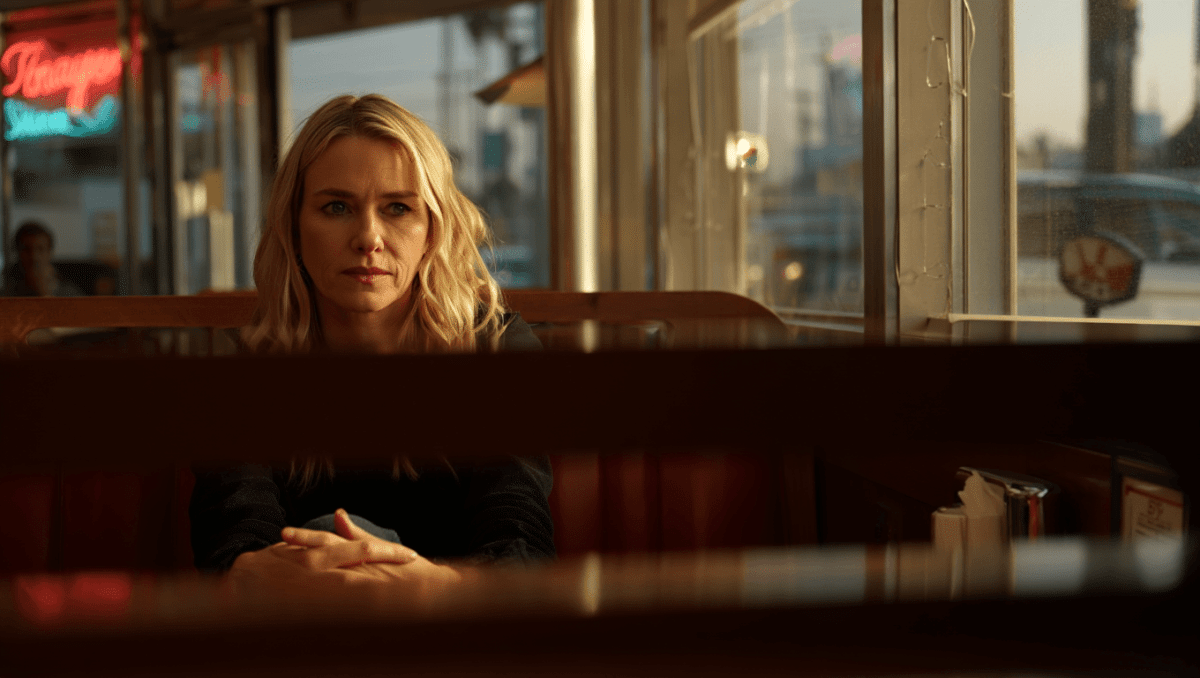
Mulholland Drive defies simple explanation. The film presents two interconnected narratives that refuse to resolve cleanly. In the first half, Betty (Naomi Watts) arrives in Los Angeles full of hope, befriends the amnesiac Rita (Laura Harring), and the two embark on a mystery investigation. Then everything shifts. The second half reveals a darker reality where identities collapse and dreams shatter.
Lynch famously refused to explain what his film meant. That ambiguity is precisely why it endures. Each viewer constructs their own interpretation, and the mystery deepens with repeated viewings rather than clarifying.
Heather Locklear brings Lorenzo Lamas to daughter Ava’s wedding in Montecito
Ally Kraemer leaves WCPO in Cincinnati after 12-year career as reporter
The Dream or Reality Debate That Continues After 25 Years
The most common theory suggests the first two-thirds is a dream unfolding in the dying mind of Diane Selwyn, the “real” protagonist who hired a hit man on her infidelity-stricken lover. Naomi Watts, in interviews, confirmed this interpretation resonates with her understanding of character psychology. Betty is the idealized version Diane imagined, and Rita represents the woman she loved but could not keep.
Yet 25 years of film scholarship has produced dozens of alternative readings. Some argue Betty and Diane are separate people in parallel universes. Others see the film as operating like a Möbius strip, where reality loops back on itself endlessly. Lynch’s deliberate ambiguity transformed the film from entertainment into a philosophical object that critics continue to analyze.
Hollywood Dreams, Corruption, and the Casting Couch
Beneath the mystery lies an unmistakable condemnation of Hollywood’s exploitation of women. YouTube critic Twin Perfect has argued the film satirizes the casting couch culture decades before #MeToo became mainstream. Camilla, cast in the film “The Sylvia North Story,” represents how powerful men manipulate talented women. Betty’s naive hope contrasts devastatingly with Diane’s eventual despair.
| Film Detail | Information |
| Total Runtime | 147 minutes |
| Budget | $15 million |
| Box Office | $20.1 million worldwide |
| Critical Score | 87 on Metacritic (Universal Acclaim) |
“At night, you ride on the top of the world. In the daytime you ride on top of the world, too, but it’s mysterious, and there’s a hair of fear because it goes into remote areas. You feel the history of Hollywood in that road.”
— David Lynch, discussing Mulholland Drive
A Legacy That Changed How Critics View Film
Critical rankings have only elevated the film’s status over 25 years. When released in 2001, Roger Ebert awarded it four out of four stars, saying Lynch “has been working toward Mulholland Drive all of his career.” The New York Times compared it to Fellini’s 8½ as a landmark work of self-reflection. Yet some critics dismissed it as deliberately incoherent, with one calling it “moronic garbage.”
That polarization vanished. The 2022 Sight and Sound poll ranked it the 8th greatest film of all time, up from 28th in 2012. BBC Culture’s 2016 poll named it the greatest film of the 21st century, ahead of 200+ acclaimed films. The New York Times ranked it number 2 in their 2025 list of the 100 best movies of the 21st century, surpassed only by In the Mood for Love.
What Keeps Film Critics Debating Mulholland Drive 25 Years Later?
The answer lies in Lynch’s mastery of ambiguity. Mary Sweeney, the film’s longtime Lynch collaborator who edited and produced it, stated no single interpretation ranks as “correct.” She said: “Everyone is informing it with their own psychological package. It means different things to different people.”
Ten clues Lynch provided on the original DVD release have spawned endless scholarly papers. The final clue asks, “Where is Aunt Ruth?” That question, unanswered by the film itself, may hold the key to understanding everything. Recent theories propose Aunt Ruth is the dreamer, her mind projecting all the characters. Others suggest the film is a labyrinth of identity collapse without any single solution.
Sources
- Boston Globe – “Mulholland Dr. at 25: David Lynch’s classic film remains an enigma”
- Wikipedia – Comprehensive filmography and critical analysis of Mulholland Drive
- BBC Culture – Greatest film of the 21st century ranking and retrospective