Show summary Hide summary
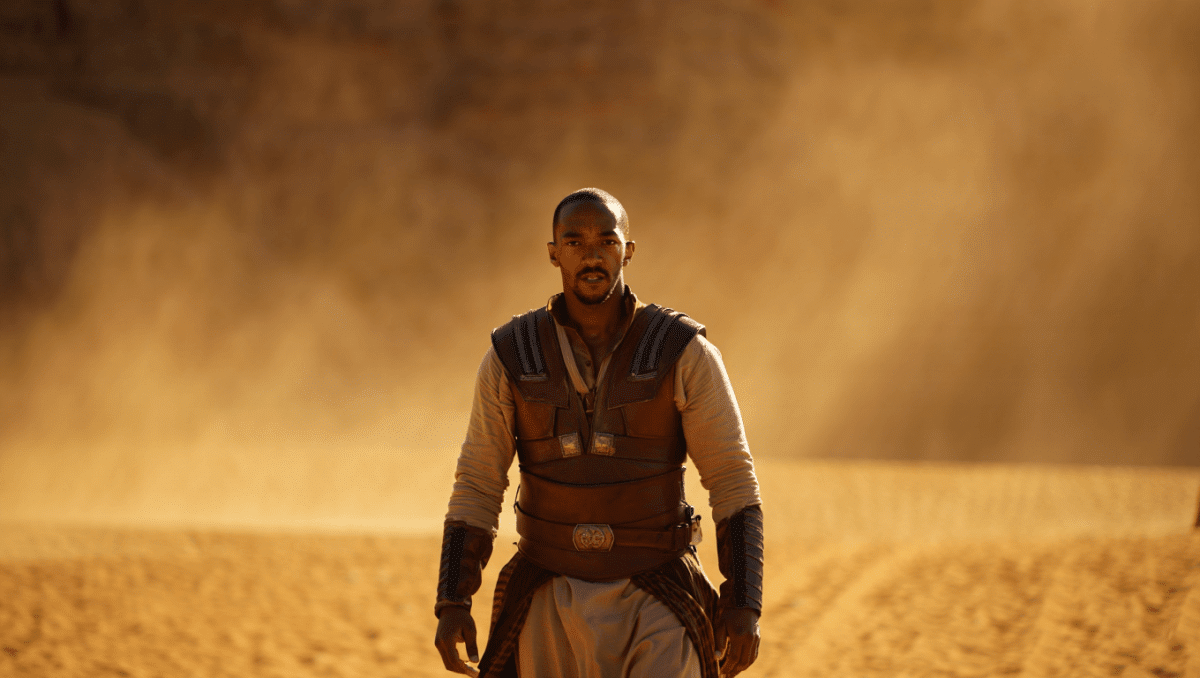
Anthony Mackie’s Desert Warrior became a historic box office catastrophe this opening weekend. The $150 million Saudi-backed epic earned just $596,000 domestically across 1,010 screens. Industry insiders are calling it one of the biggest studio disasters in cinema history.
🔥 Quick Facts
- Domestic Total: $596,000 from 1,010 theaters, averaging just $590 per screen
- Budget: $150 million production cost, making it one of the worst ROI ratios ever
- Release Date: April 24, 2026, distributed by Vertical after being acquired in February
- Cast & Crew: Starring Anthony Mackie, Ben Kingsley, director Rupert Wyatt, and 5-year troubled production
A Five-Year Nightmare Journey to Theaters
Desert Warrior endured an extraordinarily troubled five-year journey from 2021 production to its April 2026 release. Creative differences with director Rupert Wyatt caused him to initially leave the project, later returning. Post-production limbo lasted years, with crew members openly speculating the film would never see theatrical release.
The production, set up at Saudi Arabia’s media giant MBC Group, suffered budget bloat and multiple delays. By the time Vertical acquired distribution rights in February 2026, the film had already become a corporate white elephant. Many insiders believed MBC would dump it straight to streaming rather than theatrically release it.
Raising Kanan season 5 premiere set for June 12 on STARZ, Kanan teams up with Breeze
Sebastian Stan’s ‘Fjord’ gets 10-minute standing ovation at Cannes 2026
A Star-Studded Cast, Massive Marketing Blitz, and Zero Audience Interest
Anthony Mackie, known for his Captain America role, led the cast alongside Oscar winner Ben Kingsley. Additional talent included Aiysha Hart and Sharlto Copley. Vertical’s marketing strategy spotlighted these A-list names, spectacular desert cinematography, and director Wyatt’s reputation for action spectacle.
Despite heavy promotion and an impressive $150 million production budget, audiences simply did not respond. The film averaged just $590 per theater, a devastating metric that indicates minimal audience engagement. Even hopes for a modest $1 million domestic haul proved wildly optimistic.
The Box Office Collapse: By the Numbers
| Metric | Figure |
| US Domestic (Opening Weekend) | $596,000 |
| Saudi Arabia (Opening Weekend) | $87,000 from 6,100 admissions |
| Middle East Total | $225,000 |
| Per-Theater Average | $590 per screen |
| Production Budget | $150 million |
Even in Saudi Arabia, the film’s home territory, performance was disappointing. It ranked just eighth place in the kingdom. Comparable Saudi hits like Shabab Al Bomb earned $1.24 million in opening weekends. The film will almost certainly never recoup its massive $150 million budget theatrically.
“Cinemagoers don’t have the appetite for a film about a desert war in the middle of a literal desert war.”
— Industry observer, cited by Deadline
Why Did Audiences Abandon Desert Warrior
Multiple factors snowballed to create this historic flop. Timing proved catastrophic, with the film releasing amid ongoing Middle Eastern military conflicts. Additionally, industry sources revealed the film fell between cultural stools, appealing to neither Arab nor Western audiences effectively. One distribution executive stated, “I’m not sure who it is targeting. It looks like another big-budget Hollywood film that just happens to have been filmed in Saudi.”
Critical reception destroyed momentum, with Rotten Tomatoes assigning a devastating 29% critics score. An unfinished version tested in July 2023 produced negative research results, prompting filmmakers to question whether Western interpretations of Arab stories had any market value. Lacklustre reviews only compounded these concerns heading into release.
Will Saudi Arabia Continue Its Hollywood Cinema Ambitions
Desert Warrior’s box office failure raises critical questions about Saudi Arabia’s future in blockbuster filmmaking. MBC executives reportedly discussed how Crown Prince Mohammed bin Salman’s verdict on this loss could impact future funding. Will the kingdom continue blockbuster swings, or retreat from theatrical ambitions as it recently did with sports ventures like LIV Golf?
Industry observers note the film created valuable filmmaking infrastructure and technical expertise for Saudi Arabia anyway. Crew members argue that the $150 million investment, while commercially failed, developed expertise supporting future regional productions. As Saudi Arabia restructures toward non-oil economic models, these cinema lessons may prove invaluable regardless of this specific film’s collapse.
Sources
- Deadline – Comprehensive analysis of box office collapse and industry reactions
- Box Office Mojo – Official domestic and international box office figures
- Rotten Tomatoes – Critical score and audience reception data