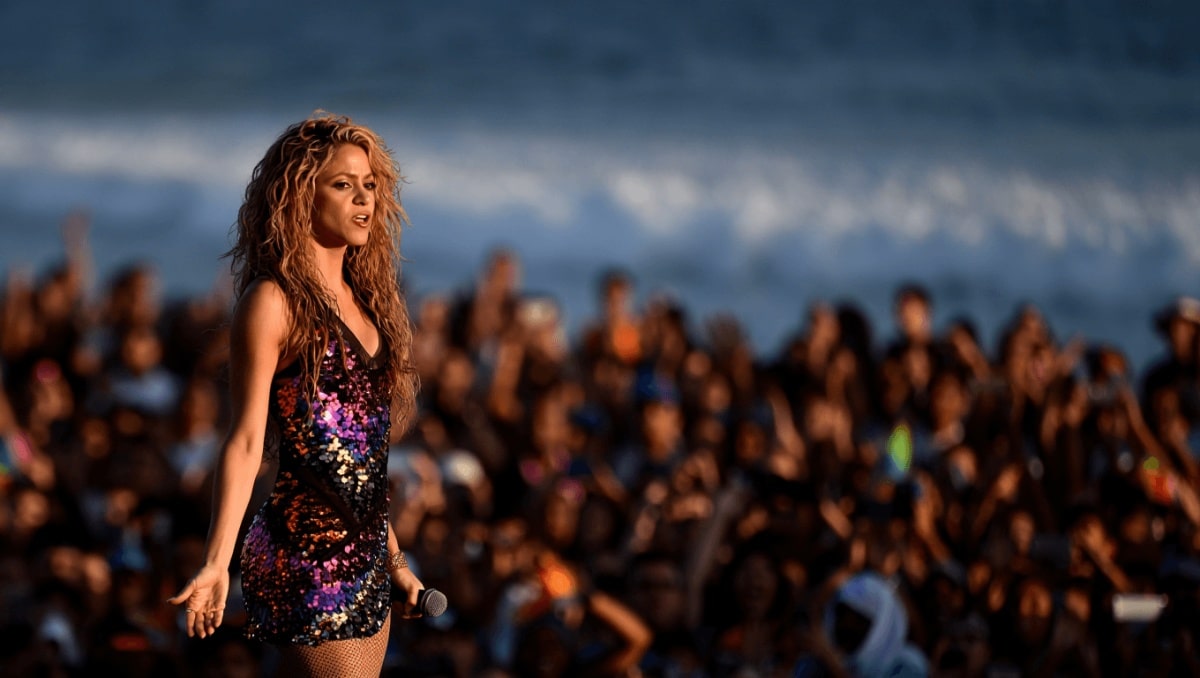
Shakira will headline a free, large-scale concert on Copacabana Beach this Saturday, May 2, a show Globo will stream live exclusively across its TV channels and the Globo Play app in Brazil. The performance is framed as more than a pop event: it arrives at a moment when the artist has recast her public persona and is bringing that story to stadium-sized crowds.
Todo Mundo No Rio, the massive festival that fills Rio de Janeiro’s shoreline, has a history of landmark appearances — previous free concerts at Copacabana have drawn global superstars and enormous crowds. This edition positions Shakira at the center of a cultural moment, with implications for fans across Latin America and beyond.
In recent statements, Shakira has described a period of abrupt personal change that forced her to rethink every part of her life and career. She says that becoming the primary caretaker and provider reshaped her priorities and became the creative engine behind the new chapter of her music, titled Las Mujeres Ya No Lloran.
She frames that era not as a call for revenge or an appeal to pity, but as a pragmatic response to responsibility — an assertion that sorrow alone is insufficient when there are children to raise, bills to handle and careers to sustain. Those ideas are woven into the songs and the staging she plans to bring to Copacabana.
On tour, the Colombian singer says she has repeatedly encountered women who echoed her experience: brief, intense conversations after shows in which fans described similar struggles and resilience. That feedback led her to conclude that what felt personal was actually a common story for many Latinas today.
Shakira has also cited Brazil specifically as a turning point. After learning that roughly 20 million single mothers in the country shoulder family responsibilities largely on their own, she has said she recognized herself in those numbers — a realization that deepened the emotional thread of her performances.
She speaks of Rio with vivid, immediate language: a city where the landscape and the rhythms make dance, music and communal life feel essential. For her, that environment strengthens the sense that joy and human connection are not optional — they are what a performance like this is meant to celebrate.
- Date and place: Saturday, May 2 — Copacabana Beach, Rio de Janeiro.
- Broadcast: Live and exclusive in Brazil via Globo (TV) and Globo Play (streaming).
- Artistic context: Set within the Las Mujeres Ya No Lloran era, emphasizing resilience and responsibility.
- Recent milestone: Shakira’s March 1 free concert at Mexico City’s Zócalo reportedly drew about 400,000 people.
- Next stop: A planned 11-show residency in Madrid this September–October rounds out the current touring plans.
The Copacabana event follows the record-breaking Zócalo concert earlier this year and will be watched closely as both a pop spectacle and a moment of cultural solidarity. For local viewers, Globo’s exclusive rights mean it will be the only domestic live source for the show via its broadcast and app platforms.
Tickets are not required for the open-air event, and organizers expect a dense crowd along the sand. That scale changes how the performance is staged — visuals, pacing and the set list are designed to read to an audience that spreads across the beachfront and to thousands more tuning in at home.
Shakira has invited fans to join her “where the shoreline meets the crowd” — language she uses to describe the meeting point of music, nature and community that she says defines Rio’s live-music culture. Whether viewers watch in person or on Globo, the concert is being presented as a public moment grounded in shared stories and large-scale celebration.