In a new first-person account from a 2026 memoir, a former employee describes a day when a politically charged caravan surrounded the headquarters of a controversial media outlet and employees armed themselves inside. The episode underlines how quickly rhetoric and spectacle can spill into real-world danger—raising questions about workplace safety, the normalization of armed standoffs, and how law enforcement responds.
Confrontation in the lot
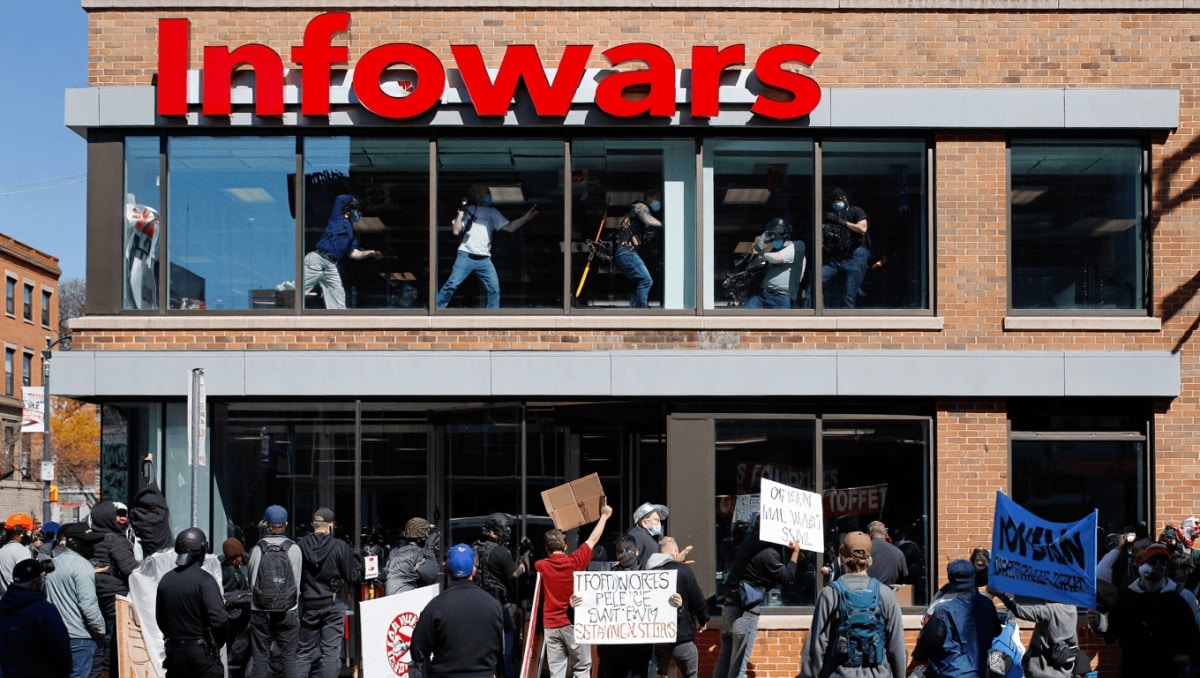
What began as a tense afternoon at the office escalated into a standoff. The parking lot filled with a procession of vehicles—one draped in a flag decal—whose drivers arrived in an aggressive, jittery manner. Men in military-style clothing pushed up to the building; some banged on the darkened windows while others peered inside. A man with a megaphone led the crowd, calling out for a particular host to come to the door.
Inside, staff watched from the windows as the scene unfolded. The host, according to the memoir, moved through the office with a casual, almost theatrical composure—pouring a drink into a paper cup, then directing colleagues to stay away from entrances. When the crowd’s leader was identified as Pete Santilli, a figure associated with earlier armed standoffs, the situation took on a different tenor: it was no longer merely a protest but a politically charged confrontation aimed at a specific person and workplace.
Through the delivery bay’s tinted glass the crowd grew, and so did the threat perception. In the warehouse, employees opened a gun safe and brought out two heavy-caliber rifles—identified in the account as Barrett M82 .50-caliber weapons—and began loading them. The rifles were set on bipods and pointed through windows toward the lot. Staff described being told, in effect, to defend the building if the glass was breached.
At the range: a dangerous culture
The memoir also recounts a separate incident at a private shooting range that preceded the parking-lot standoff. What was framed as a day of filming and firearms practice devolved into a near-miss: a rifle was discharged toward people on the range when basic safety checks had reportedly been skipped, leaving those present shaken. Rather than prompt serious reflection, the moment was quickly defused with jokes and dismissal.
That episode, the writer suggests, illustrated a pattern—an environment in which risky behavior was downplayed and loyalty insulated the leader from consequences. Women and other staffers who objected to the conduct often found their complaints minimized, the narrative says, and the group dynamic tended toward enabling rather than accountability.
Not long after the parking-lot incident, local authorities intervened in a separate plot: the city police told the office’s leadership that they had tracked an individual making online threats who had rented a car, loaded firearms, and was en route to the city. Officers detained the person on the outskirts of town. The episode painted a sharper picture of the real physical risks facing staff and the role of law enforcement in preventing violence.
The account raises several immediate concerns for journalists, employers, and public officials.
- Workplace safety: Physical threats moved quickly from online rhetoric to an on-site confrontation, forcing employees to choose between leaving, hiding, or arming themselves.
- Normalization of weapons: A culture that treats firearms as props or deterrents can blur lines between performance and lethal risk.
- Enabling dynamics: The memoir describes social and financial dependencies that can shield leaders from challenge and allow dangerous behavior to persist.
- Law enforcement role: Police intervention stopped a potentially deadly plot, underscoring the ongoing challenge of monitoring threats without further inflaming partisan tensions.
For readers tracking the intersection of media, politics and public safety, the account is a stark reminder that heated rhetoric and organized mobs can produce situations where staff safety hinges on split-second choices—and on whether leaders respond responsibly or escalate a confrontation.
This article is adapted from firsthand passages in Josh Owens’s 2026 memoir The Madness of Believing, reprinted with permission.