Show summary Hide summary
Dean Potter pushed climbing and flying to terrifying new heights. Now HBO’s raw 4-part documentary reveals his extraordinary feats and the tragic wingsuit accident on May 16, 2015 that ended his life. The Dark Wizard premieres April 14, diving deep into his brilliance and inner demons.
🔥 Quick Facts
- Release Date: Premiered April 14, 2026 on HBO and HBO Max
- Format: Four-part documentary series directed by Emmy winners Peter Mortimer and Nick Rosen
- Death Circumstances: Potter, 43, and climbing partner Graham Hunt, 29, died in wingsuit BASE jump at Taft Point, Yosemite
- Key Achievement: Set world record with 4.7 mile wingsuit BASE jump at Switzerland’s Eiger in 2011
The Life of a Climbing Legend Who Defied Boundaries
Dean Potter was born in 1972 at Fort Leavenworth, Kansas. His path to becoming a climbing icon began as a teenager when he accidentally free soloed a cliff face, hundreds of feet above ground with no ropes. He arrived in Yosemite Valley during the early 1990s, living in caves and sleeping in Camp 4 to dodge the park’s two-week camping limit. Potter didn’t just belong to Yosemite; he transformed what the sport thought possible there.
In 1998, Potter speed-soloed Half Dome without a rope in a style so aggressive it had no precedent. This ascent introduced an entirely new way of thinking about big-wall soloing. He went on to set and reset speed records on El Capitan’s Nose route, the granite wall many climbers considered climbing’s most prized objective. Potter wasn’t competing for medals; he was competing against the boundaries of human possibility.
Dean Potter: HBO’s raw 4-part doc reveals climber’s extraordinary feats and tragic final flight
Dave Mason won’t tour in 2026, but Rock Hall legend plans limited public appearances
Beyond Climbing: Inventing New Disciplines
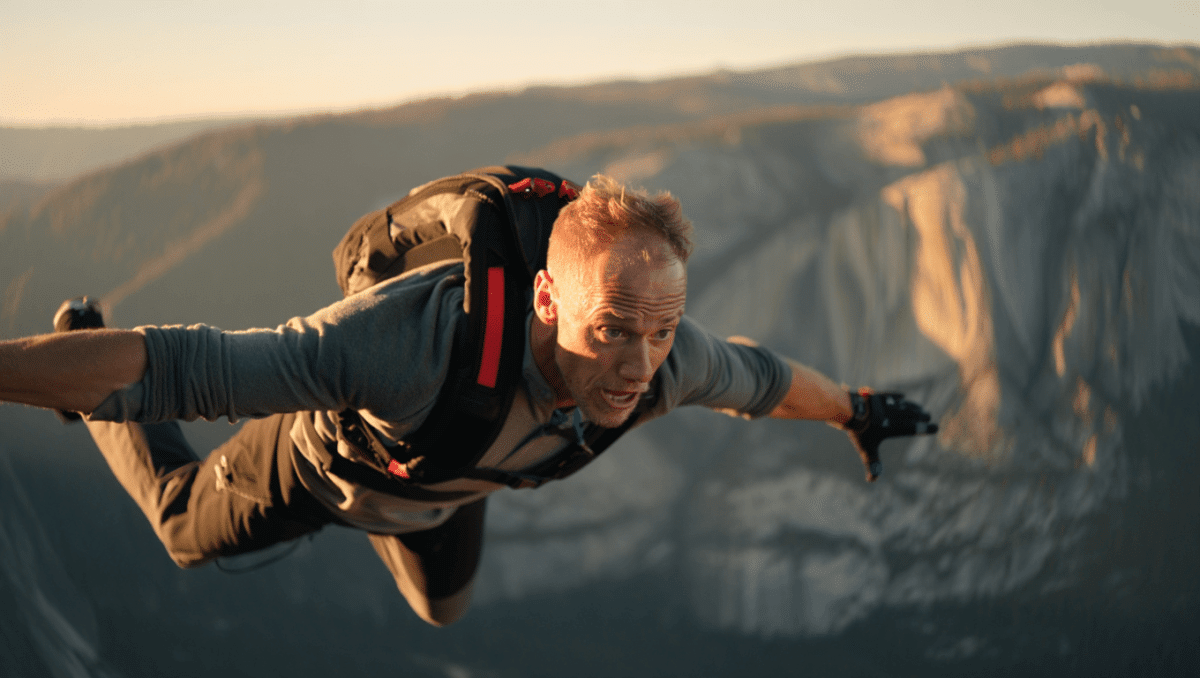
Potter called climbing, highlining, and wingsuit flying his “arts,” not sports. He invented FreeBASE, a discipline where climbers free-solo walls of at least 1,000 feet with a parachute as a last resort option. He walked highlines across cliff faces without the safety leash other practitioners considered essential. In 2009, a wingsuit BASE jump from Switzerland’s Eiger kept him airborne for nearly three minutes, setting a world record for duration at that time.
Potter funded his own filming and saw himself as a performance artist using granite and open sky as his medium. This wasn’t affectation; it reflected how deeply he viewed his extreme feats as expressions of something spiritual and artistic. His controversial style included illegal BASE jumps in Yosemite, sometimes wearing a mask to avoid identification, pushing against federal rules he saw as restricting access to his sacred cathedral.
The Documentary That Reveals His Complexity
| Detail | Information |
| Series Title | The Dark Wizard |
| Network | HBO and HBO Max |
| Episodes | 4 parts |
| Directors | Peter Mortimer and Nick Rosen (Emmy winners) |
Filmmakers Mortimer and Rosen worked with Potter for years before his death. They had unprecedented access to his personal journals, decades of archival footage, and intimate interviews with friends and loved ones. Elizabeth Potter, his sister, granted them access to materials nobody else had seen. “We really wanted to tell a really honest, unvarnished story,” Rosen explained about their approach.
The documentary refuses to make Potter a simple hero or villain. It shows his brilliance alongside his mental health struggles, his genius alongside his selfishness. Friends described him in contradictory terms: hilarious and insightful one moment, brooding and abrasive the next. The nickname that followed him, “the Dark Wizard,” captured this duality perfectly.
“I don’t think people really knew anything about Dean’s mental health struggles, and the specifics of what he was going through: how they really dragged him down at times and limited him, but also empowered him to do big things. His demons were both kind of positive and negative for him.”
— Nick Rosen, Director of “The Dark Wizard”
The Rivalry With Alex Honnold and Potter’s Decline
Then Alex Honnold arrived on the climbing scene. Quieter, more methodical, and calm in ways Potter could never be, Honnold began doing what Potter pioneered with almost casual efficiency. This unspoken rivalry cut Potter deeply existentially. Honnold wasn’t just excelling in his arena; he was reframing it, showing that extreme boldness could coexist with serenity. Potter experienced this shift as a loss of something he thought was uniquely his.
The documentary captures how Potter’s later years were marked by visible instability. Before major feats came freakouts and emotional crises. Close relationships fractured under the pressure of loving someone who often seemed to treat death as the medium for his art. But in his final years, a relationship with Jen Rapp brought a period of rare calm. Potter found something that climbing alone, no matter how extreme, could never provide: genuine connection and peace.
What Does This Story Reveal About Our Relationship to Risk and Beauty?
The Dark Wizard ultimately asks uncomfortable questions about why we celebrate extreme risk-takers. What drives someone to BASE jump from 7,500-foot cliffs when safer alternatives exist? Potter’s journals revealed vulnerability; he wasn’t fearless, but deeply struggling with self-doubt. Yet his greatest feats seemed to give him moments of transcendence nothing else could provide. The documentary presents his achievements not as recklessness but as desperate searches for peace through controlled chaos.
Potter’s story continues because climbing still grapples with his legacy. Elite climbers treat his boulder problems as rites of passage. Highliners consider him foundational. His influence shaped modern extreme sports. But The Dark Wizard argues he belonged to a particular moment before climbing became Olympic sport and boutique fitness, when the sport still felt truly counterculture. His hunger for experience, his refusal to accept comfortable limitations, and his willingness to live dangerously on his own terms defined a generation.