Show summary Hide summary
- 🔥 Quick Facts
- Clinton Defends “Brief Acquaintance” With Epstein
- House Lawmakers Grill Clinton Over Photos and Relationships
- Key Details From the Historic Congressional Inquiry
- Republican Reactions and Party Divide Over Testimony
- What Does Clinton’s Testimony Mean for the Future of Congressional Accountability?
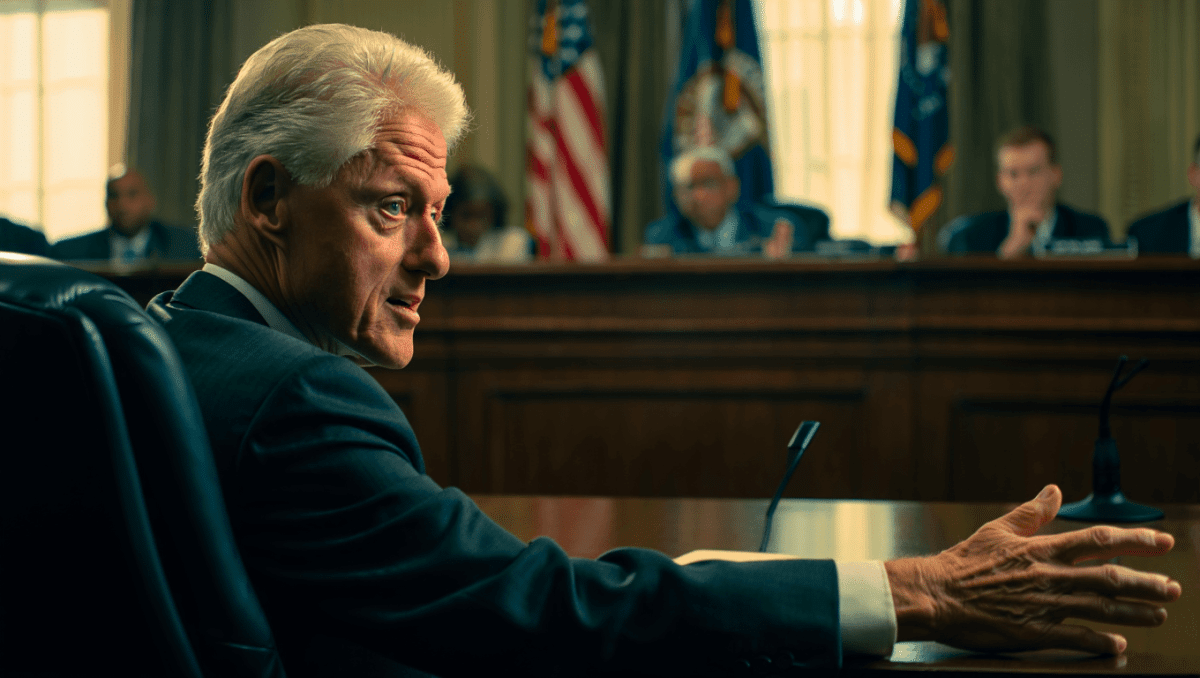
Bill Clinton testified before the House Oversight Committee on February 27, 2026, making him the first former president compelled to testify under subpoena. Over six hours of questioning, the former president repeatedly denied having any knowledge of Jeffrey Epstein’s crimes and said he saw no signs of abuse. Clinton’s deposition marked a historic moment in congressional proceedings.
🔥 Quick Facts
- Duration: Over 6 hours of sworn testimony before House lawmakers in Chappaqua, New York
- Historic First: Clinton became the first former U.S. president compelled to testify under subpoena to Congress
- Core Statement: “I saw nothing, and I did nothing wrong” regarding Epstein’s crimes
- Deposition Date: February 27, 2026, one day after Hillary Clinton’s testimony
Clinton Defends “Brief Acquaintance” With Epstein
During the six-hour deposition, Clinton consistently characterized his relationship with Epstein as a “brief acquaintance.” The former president denied having committed any wrongdoing and stressed that he stopped associating with Epstein long before the financier’s 2008 guilty plea to state charges in Florida. Clinton said it would be difficult to recall specifics of events from more than 20 years ago, but he expressed certainty that he never witnessed signs of abuse.
In his opening statement, Clinton declared: “I had no idea of the crimes Epstein was committing.” He emphasized that anyone who grew up with domestic abuse, as he did, would never have continued a relationship with someone engaging in such behavior. The former president also challenged the committee by stating that no matter how many photographs lawmakers showed him, it would not change his assertion of innocence.
Jenny Slatten and Sumit Singh reveal plans for new 90 Day Fiancé project
Beanie Feldstein announces pregnancy with wife Bonnie Chance-Roberts
House Lawmakers Grill Clinton Over Photos and Relationships
Throughout the deposition, House Oversight Committee members repeatedly showed Clinton photographs from newly released Justice Department files depicting him with women. Lawmakers asked directly whether he had engaged in sexual activity with each woman pictured, and Clinton denied these allegations at every turn. One particularly famous image showed Clinton in a jacuzzi with a woman whose face was redacted. Clinton stated he did not recognize the woman and denied having sexual relations with her.
Republican members of the committee, including Rep. John McGuire, accused Clinton of “selective memory” during questioning. Lawmakers also pressed him about his 27 airplane flights on Epstein’s private plane between 2001 and 2004, and on the fact that Epstein visited the White House 17 times during his presidency. Despite intense questioning, lawmakers acknowledged that Clinton answered every question posed to him.
Key Details From the Historic Congressional Inquiry
| Detail | Information |
| Deposition Date | February 27, 2026 |
| Location | Chappaqua Performing Arts Center, Chappaqua, New York |
| Duration | 6+ hours of sworn testimony |
| Committee Chair | Rep. James Comer (R-Kentucky) |
| Precedent Set | First former president compelled to testify under subpoena |
“I saw nothing, and I did nothing wrong.”
— Bill Clinton, Former U.S. President, Opening Statement
Republican Reactions and Party Divide Over Testimony
Committee chair James Comer described Clinton as “charming” and noted his “Southern people skills” during the lengthy questioning. GOP members acknowledged that the former president cooperated fully and answered nearly every question without invoking legal protections. However, GOP Rep. John McGuire remained skeptical, suggesting Clinton displayed “selective memory.”
Democratic lawmakers pressed different lines of questioning but also acknowledged Clinton’s demeanor throughout the ordeal. Rep. Robert Garcia, the top Democrat on the committee, praised Clinton for his cooperation and candid responses. The deposition marked the first time a former U.S. president was compelled to testify under oath before Congress, setting a significant constitutional and political precedent for future inquiries.
What Does Clinton’s Testimony Mean for the Future of Congressional Accountability?
The historic deposition raises major questions about whether this precedent will apply to President Donald Trump, who also had documented connections to Epstein. Democratic lawmakers have called for Trump to voluntarily testify, with Rep. Robert Garcia saying the president should “man up” and answer questions. Trump expressed sympathy for Clinton, telling reporters, “I like Bill Clinton, and I don’t like seeing him deposed.”
Republicans have resisted calls for Trump’s testimony, claiming they have found no evidence of wrongdoing by the current president. The question of whether sitting or former presidents can be compelled to testify now hangs over future congressional investigations. Clinton’s appearance also highlighted broader debates about accountability for high-powered men who maintained relationships with Epstein after his 2008 guilty plea in Florida.
Sources
- NPR – Bill Clinton’s testimony and Republican accusations of selective memory
- CNN – Historic deposition details and photograph questioning
- Associated Press – House Oversight Committee proceedings and witness accounts