
Show summary Hide summary
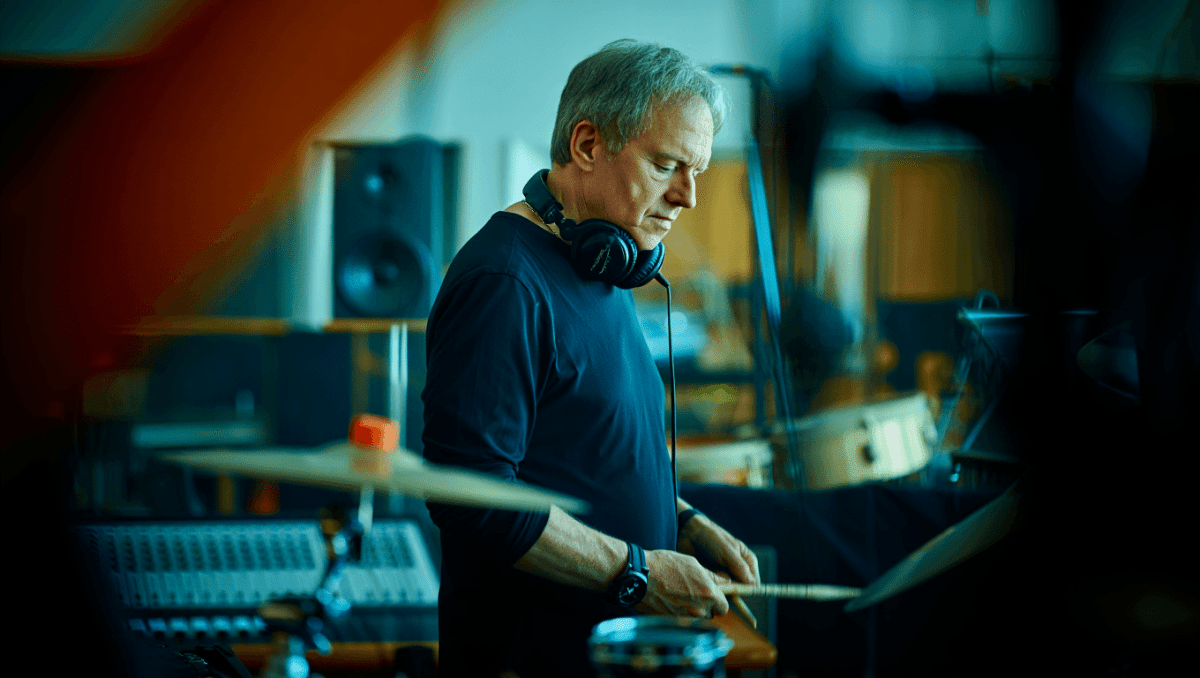
Stewart Copeland just transformed his Los Angeles studio into a wild orchestra. The legendary Police drummer fused 73 animal sounds with orchestral music on his groundbreaking album Wild Concerto, released just yesterday. This pioneering album features howling wolves, chirping Arctic terns, and croaking frogs performing alongside traditional instruments in ways you’ve never heard before.
🔥 Quick Facts
- Album Name: Wild Concerto, released April 18, 2025 via Platoon Records
- Collaborator: Naturalist Martyn Stewart, known as the David Attenborough of Sound with nearly 100,000 animal recordings
- Recording Location: Abbey Road Studios with 30 musicians of the Kingdom Orchestra
- Featured Animals: Arctic terns, wolves, hyenas, guillemots, frogs, and ten endangered species including poison dart frogs
A Drummer’s Wild Evolution from Rock to Nature Orchestra
Stewart Copeland spent decades behind the Police drum kit, but his latest project fundamentally reimagines what an orchestra can be. The seven-time Grammy winner decided to swap traditional singers for wildlife. He worked directly with naturalist Martyn Stewart, who recorded pristine animal sounds across remote jungles and Arctic tundras. All sounds remain unmanipulated, maintaining their authentic character while fitting into Copeland’s orchestral arrangements.
Copeland explained his concept with infectious enthusiasm: Instead of sopranos and tenors, I’m working with hyenas, wolves and a chorus of birds. The white-breasted nuthatch duets with flute. The Asian barred owlet hoots alongside piano. For Copeland, the collaboration felt immediately intriguing, drawing from his decades composing film scores where every sound tells a story.
South Park season 29 premieres October 8 on Comedy Central, 6-episode fall run confirmed
Summer House Season 10 finale airs tonight with spinoff premiere
Twelve Journeys Across the Poles with the Arctic Tern
Wild Concerto contains twelve distinct movements inspired by the Arctic tern’s remarkable migration. This tiny bird completes a round trip of up to 44,100 miles annually, traveling from Arctic breeding grounds over the Galapagos to Antarctica, then back via Africa’s coast. Each movement captures a moment in this epic journey, with animals performing as soloists and ensemble members.
The album opens with White Throated Sparrow (Is Happy On the Glacier) and progresses through encounters with creatures across continents. Wolves howl with great soul, accompanied by trombone, creating what Copeland describes as the jazz wolf of the Arctic tundra. Hyenas party on skeleton coasts. Penguins sing through Antarctic winds. The composition treats wildlife not as background ambiance but as serious musical partners.
Why This Album Matters Now More Than Ever
Nearly 10 endangered species perform on Wild Concerto, including poison dart frogs, wolves, and Galapagos tortoises. Copeland and Stewart share a conservation mission. According to Martyn Stewart, two-thirds of the species in my library are now basically extinct. Recording pristine animal sounds today requires 2,000 hours of patience to eliminate human noise pollution. In the 1990s, capturing one clean hour took just three to four hours.
The album immortalizes these voices permanently. Many of these species are endangered and their sounds could vanish in our lifetime, Copeland stated. Through the Wild Concerto, their voices are immortalised. Stewart donated his entire archive of nearly 100,000 recordings to the Listening Planet, a charity celebrating biodiversity and advocating for conservation worldwide.
Inside Abbey Road with a Revolution in Sound
The recording process at Abbey Road Studios brought together 30 classical musicians who had to adapt to an entirely new rehearsal experience. Kingdom Orchestra members received orchestral scores alongside field recordings. They weren’t playing against metronomes but against the natural rhythms of nature itself. Copeland conducted movements where a croaking frog duets with saxophone and a black-footed albatross twitters over string motifs.
Copeland oversees everything with meticulous control. I didn’t stretch any of the rhythms or auto-tune the red-breasted nuthatch, that’s how she sounds, he emphasized. The synergy between beast and brass is amazing, Martyn Stewart confirmed after hearing the final mix. Stewart combined natural sounds and music seamlessly, creating what feels like a genuine conversation between species.
Will This Become the Future of Orchestral Music?
Wild Concerto raises provocative questions about what qualifies as music in the concert hall. Copeland performed on all drum tracks, adding his signature syncopated voice throughout. But the real revelation is how listeners will respond. Does hearing a guillemot serenade the red deer in movement eleven spark wonder or confusion? The album drops commercially on April 18, 2025 via Platoon Records, making it accessible beyond concert halls.
Earth Day 2025 on April 22 marks a special moment when Copeland joins fellow composer Arash Safaian at Kings Place, London to discuss the album. He’ll explain his compositional process and why nature might be the most sophisticated orchestra ever assembled. For a generation raised on drone and ambient music, Wild Concerto offers something rarer, something with heartbeat and purpose reflecting our shared planet.







Absolutely the dumbest segment ever done on 60 mins. Unwatchable and the music is unlistenable.